
Last updated September 20, 2026
Full 25-point door and opener safety check with every visit - springs, cables, rollers, tracks, and your LiftMaster or Chamberlain opener included
You get a price before we start. It does not change when the truck arrives.
Full-view glass
Chamberlain openers
 Before
 After
After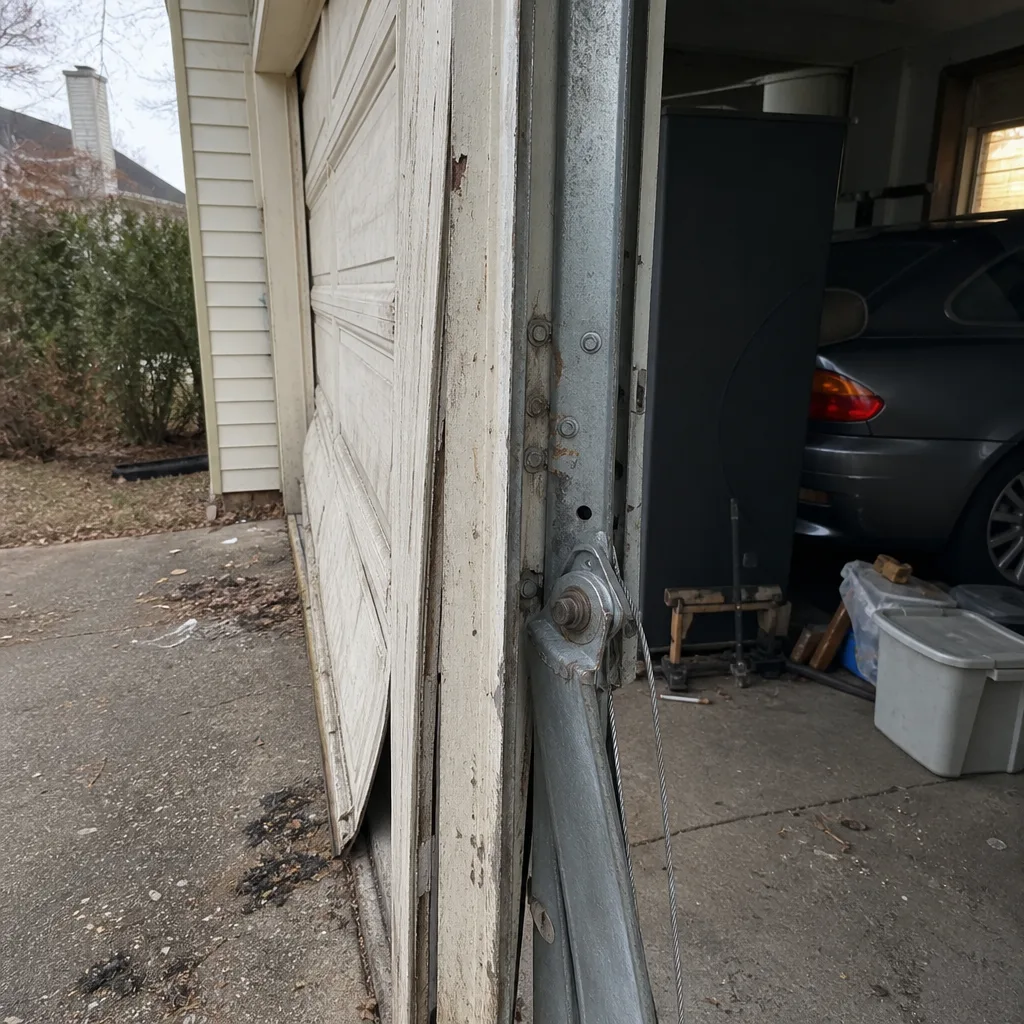 Before
 After
After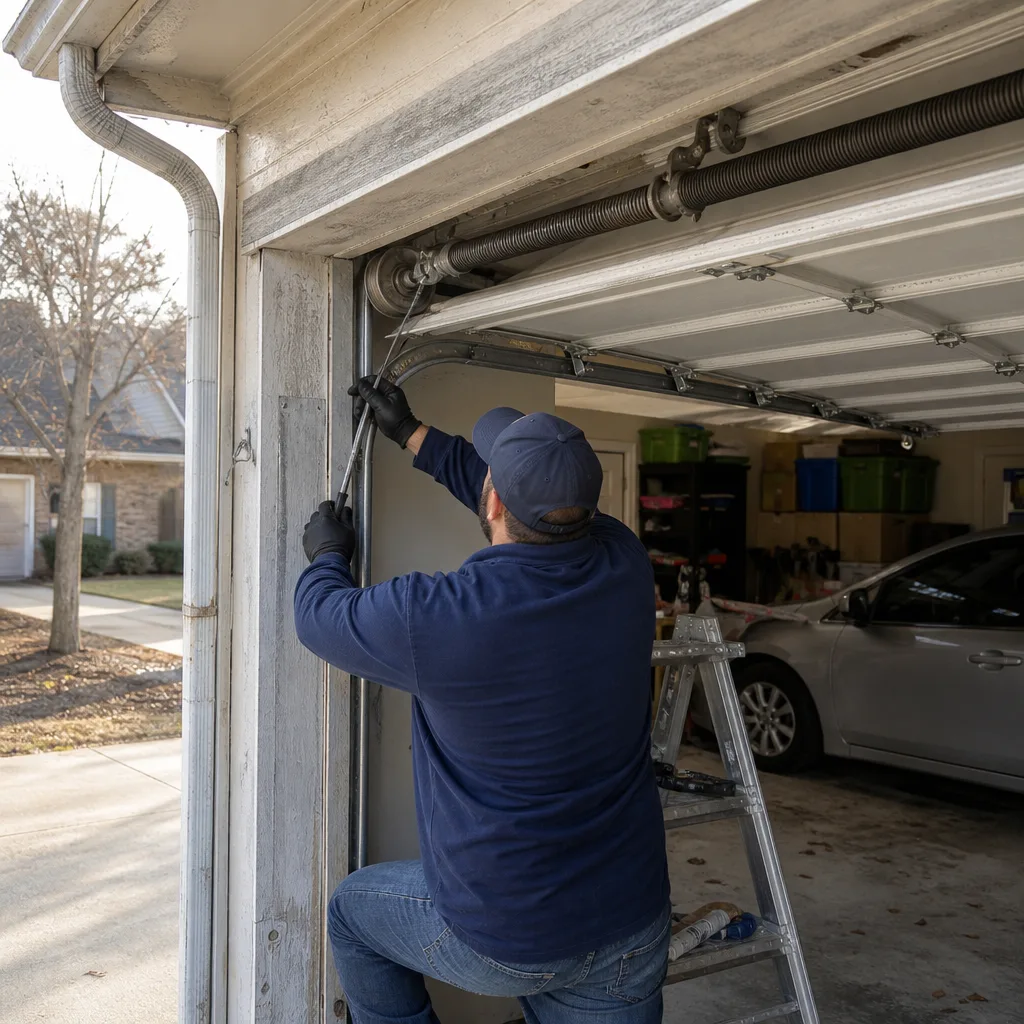 Before
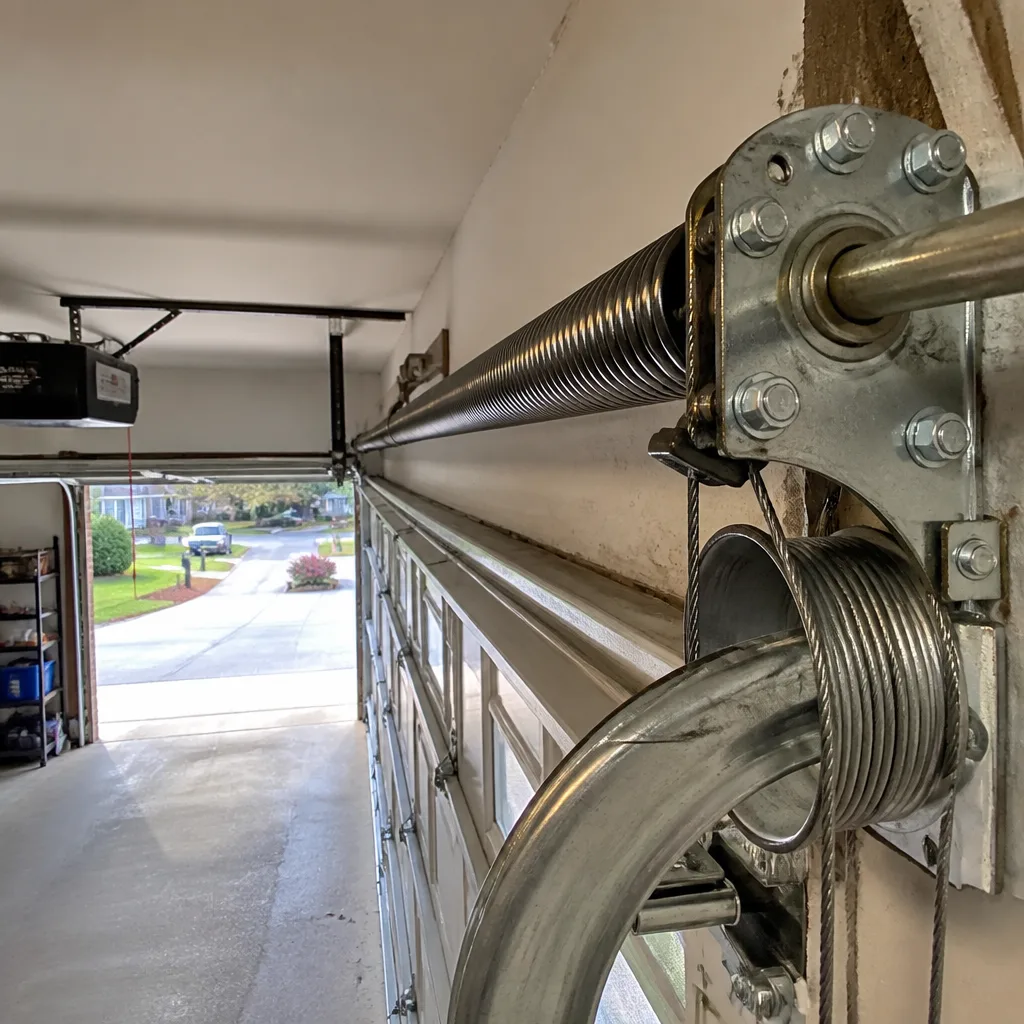 After
AfterSeasonal Garage Door Care for Buford: Year-Round Homeowner’s Guide
Most published garage door maintenance guides are written for places with four predictable seasons: oil the hinges in October, weatherstrip in November, done. Buford doesn’t work that way. The National Weather Service station at Gainesville, ten miles north of Buford, records a mean January low of 33°F and a mean July high of 89°F, but averages hide what actually breaks garage doors here: the 40-degree swings inside a single January week, the August dew points that hold near 70°F, and the spring squall lines that push 50-mph gusts through Gwinnett and Hall counties. This Complete Guide to Garage Door in Buford is built from what we see on service calls across Buford, Sugar Hill, and Flowery Branch, month by month, component by component. You’ll learn which inspections matter in which months, what a Buford freeze-thaw cycle does to a torsion spring, and when a $12 tube of lubricant prevents a $340 service call.
Quick Answer
Buford garage doors fail on a different calendar than the rest of the country. The three stress points that matter here are the August humidity peak, which swells wood door skins and corrodes spring coils; the January freeze-thaw cycle, which makes doors feel heavy and exposes weakening springs; and the March-April storm window, which tests wind-load ratings on old, unbraced doors. The core seasonal rhythm is: inspect and lubricate in June (before humidity peaks), test spring balance in October and again in January, and check cables and drums every spring after storm season. For a full inspection with a documented photo record, call Garage Door Repair in Buford at (470) 458-9647.
Table of Contents
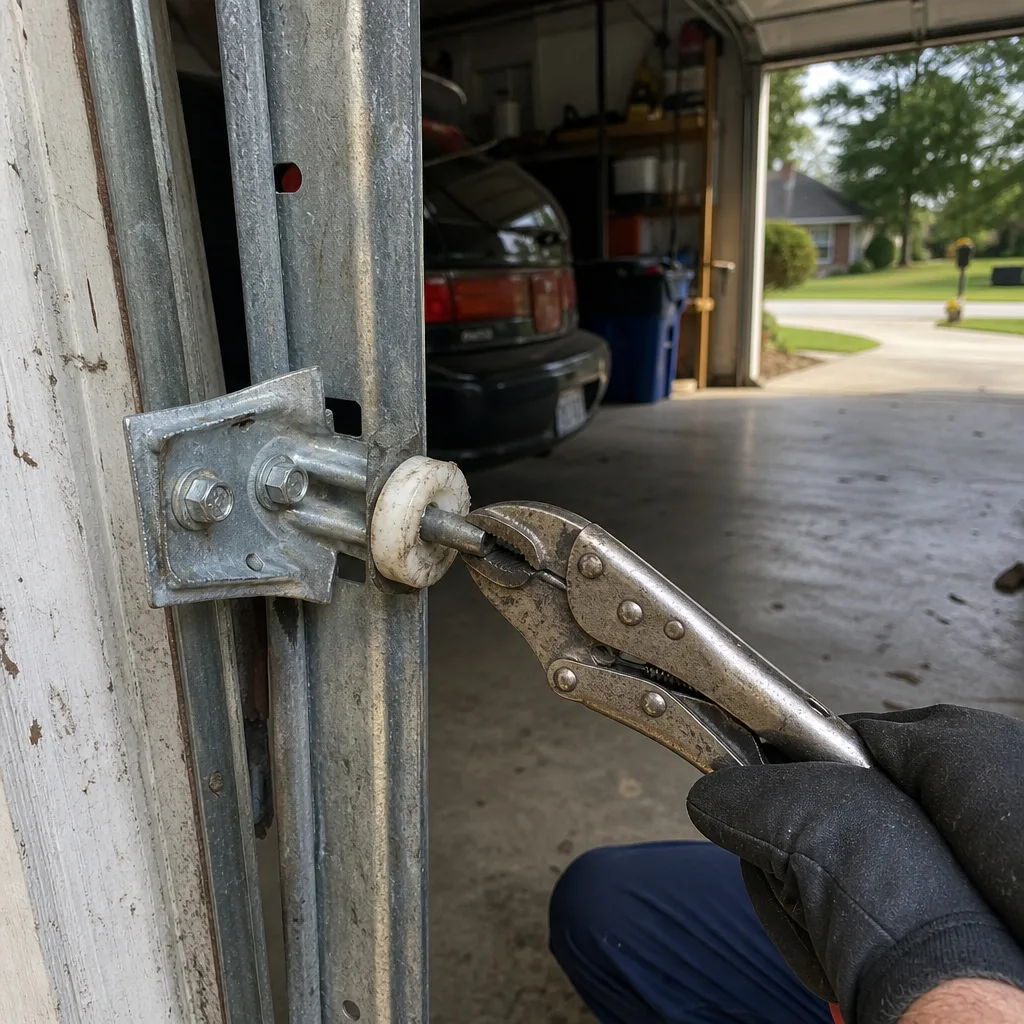
- Buford’s Real Seasonal Stress Calendar
- August Humidity: The Silent Component Killer
- January Freeze-Thaw: Why Your Door Feels Heavy
- Spring Storm Prep: Wind Load and bracing in Buford
- Cable and Drum Inspection: Summer Heat Cycling Damage
- Month-by-Month Maintenance Checklist
- Common Mistakes to Avoid
- When to Call a Professional
- Frequently Asked Questions
- The Bottom Line
 Before
 After
AfterBuford’s Real Seasonal Stress Calendar
A generic seasonal guide says “lubricate in fall before winter.” In Buford, where January temperatures swing from 28°F to 68°F in 48 hours, the freeze-thaw problem isn’t winter itself. It’s the transitions into and out of it, and lubricating in October often isn’t early enough. Here’s the calendar we’ve built across thousands of service calls in Buford and the surrounding Gwinnett and Hall county areas.
Buford sits in USDA Plant Hardiness Zone 8a, which matters less for your garage door than the humidity profile. Lake Lanier, which borders Buford on the south and east, moderates winter lows but raises ambient moisture year-round. Homes within a half-mile of the lake, particularly around Buford Dam Road and the Sweetwater Creek inlets, see condensation on metal components at rates noticeably higher than homes on the ridge north of Highway 20. This isn’t trivia. It’s the reason we replace more corroded torsion springs and rusted bottom brackets in lake-adjacent neighborhoods than anywhere else on our route.
The Buford stress calendar, in order of what actually causes the most service calls:
- August (peak humidity): Wood door skin swelling, bottom seal distortion, spring coil corrosion acceleration. Dew points above 70°F mean every exposed steel surface is wet at night, even when the door is dry during the day.
- January (freeze-thaw cycling): Cold-weather spring load increase, cable tension variation, opener gear stress. The classic symptom is a door that opens fine at 10 a.m. but groans or hesitates at 7 a.m.
- March-April (storm season): Wind gusts above 40 mph across unbraced doors, track misalignment from pressure cycling, cable drum wear exposed by violent door movement.
- October (cooling and drying): The first real cold snap, which is when we see a spike in torsion spring breaks in Buford. Springs that survived the summer’s thermal cycling often crack on the first sub-40°F morning.
- June (pre-humidity inspection window): The one maintenance task that pays for itself: a full inspection and lubrication before the dew point spike hits.
If you follow nothing else from this guide, follow the June inspection. It costs less than a tank of gas if you do it yourself, and it catches the failures that August humidity turns into $300-plus repairs.
August Humidity: The Silent Component Killer
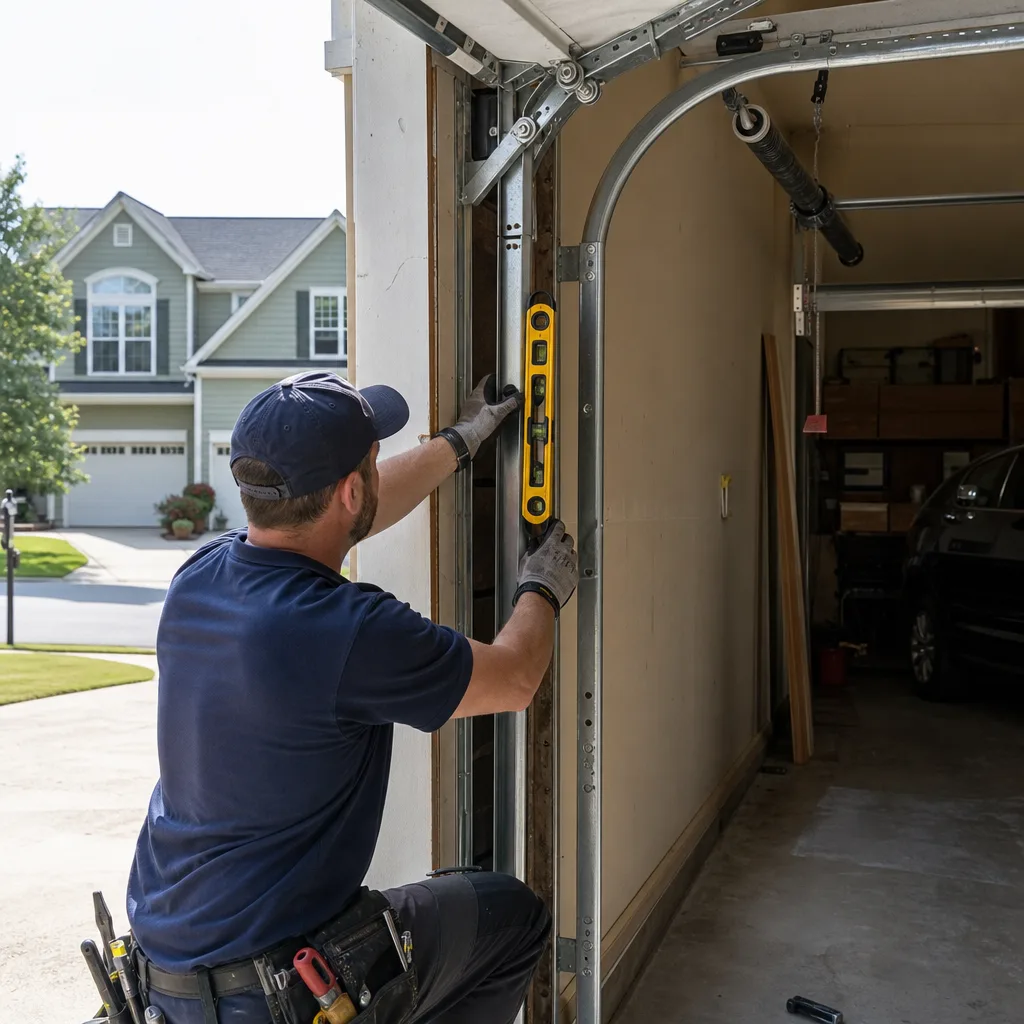
Buford’s mean August relative humidity runs between 75-90% overnight, and the dew point regularly stays above 70°F for weeks straight. That’s the environment that kills garage doors slowly. The damage isn’t dramatic. It’s pitting on spring coils, swelling on wood door skins, and a bottom seal that holds water against the door’s lower panel instead of shedding it.
What the humidity attacks, component by component
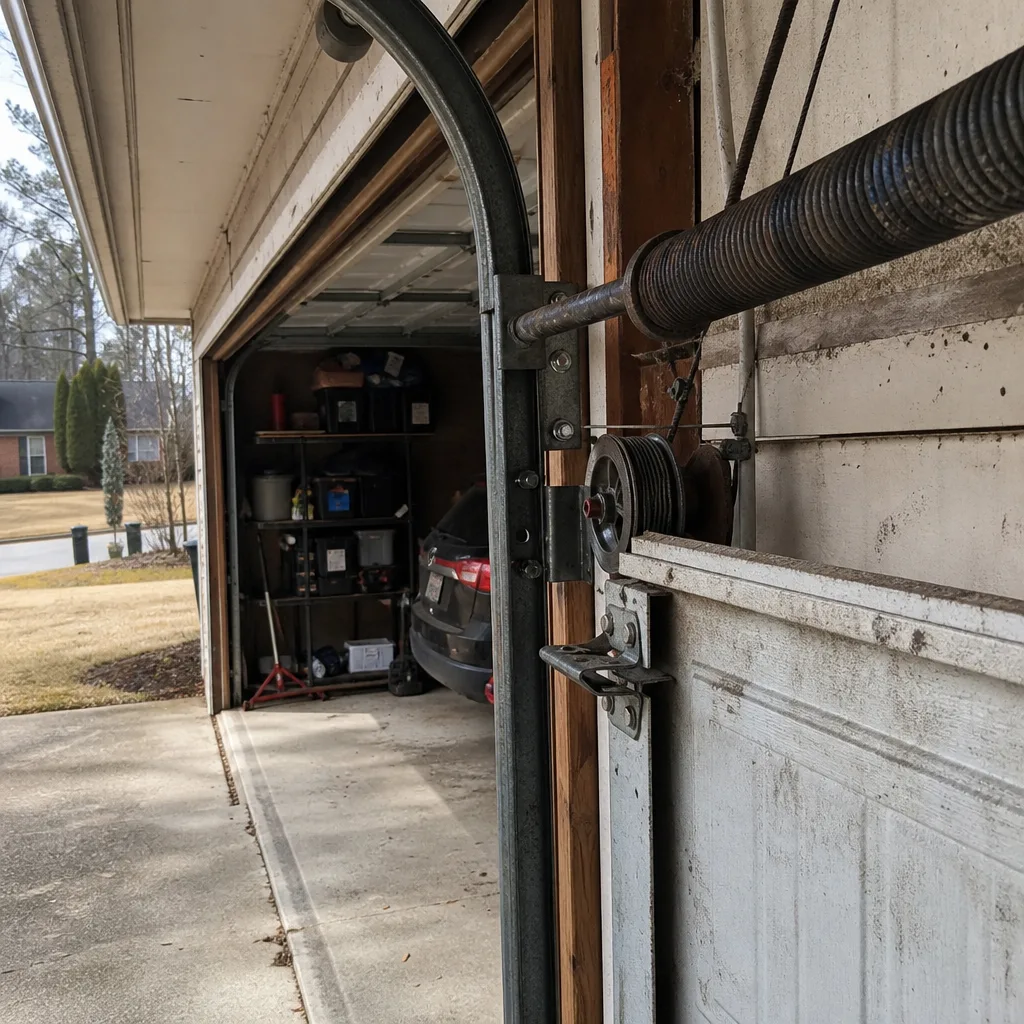
- Torsion spring coils: Every coiled spring on every major brand we service, from LiftMaster to Wayne Dalton, sits uncoated at the flex points. Morning condensation settles into the coil gaps and doesn’t evaporate until afternoon. Over 3-5 summers, that’s thousands of wet-dry cycles on the same steel. The failure mode is a clean snap at the coil, often on a morning when the door hasn’t been opened yet.
- Wood door skins (Amarr, Clopay, and older designs): Wood is a moisture sponge. In August, the bottom panel of a wood door can absorb enough water to swell 1/8 inch, which is enough to bind against the weatherstripping and make the door feel like it’s fighting the opener. The fix before it fails: check the bottom panel face for paint bubbling or peeling, which indicates the seal has failed and the wood is taking water.
- Bottom seals: The rubber strip along the bottom edge is a sacrificial part. In Buford humidity, it compresses and hardens faster than in dry climates. A hardened seal transmits water upward into the panel. The test: run your hand along the seal in the morning. If it’s stiff and glazed, it’s done.
- Track and hinge lubrication: Grease breaks down faster in high dew points. We see doors that were greased in May and are dry by August. The low-tech test is the sound: a door that squeaks or pops at the halfway point has lost its lubrication layer at the stress points.
The August inspection that catches damage before it compounds
- Open the door halfway and release it from the opener (pull the red handle). It should stay put without creeping. If it drops, the spring is losing tension, and August is when we see the most false “the door is fine” assessments because humidity masks spring wear.
- Look at the coil gaps on the torsion spring. You want consistent spacing. If you see a gap wider than a dime in one spot, that coil is deforming and the spring is in its last season.
- Run a dry cloth along the bottom seal. If it comes back with black residue, the seal is degrading. Replacements are under $30 and take 20 minutes.
- Check the battery on your opener. Buford thunderstorms knock out power regularly in August, and a dead backup battery means a door that can’t open when the power is out.
In our experience, the homeowner who does that four-step check in August saves, on average, one emergency service call per year. The homeowner who doesn’t is the one calling us in January when the door won’t lift at all. If you’d rather have a technician perform the inspection and hand you a documented photo record of what was found, that’s a service we provide across Buford. Written price before any work starts, per Clause 1 of The Haven Standard.
January Freeze-Thaw: Why Your Door Feels Heavy
Every January, we field the same set of calls from Buford homeowners: “The door opened fine yesterday, but this morning it crawled up and sounded like it was grinding.” The most common cause is not a broken part. It’s physics.
Steel contracts in cold. Torsion springs, which counterbalance the weight of the door, lose a small percentage of their lifting force as temperature drops. The difference is normally imperceptible on a 250-pound door. But in Buford’s freeze-thaw cycle, two things compound:
- Cold grease in the opener’s gear case thickens, so the motor works harder at the same energy output.
- Condensation from the previous warm day has frozen on the track and rollers, adding friction.
The result is a door that feels 20-30 pounds heavier at 7 a.m. than it did at 2 p.m. the day before. That’s normal, up to a point. The question is: how do you distinguish normal cold-weather load from a failing spring or a low-tension cable? The answer is a simple test that takes 90 seconds.
The 90-second January spring test
- Close the door completely.
- Pull the emergency release handle (the red cord hanging from the opener rail). This disengages the door from the motor.
- Manually lift the door by the handle. A properly balanced door lifts smoothly to waist height and stays there with no help.
- If the door is heavy to start, or if it drops when you release it at waist height, the spring is either broken or losing tension.
If the door passes that test, the cold-weather heaviness is friction and cold grease, not spring failure. You can address it with a lithium-based spray lubricant on the track and rollers. Do not use WD-40. It strips the existing lubricant and makes the problem worse by spring.
If the door fails that test, don’t try to adjust the spring yourself. Torsion springs are under 180-250 pounds of twist at rest, and an untrained adjustment can snap bones or worse. This is the one component on your garage door we tell every homeowner to leave alone. We see the aftermath of DIY spring work every January in Buford, and it’s the worst call of the year to run-see our DIY vs Professional Garage Door guide for Buford homeowners. If you feel the door fight you during the test, call us, and a technician will come out, measure the spring, and give you a written price before touching anything.
The freeze-thaw cycle and cable tension
The other January failure we see in Buford is low-tension cables. These are the steel cables that run from the drum at each end of the torsion bar down to the bottom brackets of the door. In freeze-thaw weather, the cable’s length changes by a few thousandths of an inch as steel expands and contracts. Normally that’s irrelevant. But when a cable’s anchor point at the bottom bracket is already corroded from Buford summers, the January cycling can pull the cable off the drum or snap the anchor. The symptom is a door that jerks or sags on one side during opening.
A jerking door is not a lubrication problem. It’s a cable or drum problem, and it gets worse every cycle. Call before it becomes a door off its track.
Spring Storm Prep: Wind Load and bracing in Buford
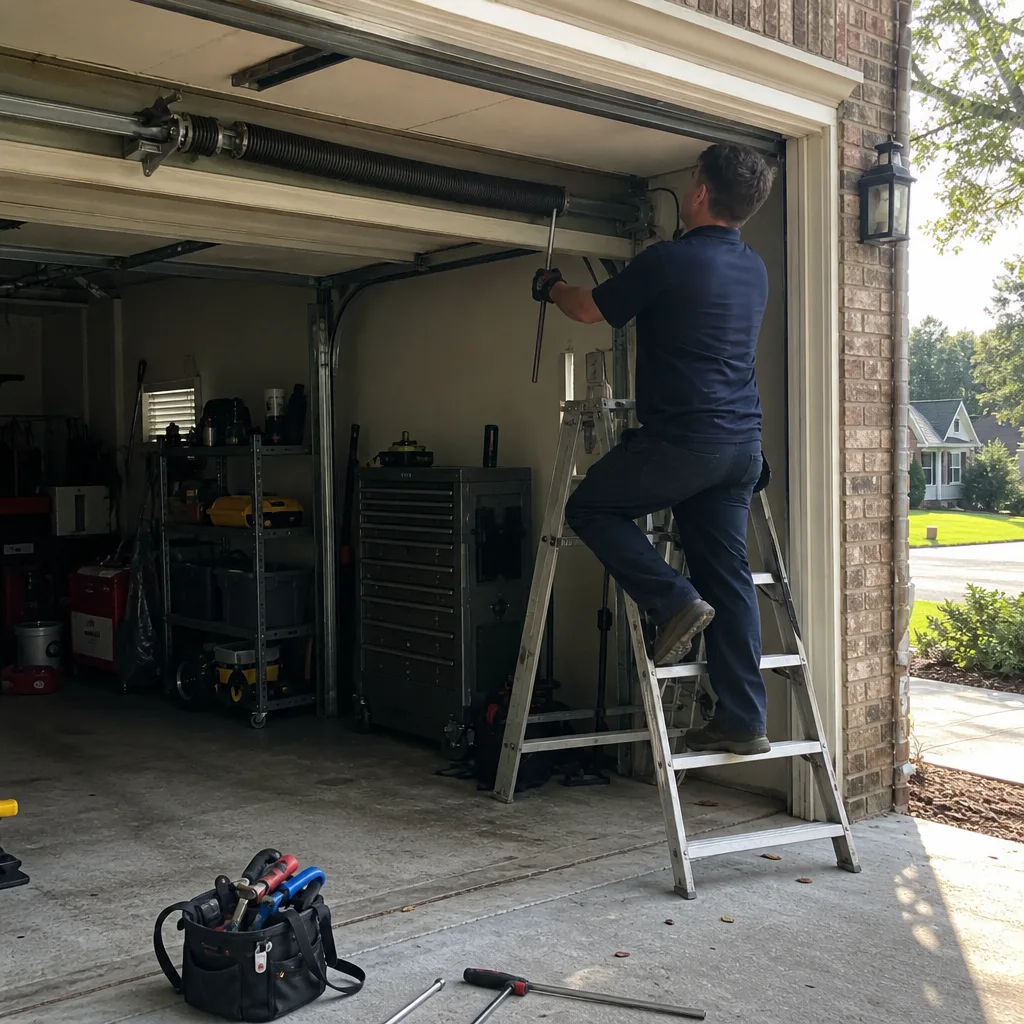
Buford sits in the northern edge of Georgia’s severe weather corridor. March and April bring the squall lines and supercell conditions that produce straight-line wind gusts between 50 and 70 mph, and those gusts are what destroy garage doors. Not the rain. Not the hail. The wind pressure.
Every garage door sold since 2000 has a wind-load label, normally a sticker on the end stile or the bottom panel. It lists a design pressure in PSF (pounds per square foot). A standard residential door in Buford is typically rated for 20-25 PSF positive pressure and 20-25 PSF negative pressure, depending on the model and manufacturer. Here’s what that means in plain terms: the door is engineered to hold against about 90-100 mph wind speeds, but only if the door is braced to the manufacturer’s specification and the track system is in good condition.
The weak point in a Buford wind event is rarely the door panel. It’s the track and the cable system. When wind pressure pushes against the outside face of a closed door, the force transfers through the rollers to the vertical track. If the track brackets have loosened over years of thermal cycling, or if the track was installed with undersized lag bolts, the track can flex inward. Flexed track becomes the failure point, and a 16-foot door can come off its track in a single gust.
Wind-load checks to do before storm season
- Check the door label. If it’s missing, or if the door was installed before 2000, assume it’s under-braced for Buford’s wind exposure.
- Look at the vertical track brackets. They should be screwed or lag-bolted into wood studs, not just drywall or trim. If you can wiggle the bracket by hand, that’s a failure waiting for a March squall line.
- Inspect the bottom brackets where the cables attach. If the bracket is rusted or the cable strands are frayed, the door is not secure against wind-driven pressure cycling.
- Check for a strut system. Many older doors in Buford lack the horizontal steel struts that newer doors include as standard reinforcement. A door without struts flexes visibly in a 40-mph gust.
Brace kits: the upgrade most Buford doors are missing
If your door was installed before 2015 and has never been retrofitted, there’s a good chance it lacks a wind-load brace kit. These kits add steel struts across the top and bottom panels and reinforce the center stiles. They’re a small fraction of the cost of a full door replacement, and they convert an unbraced door to a code-compliant wind load rating. We install brace kits for homeowners across Buford, particularly in neighborhoods west of I-985 that get the full force of spring systems moving up from the Gulf.
The other pre-storm service we recommend every March: a track and cable tension check. It’s the cheapest insurance against the most expensive failure mode we see in Buford storm season: a door that’s been blown off its track, with a bent panel, a snapped cable, and an opener that’s been run into a wall because the emergency release wasn’t pulled.
Cable and Drum Inspection: Summer Heat Cycling Damage
Here’s something the generic maintenance guides never mention: in hot climates like Buford’s, the repeated thermal expansion of steel cable anchor points degrades them faster than in northern states. We replace more cable anchor brackets and drums in Buford than our counter parts in cooler regions see in twice the service volume.
The mechanism is simple. The steel cable and the aluminum or galvanized drum expand and contract at different rates as the garage heats from 50°F at night to 110°F in the afternoon (a daytime attic temperature that’s normal in Buford garages from June through September). Each cycle applies a tiny amount of movement at the anchor point: the looped end of the cable where it attaches to the bottom bracket. Over 1000-plus cycles per year, that loop loosens and the cable begins to fray at the crimp.
Then comes the January morning when the door is cold, the spring is slightly weaker, and the cable is carrying a larger share of the door’s weight. The frayed anchor lets go. The door drops on one side. The panel can crack. The roller can come out of the track. And now it’s not a $40 cable replacement.
The annual inspection that prevents the January drop
- Look at the cable where it enters the drum. You’re looking for any strand separation or a flat spot. A healthy cable is round and smooth. If you see individual wire strands splaying, the cable is in its last weeks.
- Look at the drum itself. The spiral groove that guides the cable should be clean and uniform. If the groove has worn wide or unevenly, the drum is shot, and a drum replacement on a LiftMaster or Raynor setup is not a DIY part.
- Look at the bottom bracket. This is where the cable anchors to the door. If the bracket shows rust staining or if the anchor loop is deformed, the bracket needs replacement. A bracket is a $15 part. The door panel it rips out of when it fails is a $400-plus panel.
- Test the balance. Do the 90-second spring test from the January section. A door that passes in October may fail in February, but catching the imbalance in October gives you time to schedule the repair before the cold snap.
Do this inspection every October, before the temperature swings begin in earnest. It takes 15 minutes with a flashlight and a step stool. In our experience, about one in four Buford garage doors over seven years old has a cable or drum issue visible on this inspection. That’s not a statistic from a study; that’s what we document on the photo records we hand to customers after each inspection.
Month-by-Month Maintenance Checklist
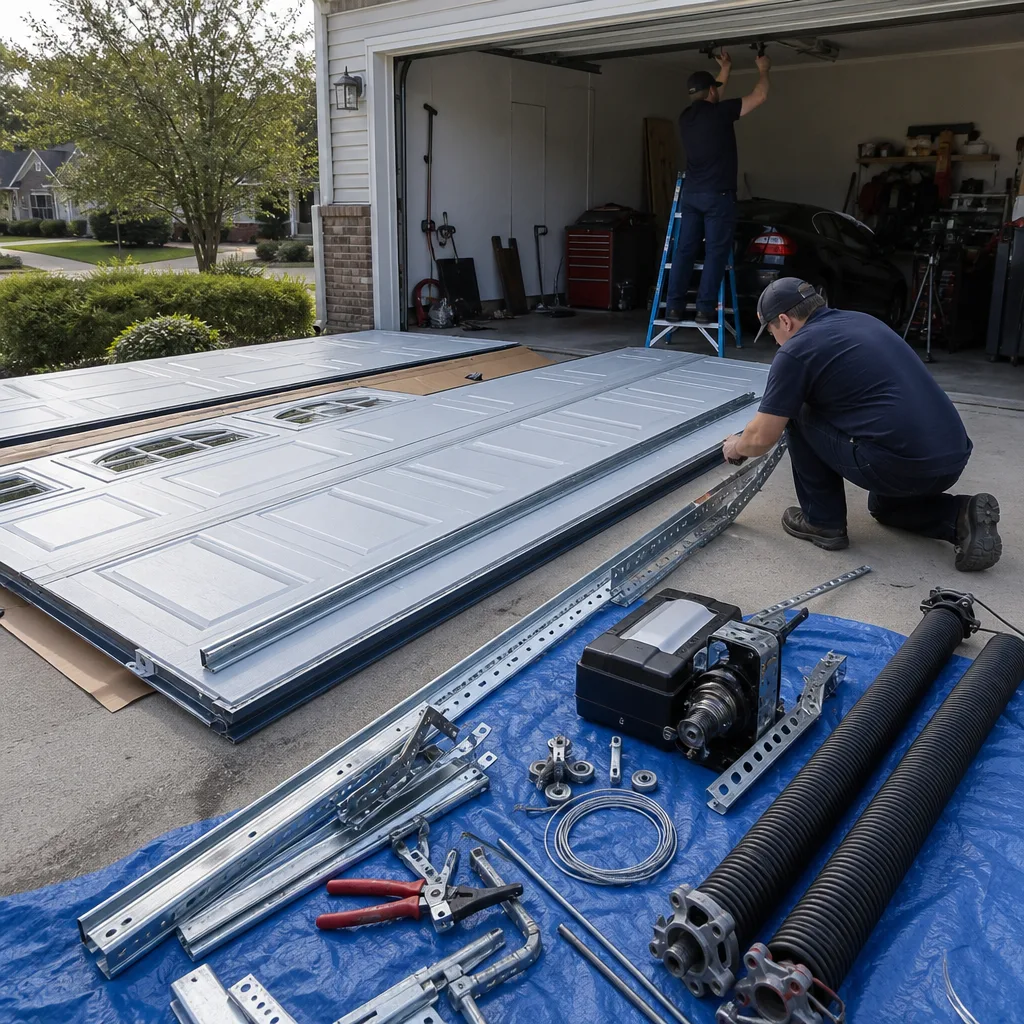
Here’s the Buford-specific maintenance calendar, distilled from the sections above. Print it and put it on the garage wall. Each month takes less than 20 minutes, and every task below is one a homeowner can do without calling a technician.
January
- Do the 90-second spring test on the first sub-40°F morning.
- Listen for grinding or hesitation from the opener. A LiftMaster or Raynor opener that’s working hard in the cold is telling you something.
- Check the bottom seal for ice adhesion. If it’s frozen to the floor, don’t force the opener. Break the ice seal by hand.
March
- Check all track brackets for looseness by hand. Tighten any that wiggle.
- Inspect cables and drums for fraying or wear (full checklist in the section above).
- Verify the wind-load label is present and legible.
June (the most important month)
- Apply lithium-based spray lubricant to hinges, rollers, and the torsion spring coils. Work the door up and down twice to distribute it.
- Check the balance with the 90-second test. Do this before the August humidity peak, not after.
- Inspect wood door panels for paint bubbling or peeling, particularly on the bottom panel.
- Test the opener’s safety reverse mechanism. Place a 2×4 flat under the door and close it. The door should reverse within two seconds of contact.
August
- Do the four-step humidity inspection listed in the August section.
- Check the bottom seal for stiffness and glazing. Replace if it’s lost its rubber feel.
- Look for condensation staining on the door’s interior face, which tells you where water is pooling.
October
- Repeat the cable and drum inspection from the summer heat cycling section.
- Re-lubricate after the summer’s heat and humidity have broken down the June application.
- Do the 90-second spring test again, and note the results. If the door is noticeably heavier than it was in June, schedule a spring inspection before January.
December
- Check the opener’s backup battery. Many openers sold after 2015 have one, and it should hold a charge for at least an hour of operation.
- Inspect the weatherstripping on the side and top jambs. The gap between door and jamb should be no more than 1/8 inch.
- Do a final track check before the January cold snap.
If any of these inspections reveals something you don’t want to handle yourself, Garage Door Installation in Buford covers full replacements, and our technicians can assess any issue and hand you a written price before any work starts.
Common Mistakes to Avoid
- Lubricating with WD-40. WD-40 is a solvent, not a lubricant. It strips the existing grease and leaves metal dry. In Buford’s humidity, dry metal starts corroding within weeks. Use lithium-based spray grease or white lithium.
- Following a “fall and spring only” schedule from a national site. That schedule misses the two Buford events that cause the most damage: the August humidity peak and the January freeze-thaw transition. Lubricating in October is not early enough for Buford’s dew point spike.
- Ignoring a door that “sounds fine” but feels heavy. A failing torsion spring doesn’t always break at once. It loses tension gradually, and the opener’s motor works harder to compensate. By the time you hear it, the spring is days from snapping.
- Adjusting or replacing a torsion spring yourself. We say this in the January section and we’ll say it again: torsion springs carry enough stored energy to break bones. No YouTube video replaces a trained technician with the right winding bars.
- Forcing an opener when the door is frozen to the floor. The opener’s gear is designed to move the door, not to break an ice seal. Forcing it strips the gear, which is a $180-$250 repair on a LiftMaster or Chamberlain opener. Break the ice by hand first.
- Skipping the spring balance test because “the door opens.” The test takes 90 seconds and reveals problems months before a break. Every Buford homeowner should know how to do it.
- Deferring a cable replacement because “it hasn’t snapped yet.” A frayed cable is a failure that’s already in progress. It doesn’t get better with time, and when it goes, it typically takes a door panel and a track section with it.
When to Call a Professional
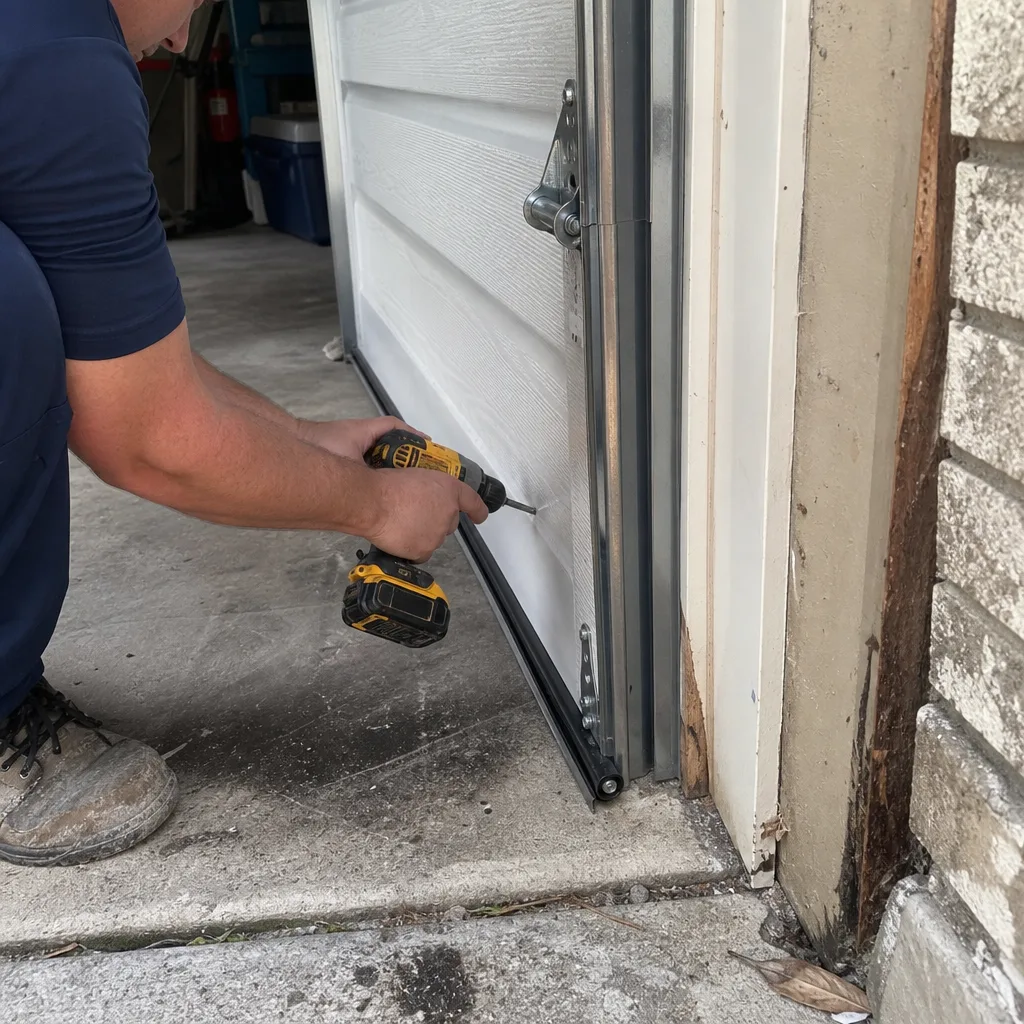
Some garage door work is genuinely safe for a homeowner: lubricating hinges, replacing a bottom seal, tightening track bolts. Other work is not. Call a professional if you see a snapped or stretched torsion spring, a frayed or off-drum cable, a door that’s come off its track, a door that sags on one side, or any opener that’s clicking without moving the door. These failures involve stored tension and falling weight, and the cost of a pro is a fraction of the cost of a hospital visit or a crushed finger. We see DIY spring and cable work go wrong every year in Buford, and it’s the one area where we won’t walk a homeowner through a fix over the phone. Servo Garage Doors Buford offers free estimates in Buford. Call (470) 458-9647, and a technician will come out, assess the issue, and hand you a written price before any work starts.
Frequently Asked Questions
Twice a year, in June and again in October. The June application carries you through the August humidity peak, and the October application carries you through the January freeze-thaw cycle. Use a lithium-based spray grease on the hinges, rollers, and spring coils. Call (470) 458-9647 if you’d rather have a technician do it as part of a full inspection, which includes a written report and photo record.
A torsion spring replacement in Buford typically runs between $180 and $340, depending on spring size and door weight-details in our Garage Door Cost Breakdown for Buford homeowners. The price is quoted and agreed in writing before any work starts, per Clause 1 of The Haven Standard, so there are no surprises when the technician leaves. You’ll also get a photo record of the failed spring before the replacement is quoted, because that’s Clause 4.
Popping in cold weather usually comes from metal contraction in the track and hardware, not a failing component. It’s most common in Buford during the January freeze-thaw cycle, when the track cools and contracts overnight. If the popping is accompanied by visible jerking or sagging, that’s a cable or drum problem, not a temperature issue, and it needs a professional look.
No. The cable is under the full tension of the spring system, and replacing it without releasing that tension properly can cause the drum to spin violently and the cable to whip. This is a job for a trained technician with the right winding bars. We replace cables across Buford every week, and the price is always written and agreed before work starts.
Look for the wind-load label on the door’s end stile or bottom panel. It lists a design pressure in PSF. If the label is missing or the door was installed before 2000, assume it’s under-braced for the wind gusts Buford sees in March and April. A brace kit retrofit is a fraction of the cost of a full door and can bring an older door up to a code-compliant rating.
We service all of Buford, including Buford City, the Lake Lanier communities, the neighborhoods along Buford Highway, and the areas around Mall of Georgia. We also cover Sugar Hill, Flowery Branch, and the surrounding Gwinnett and Hall county areas. Call (470) 458-9647 and a live person answers, 24 hours a day, including holidays.
If your opener runs but the door doesn’t move, or if it’s making a grinding noise from the motor head, the issue is usually the gear or logic board: repairable on most LiftMaster, Chamberlain, Genie, and Raynor units. If the opener is over 15 years old, or if the rail is bent, replacement is often the smarter call. We inspect and diagnose either way, and the price is written before any work starts. Learn more at Garage Door Opener Repair & Installation in Buford.
The Haven Standard is the documented set of rules that Servo Garage Doors operates under. Clause 1 requires a flat, written price and written scope before any work starts. Clause 4 requires the technician to photograph the failed component before quoting a replacement. It’s an independent local business’s own operating standard, not a manufacturer program or an industry certification. The full terms are on the Servo Garage Doors Buford home page.
The Bottom Line
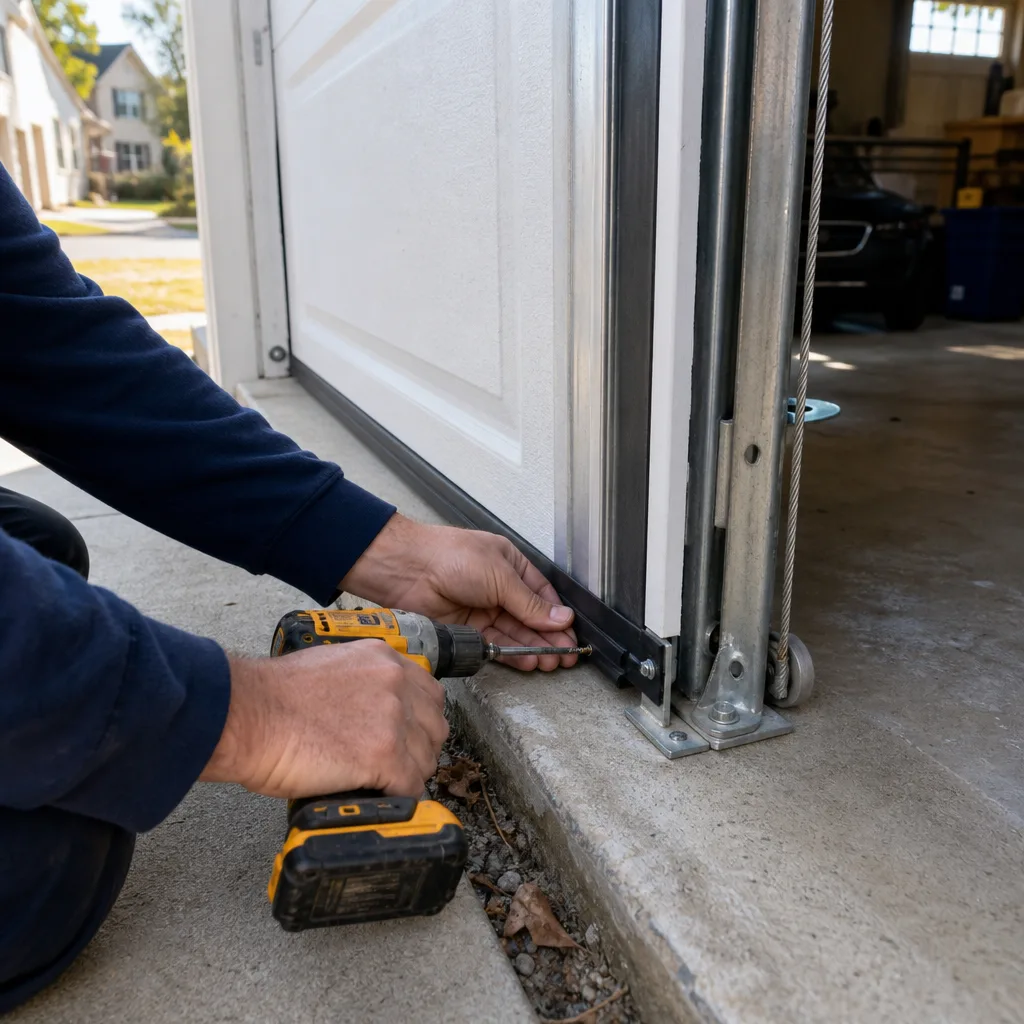
Buford’s garage door failures track a predictable calendar, and that calendar is not the one in the national maintenance guides. The August humidity peak corrodes springs and swells wood panels. The January freeze-thaw cycle makes doors feel heavy and reveals weakening springs. The March-April storm window tests wind-load ratings and cable anchor points that have been heat-cycled since summer. The discipline that prevents most of it is boring: a spring balance test every season, a cable and drum inspection every October, and lithium grease in June and October. No single task takes more than 20 minutes. The ones that matter most cost nothing. And if any inspection turns up something you don’t want to touch, Servo Garage Doors Buford will send a technician, hand you a written price before work starts, and leave you with a documented photo record of what was found and what was done. For more guides & resources, visit our blog.
Written by Marcus Deller, Owner at Servo Garage Doors Buford, serving Buford since 2015.