
Last updated September 20, 2026
Full 25-point door and opener safety check with every visit - springs, cables, rollers, tracks, and your LiftMaster or Chamberlain opener included
You get a price before we start. It does not change when the truck arrives.
Full-view glass
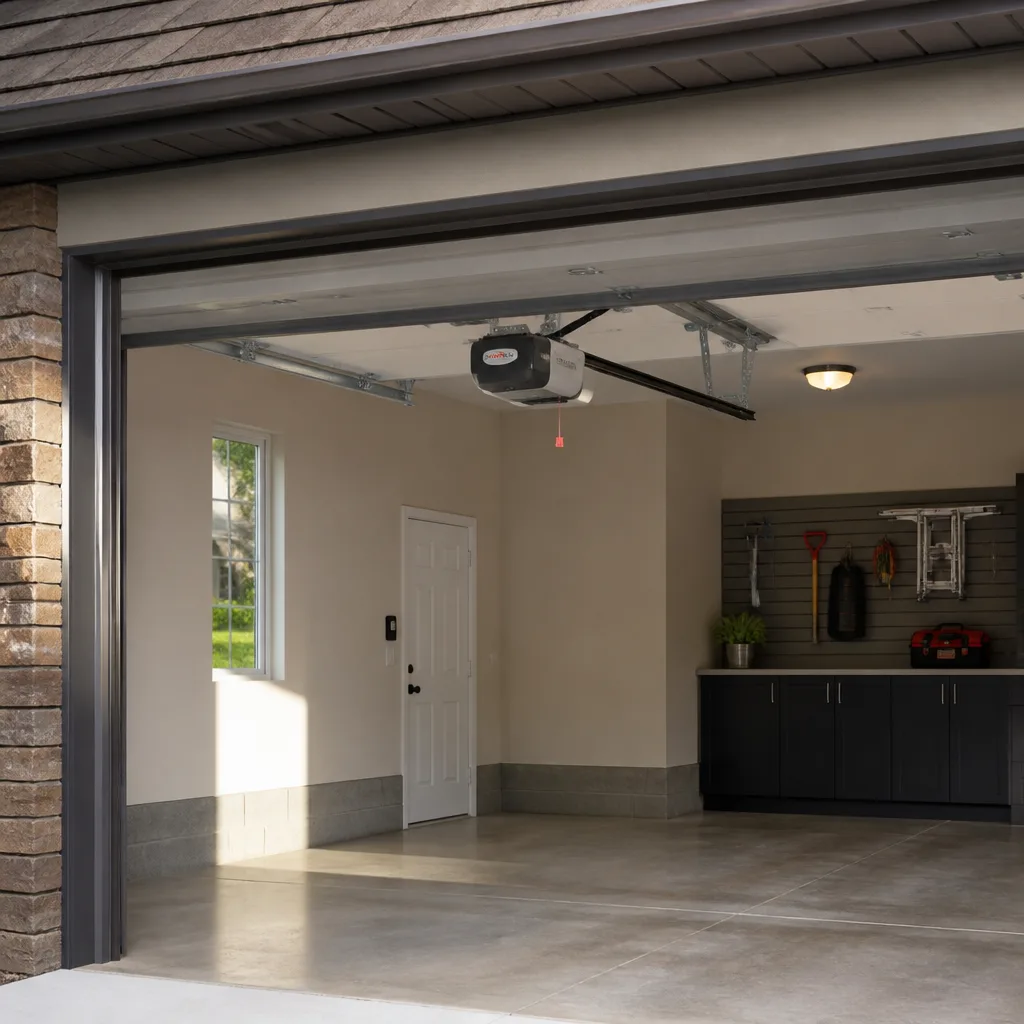
Chamberlain openers
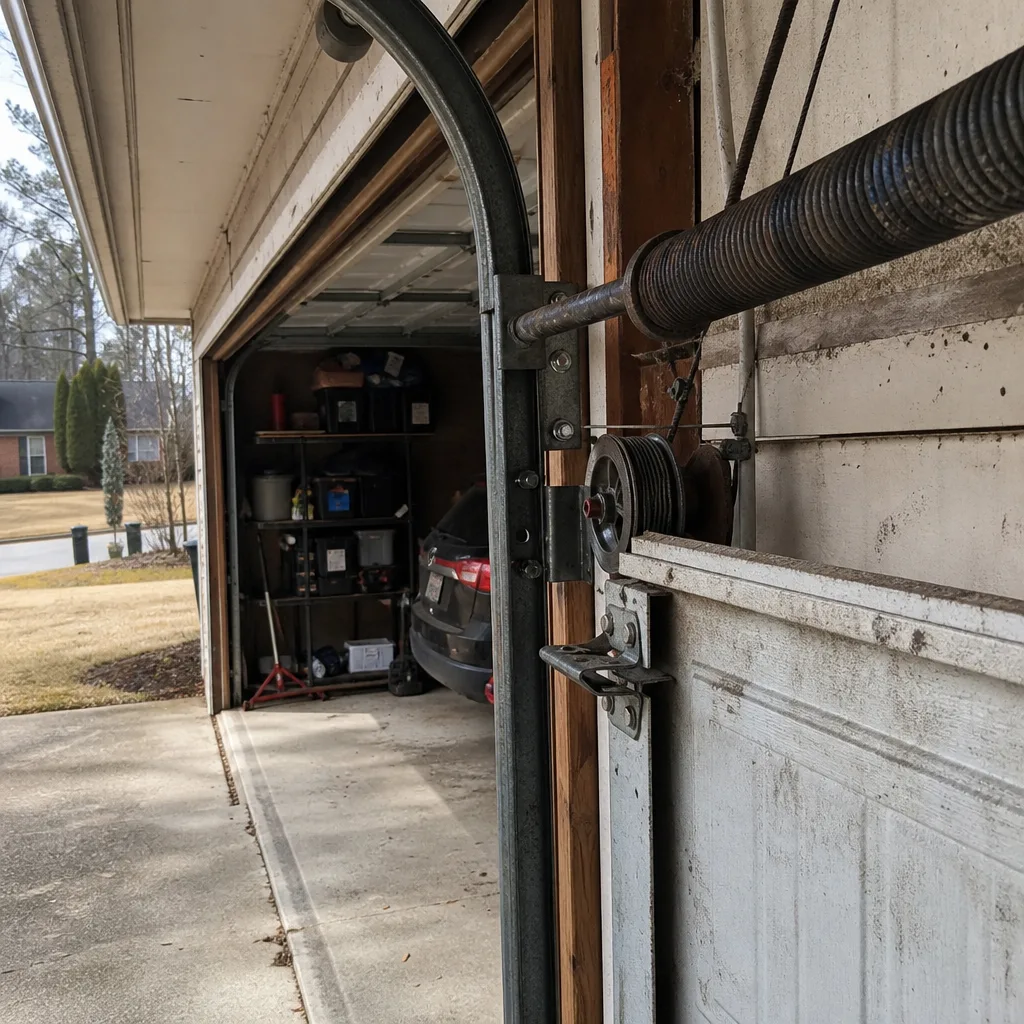 Before
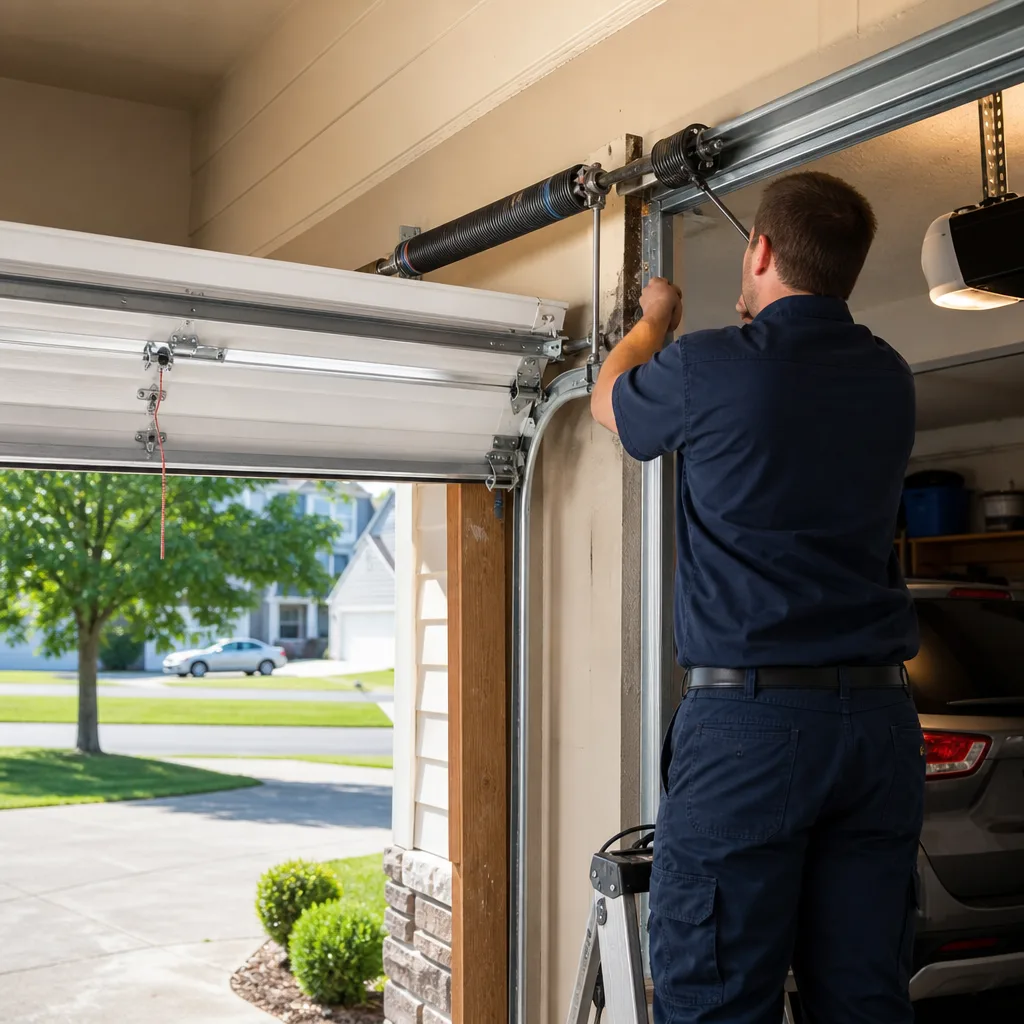 After
After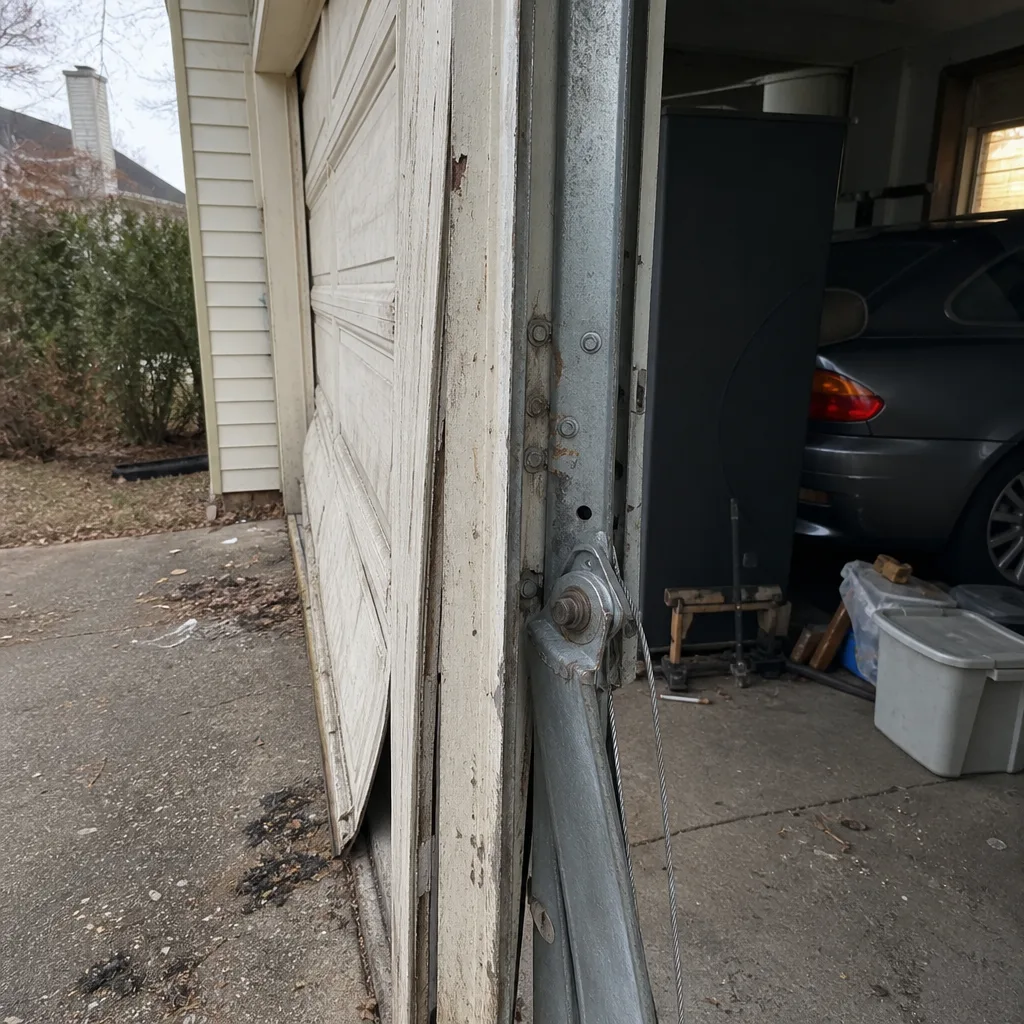 Before
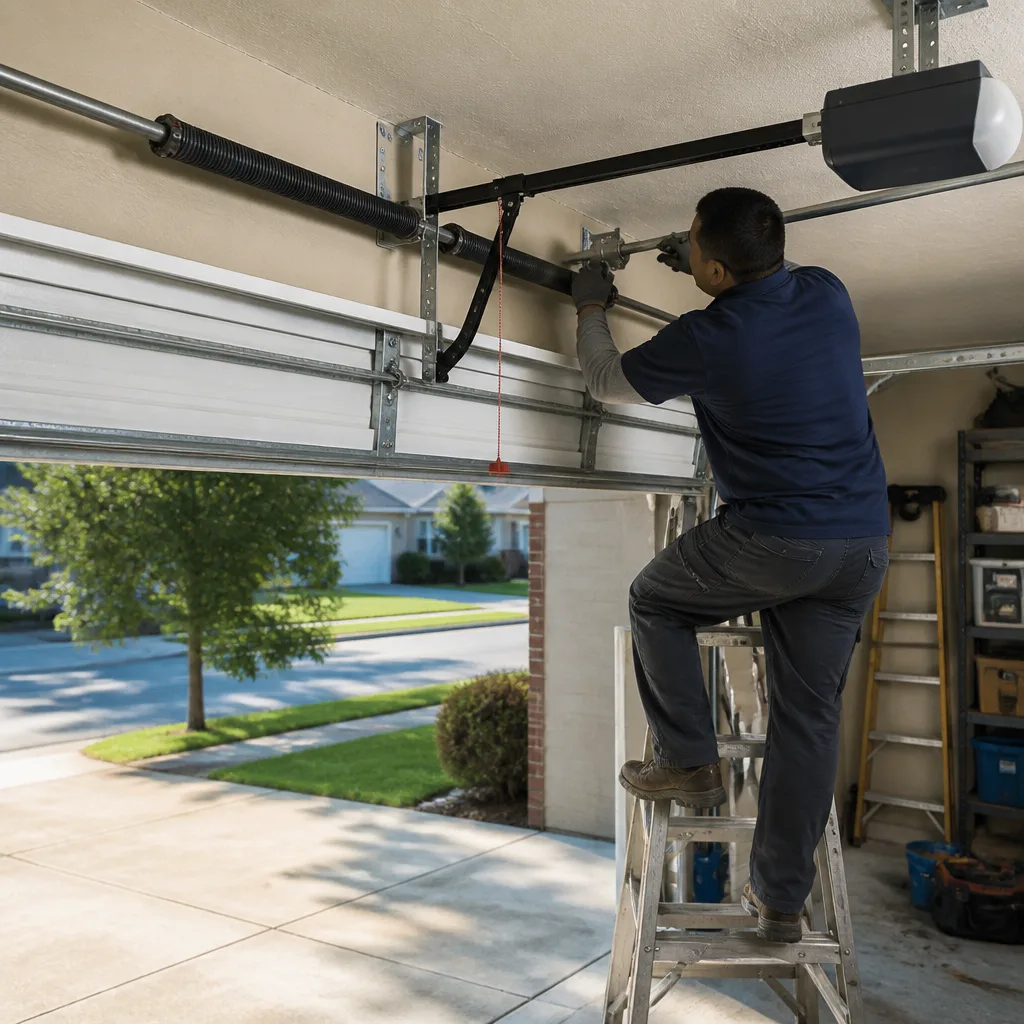 After
After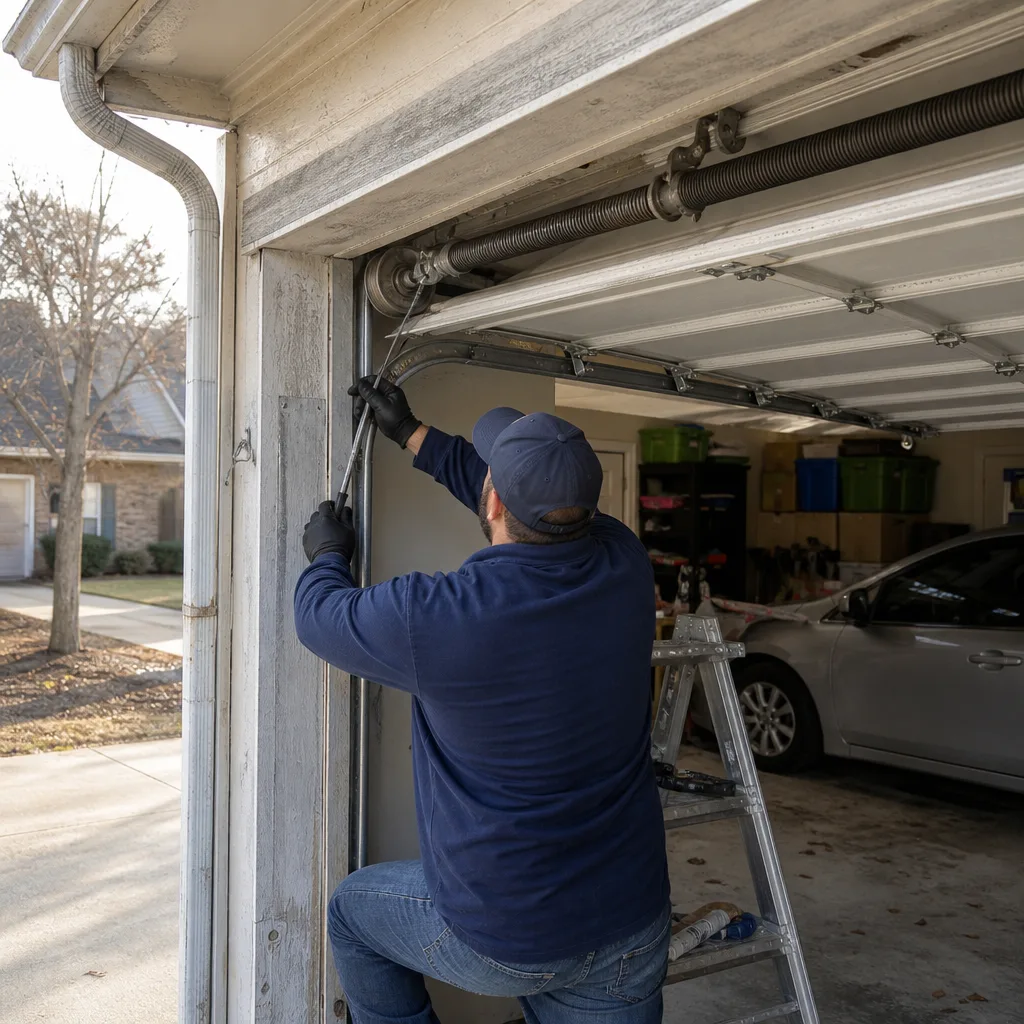 Before
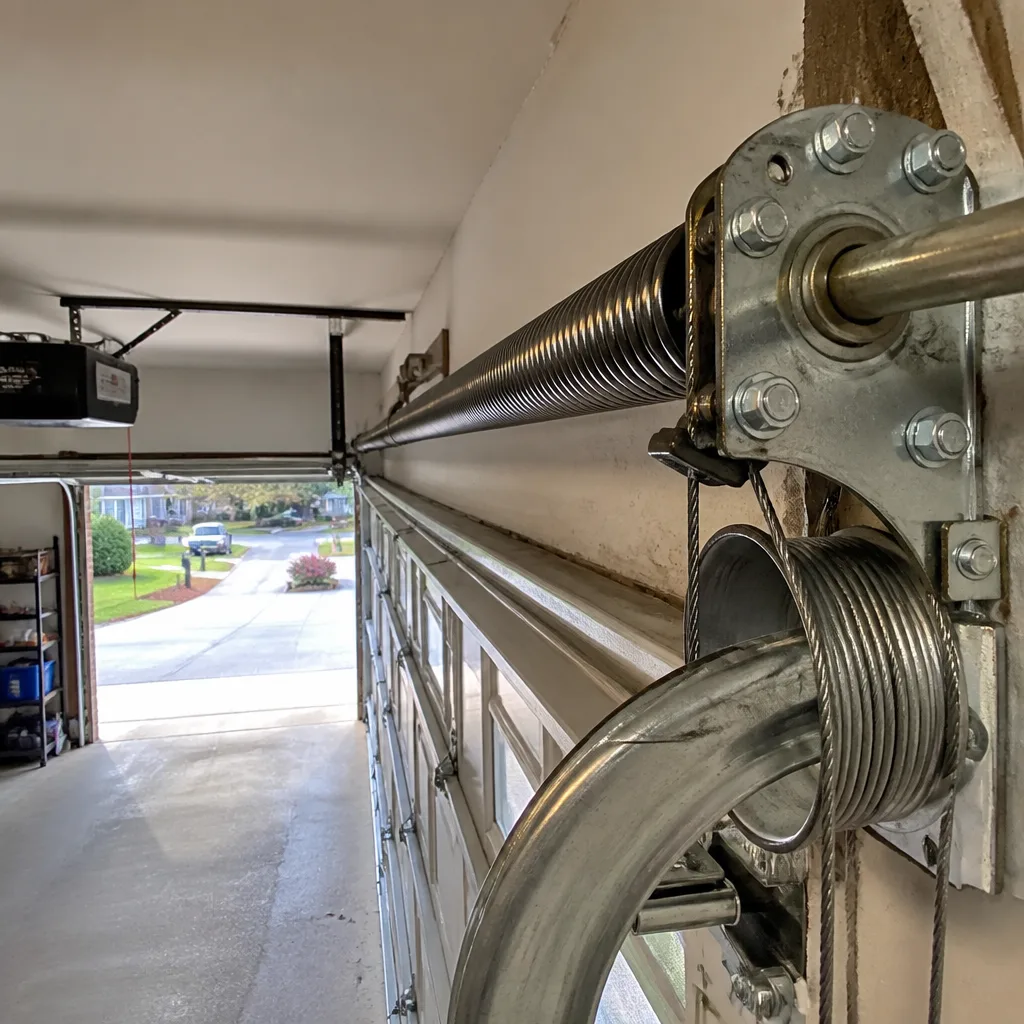 After
AfterHow to Hire a Garage Door Contractor in Buford: A Step-by-Step Guide
Georgia does not require a specialty contractor license to replace a garage door or its components. Anyone with a truck and a wrench can legally take the job in Buford. The question is not whether they’re licensed. It’s whether they’ll put the price in writing before they pull the old door off the tracks. This guide walks through the documentation-first hiring process that separates contractors who price from evidence from those who price from a guess, and it covers the five contract items, the insurance verification step, and the emergency-call red flags that most Buford homeowners never think to check until the invoice arrives. For more guides & resources, see our blog.
Quick Answer
Hire a garage door contractor in Buford by requiring a written, itemized quote before any work begins, verifying insurance with a Certificate of Insurance rather than a verbal claim, and confirming that the contractor photographs the failed component before quoting a replacement. A legitimate contractor will name the part, the labor hours, the warranty term, and the total price in writing without being asked. If any of those is missing, keep looking.
Table of Contents
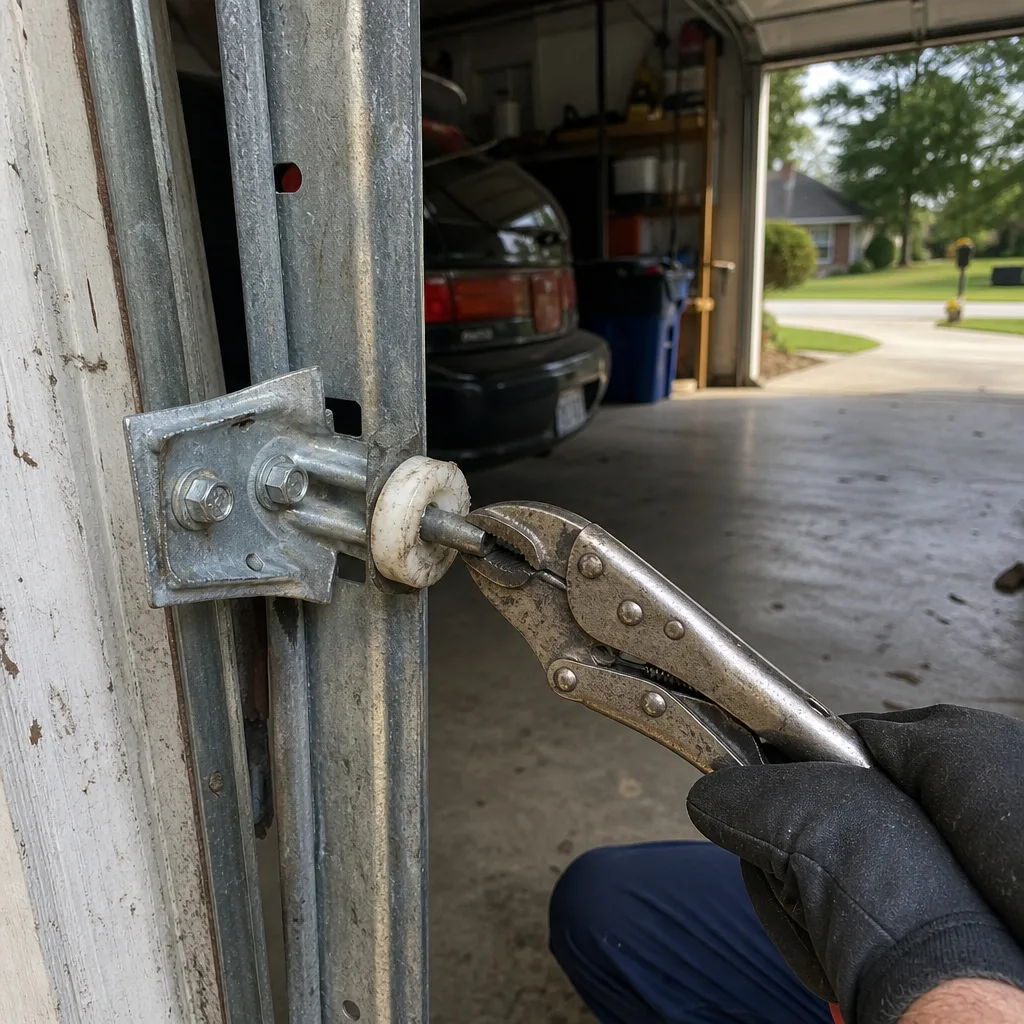
- Why Licensing Does Not Protect You in Georgia
- The Five Items a Written Quote Must Contain
- How to Verify Insurance with a COI
- Interview Questions That Reveal Diagnostic Pricing
- Red Flags Specific to Emergency Calls
- How to Compare Bids Without Getting Lost
- What Brand Names Actually Tell You
- Common Mistakes to Avoid
- When to Call a Professional
- Frequently Asked Questions
- The Bottom Line
 Before
 After
AfterWhy Licensing Does Not Protect You in Georgia
The state of Georgia licenses general contractors, electricians, plumbers, and HVAC technicians. It does not license garage door contractors as a specialty trade. That means a Buford homeowner cannot call a state board, look up a garage door license number, and confirm the person at the door passed a competency exam. The credential simply does not exist.
What does exist is the general contractor license, which requires passing an exam, proving financial stability, and carrying a minimum level of insurance. A garage door company may hold one, and that is worth asking about. But most garage door work in Buford and throughout Gwinnett County is performed by unlicensed technicians operating under a business license issued by the city or county. A business license proves the company registered with the local government and pays its occupation tax. It proves nothing about competence, insurance, or warranty practices.
That gap is not theoretical. It is why homeowners in Buford report wildly different outcomes from the same repair. One contractor replaces a torsion spring and charges $220 with a written warranty. Another replaces the same spring and charges $600 because the homeowner had no way to compare the part, the labor time, or the terms. The licensing vacuum places the entire burden of protection on the contract itself.
So when you evaluate a garage door contractor in Buford, do not lead with “Are you licensed?” Lead with “Will you give me a written quote with part numbers and labor hours before you start?” The answer to that question tells you more than any credential number.
The Five Items a Written Quote Must Contain
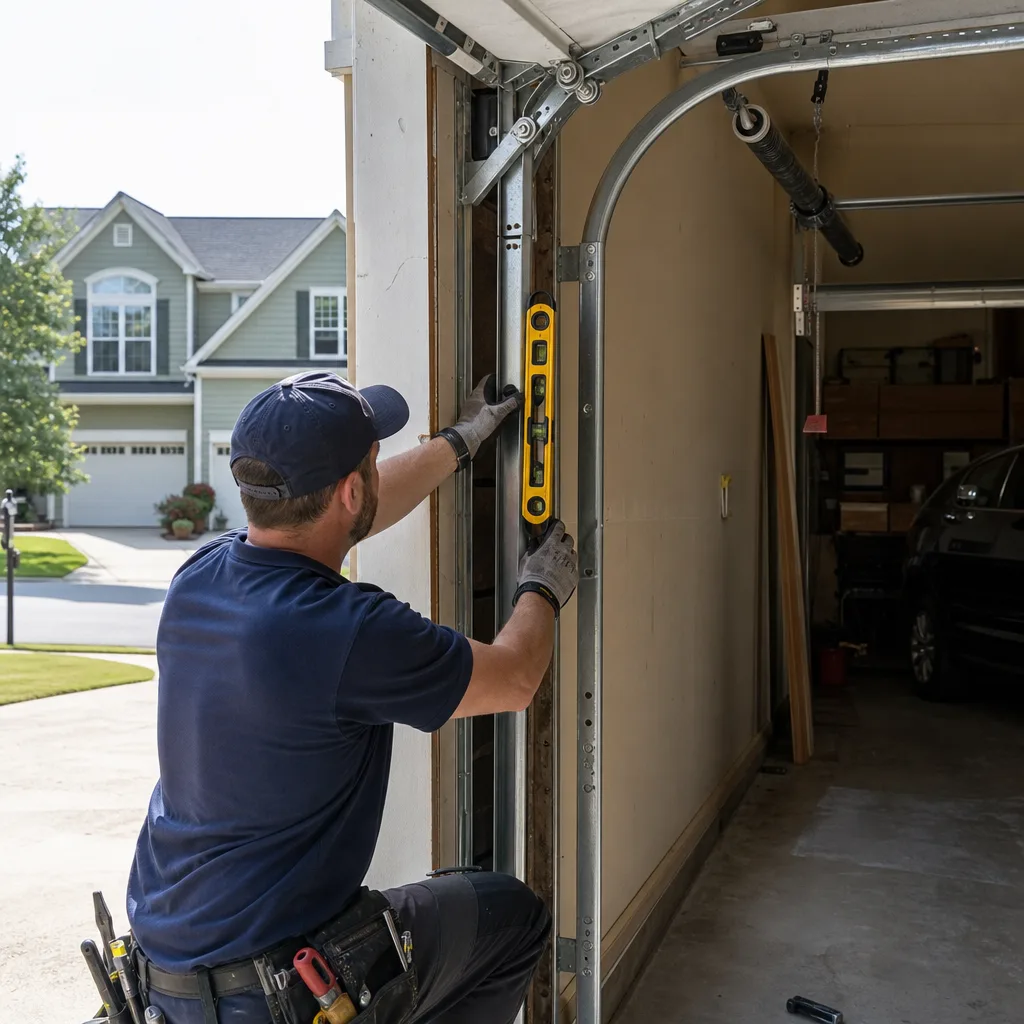
A verbal quote is a guess with a handshake attached. A written quote is a document you can enforce. In Georgia, a contract for home repair work is enforceable when it contains the scope, the price, and the parties. But “scope” is a fuzzy word. For garage door work, an enforceable written quote contains five specific items. If any one is missing, the contractor can change the terms after the fact and you will have a hard time disputing it.
- Part numbers. “New spring” is not a part number. “Torsion spring, 0.225 wire diameter, 32-inch length, 2-inch inside diameter” is a comparison point. Part numbers let you price-check the component online and let a second contractor quote the same job accurately. A contractor who will not name the part before pricing it is pricing you, not the job.
- Labor hours. The quote should state how many hours the job will take, or a flat labor rate for the defined scope. Labor is where most padding happens. Knowing the labor figure lets you compare bids that use identical parts.
- Warranty terms. The document should state what is covered, for how long, and what voids the coverage. A garage door spring warranty might be 2 years or lifetime depending on the part. The page should say which. If the warranty is only verbal, it does not exist.
- Trip charge disclosure. Does the contractor charge to come out? Is the trip fee waived if you approve the work? A written quote must disclose this before the truck rolls. Many Buford homeowners learn about a $75 trip charge only after the technician has already diagnosed the problem.
- A no-upsell clause. This is the item almost nobody asks for and the one that matters most. The clause states that the contractor cannot add work, parts, or fees beyond the written scope without a new written approval from you. Without it, “I noticed your rail is also worn” becomes an extra $180 on the final bill. Our own standard, Servo Garage Doors Buford home pricing practice, codifies this as Clause 1 of The Haven Standard: a flat, written price and written scope delivered before any work starts. No exceptions.
If the contractor hesitates on any of these five items, that hesitation is information. A legitimate operator writes these details down daily. It takes three minutes.
How to Verify Insurance with a COI
“Are you insured?” is the wrong question. Every contractor says yes. The right question is “Will you send me a Certificate of Insurance before the job starts?” A COI is a document issued by the insurance company that names the policyholder, the policy type, the coverage limits, and the policy dates. It takes the contractor five minutes to request from their agent.
What you are looking for on the COI:
- General liability coverage. This covers property damage. If the technician drops a door panel on your car or breaks a window, general liability pays. A reasonable minimum for garage door work is $500,000 per occurrence. Many legitimate companies carry $1 million or more.
- Workers’ compensation coverage. In Georgia, a business with three or more employees must carry workers’ comp. If the contractor has employees and cannot produce proof, you are the fallback payer if someone gets hurt on your property. Torsion springs store enormous energy and injuries in this trade are real.
- The policy is active. Check the effective dates. A COI from a canceled policy is a piece of paper with a logo.
- The named insured matches the company. A COI in a different name means the contractor is working under someone else’s policy, or not at all.
In Gwinnett County, certain jobs require proof of insurance before work begins, particularly when the work involves structural attachment points or when a homeowners association requests documentation. Buford’s older subdivisions, including those along Buford Highway and in the Mill Creek area, often have HOAs that ask for the contractor’s insurance certificate before approving exterior work. Have the COI ready before you file the HOA application.
Verbal insurance claims are worthless. A contractor who says “we’re fully insured” but refuses to produce the certificate is not insured, or is insured at a level that will not cover the risk. Walk away.
Interview Questions That Reveal Diagnostic Pricing
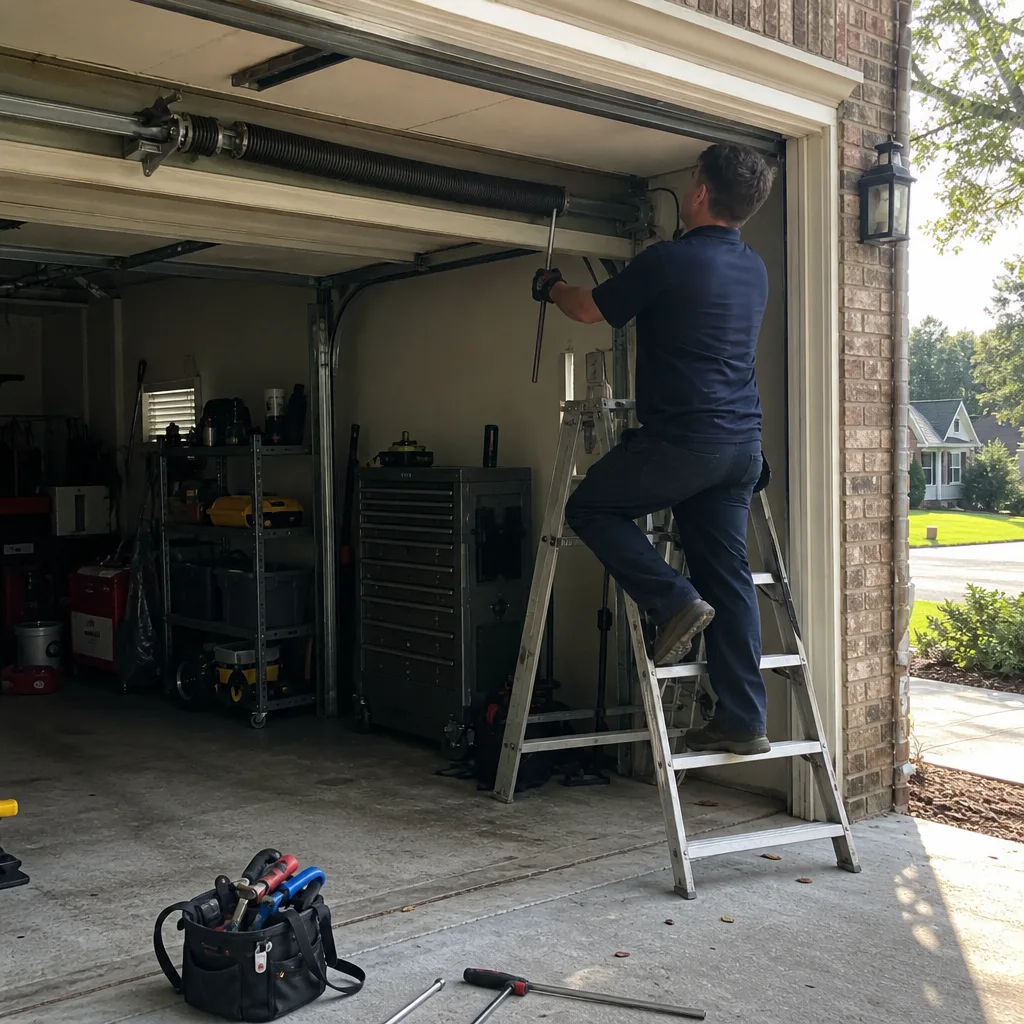
Here is the single most informative question you can ask a garage door contractor in Buford: “Will you photograph the failed component and show it to me before you quote a replacement?” The answer separates diagnostic pricing from guess pricing.
A contractor who diagnoses by evidence removes the old part, photographs the break, and shows you the failure before quoting a price. The photograph is the proof that the part actually failed. Without it, a technician can tell you the spring “looked worn” and recommend replacement of a component that had years left. The photograph is what creates accountability.
Our founding rule, written in 2015 and now codified as Clause 4 of The Haven Standard, is that the customer sees the failed part before anyone quotes a replacement. The technician photographs the broken spring, the stripped gear, or the failed logic board, and that photograph is part of the written record you receive when the job closes. You should expect the same from anyone you hire.
Other interview questions that separate professionals from guessers:
- “What is the wire diameter of the spring you will install?” A technician who answers with a number is measuring. A technician who says “standard” is guessing.
- “Will the quote include part numbers?” Covered above. The answer should be yes without hesitation.
- “Do you carry the common parts on the truck?” A professional carries torsion springs in multiple sizes, extension springs, cables, rollers, and common opener parts. If the answer is “we’ll have to order it,” you are paying for two trips.
- “What happens if the repair is not right?” Listen for a specific answer: a defined warranty period, a named contact, a process. “We’ll make it right” with no specifics is a warm feeling, not a commitment.
- “Who is doing the work today?” The person at the door should be the person named on the quote. Background-checked, uniformed technicians are the standard at our company; the license number and name are on the page, not buried in a contract appendix.
Red Flags Specific to Emergency Calls
Emergency garage door calls are where verbal quotes replace written ones and where Buford homeowners lose the most money. A door that will not open at 9 PM feels like a hostage situation. The contractor standing in your driveway knows it.
The emergency scenario breaks the normal hiring process because the homeowner has not had time to compare bids, check references, or verify insurance. The urgency is real, but the documentation requirement does not change. A legitimate contractor can produce a written quote at midnight just as easily as at noon. The pen works in the dark.
Red flags on emergency calls:
- The technician will not quote in writing. “I’ll write it up after” is the most common emergency-call phrase that precedes a bill double the initial verbal number. The verbal quote is a documented estimate of nothing.
- The technician recommends replacement instead of repair without evidence. If the door is 8 years old and the spring snapped, replacement is a recommendation, not a diagnosis. A 3-year-old door with a single failed part should be repaired. Ask to see the photograph of the failure before authorizing anything.
- The truck has no signage. Not always a dealbreaker, but an unmarked truck on an emergency call means you have no recourse if the work is substandard. The contractor’s phone number and company name belong on the vehicle.
- The technician asks for cash only. Legitimate operators take cards, checks, and payment apps. A cash-only emergency call is a contractor who does not want a paper trail.
- The quote changes after the door is opened. The technician starts the job and then “finds” additional problems. This is where the no-upsell clause matters. If the quote did not include the clause, you are negotiating against a disassembled door.
At Garage Door Repair in Buford calls, including emergencies, are answered by a live person 24 hours a day. The technician’s name and an on-the-way text are standard. The written quote is standard too. Urgency does not suspend documentation.
How to Compare Bids Without Getting Lost
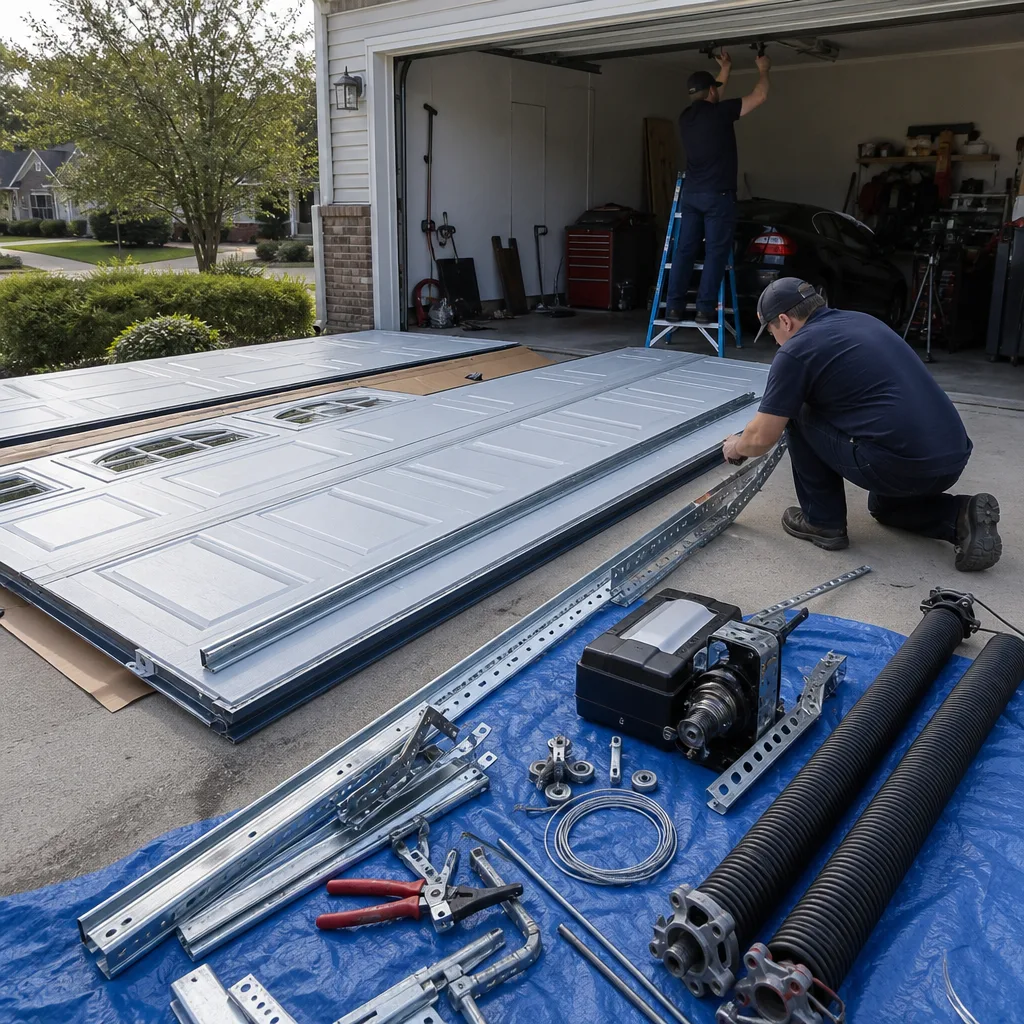
You have three written quotes in front of you. One is $320. One is $480. One is $590. The cheapest is not automatically the best, and the most expensive is not automatically the safest. Here is the method for comparing them without losing your mind.
First, normalize the parts. Look at the part numbers or part specifications on each quote. If one quote lists a spring with a wire diameter of 0.225 inches and another lists 0.250 inches, those are different springs. The 0.250 is heavier duty and costs more. Comparing them on price alone is comparing different jobs.
Second, isolate the labor. Subtract the component cost from the total on each quote. The remainder is labor plus overhead. If one contractor lists 1.5 hours and another lists 3 hours for the same scope, the first is either more efficient or underbidding. Ask for an explanation.
Third, read the warranty terms. A spring with a 1-year warranty at $320 and a spring with a lifetime warranty at $480 are different products. The lifetime spring is often the better value over the life of you owning the home. Buford’s climate, with its humid summers and temperature swings, means garage door components cycle more frequently than in cooler regions, so warranty terms translate directly into real-world replacement costs. Our Seasonal Garage Door Care for Buford: Year-Round Homeowner’s Guide explains how to protect those components through every season.
Fourth, check what happens after the work is complete. Does the quote include a documented record of the work? Photographs of the old part and the new installation? A written warranty certificate? If one quote includes documentation and the others do not, that is a line item with real value. Our jobs close with a documented photo record of findings and completed work, delivered to the customer. The record is included, not optional.
Finally, look at the total and ask one question: does the contractor’s process give me a way to verify what was done? A contractor who works from a written quote and closes with a photo record has created a paper trail you can hold. A contractor who works from a verbal estimate and closes with a handshake has created a memory. Memories do not hold up in small claims court.
What Brand Names Actually Tell You
Garage door contractors in Buford tend to install whatever brand they have a relationship with. The brand name on the quote tells you something about the component quality, but less than most homeowners assume. What matters is the specification of the specific part, not the logo on the box.
That said, some brands have meaningful differences. Amarr builds residential doors with a reputation for clean panel construction and consistent fit across entry-level and premium lines. Wayne Dalton is known for its TorqueMaster spring system, which encloses the torsion spring inside a tube and changes the repair procedure compared to a standard exposed spring. Raynor positions itself in the middle of the market with commercial-grade hardware on residential doors. Craftsman is primarily an opener brand, and its opener quality varies by era: pre-2010 units are generally more durable than the newer units sold through big-box retailers.
What a brand name should not do is end the conversation about parts. A quote that says “Raynor door, installed” with no panel thickness, no insulation R-value, no spring specification, and no hardware details is a quote with a logo on it. Ask for the build sheet.
For Garage Door Installation in Buford, the door selection process should start with your climate requirements. Buford’s summer heat makes an insulated door worthwhile even for detached garages, because the door is the largest thermal break in the building envelope. A non-insulated steel door will radiate heat into the garage all summer. The brand decision comes after the specification decision.
Common Mistakes to Avoid
- Accepting a verbal quote because the repair feels urgent. A snapped spring at 7 AM on a Monday feels urgent. Urgency is exactly when verbal quotes become expensive lessons. The written quote takes three minutes.
- Verifying a license instead of verifying insurance. Georgia does not license garage door contractors, so the license check leads nowhere. The insurance check leads to a COI, which actually protects you.
- Comparing bids on total price without normalizing parts. A $320 spring replacement with a 0.225-inch spring and a $480 replacement with a 0.250-inch spring are different jobs. Compare specifications before comparing totals.
- Not asking for the no-upsell clause. The most common billing dispute in garage door work is not the quoted price, it is the additional work added after the door is open. Get the clause in the quote.
- Assuming the brand name guarantees quality. Every major brand sells entry-level and premium lines. The specification sheet matters more than the logo.
- Hiring the first contractor who answers the phone. Response time is a poor proxy for competence. A contractor who answers immediately and quotes verbally is not necessarily better than one who calls back in an hour with a written quote.
- Skipping the documentation question. “Do you photograph the failed part before quoting?” is the single best question in this entire guide. If you ask nothing else, ask this.
When to Call a Professional
Some garage door tasks are safe for a homeowner with the right tools. Others are not. The line is drawn at anything involving the torsion spring system, which stores enough energy to cause serious injury or death. Torsion springs are the large springs mounted above the door on the header bar. If one has snapped or needs adjustment, do not attempt the repair yourself. Extension springs, which run along the horizontal tracks on either side of the door, are only marginally safer, and the cables under tension can cause serious cuts if they snap during handling.
Garage door opener logic boards, limit switches, and trolley carriages are electrical components that should also be left to a trained technician. A miswired opener can create a fire hazard or a door that reverses unexpectedly. If the door will not open, is making a grinding noise, or has a visibly broken spring, call a professional. Servo Garage Doors Buford offers free estimates in Buford. Call (470) 458-9647 and a live person will answer, 24 hours a day, including holidays.
Frequently Asked Questions
Garage door repair in Buford typically ranges from $180 to $450 depending on the failed component. A single torsion spring replacement usually runs $220 to $340 including parts and labor. Garage door opener repair runs $120 to $280 for most logic board failures, limit switch replacements, and gear kit rebuilds. Cable replacements run $150 to $250. The exact price depends on the spring specification, the door weight, and the opener model. Call (470) 458-9647 for an exact written quote.
Yes. Georgia has no specialty license requirement for garage door repair, so a handyman can legally perform the work. That is exactly why the written quote, the insurance certificate, and the documentation question matter more than any credential. A handyman who cannot produce a written quote with part numbers and warranty terms is legally allowed to work but practically unaccountable.
A legitimate contractor quotes a flat, written price before any work begins, and that price does not change unless the scope changes with your written approval. The no-upsell clause in your quote is what prevents price changes after the door is open. If a contractor says the price “depends on what we find,” ask whether the written quote will be fixed for the defined scope. At Servo Garage Doors Buford, the written price and written scope are delivered before any work starts, per Clause 1 of The Haven Standard.
Most legitimate garage door technicians carry the common repair parts: torsion springs in multiple wire diameters, extension springs, cables, rollers, hinges, and common opener parts. A technician who must order a standard spring or a standard cable is either new or poorly stocked. Expect same-visit repair for standard component failures.
Ask for a Certificate of Insurance issued by the contractor’s insurance company. The COI lists the policy types, coverage limits, and policy dates. A verbal “yes, we’re insured” is not verification. If the contractor cannot produce a COI within one business day, move on. Gwinnett County HOAs often require the COI before approving exterior work, so having it early saves time.
Most common repairs, including spring replacements, cable replacements, and opener repairs, can be completed the same day if the parts are on the truck. Standard torsion springs in common sizes are typically stocked. Custom door sections or specialty hardware may require a second visit. For Garage Door Opener Repair & Installation in Buford, same-day service is available for most opener brands, including LiftMaster, Chamberlain, and Genie. Call (470) 458-9647 for current availability.
The Bottom Line
The garage door industry in Georgia runs on documentation, not licensing. A Buford homeowner who requires a written quote with part numbers, labor hours, warranty terms, trip charge disclosure, and a no-upsell clause has protected themselves against the most common failure points: verbal quote inflation, component substitution, and post-diagnosis upsells. Verify insurance with a COI. Ask whether the technician photographs the failed part before quoting. And remember that urgency does not suspend documentation. A contractor who writes it down before starting is a contractor you can hold to what was written. Everyone else is selling a handshake.
If you are ready to hire, call (470) 458-9647 for a free estimate. We will give you a written price before any work starts, photograph the failed component before quoting a replacement, and close the job with a documented photo record of what was found and what was done. That is how it should work.
Written by Marcus Deller, Owner at Servo Garage Doors Buford, serving Buford since 2015.