
Last updated September 20, 2026
Full 25-point door and opener safety check with every visit - springs, cables, rollers, tracks, and your LiftMaster or Chamberlain opener included
You get a price before we start. It does not change when the truck arrives.
Full-view glass
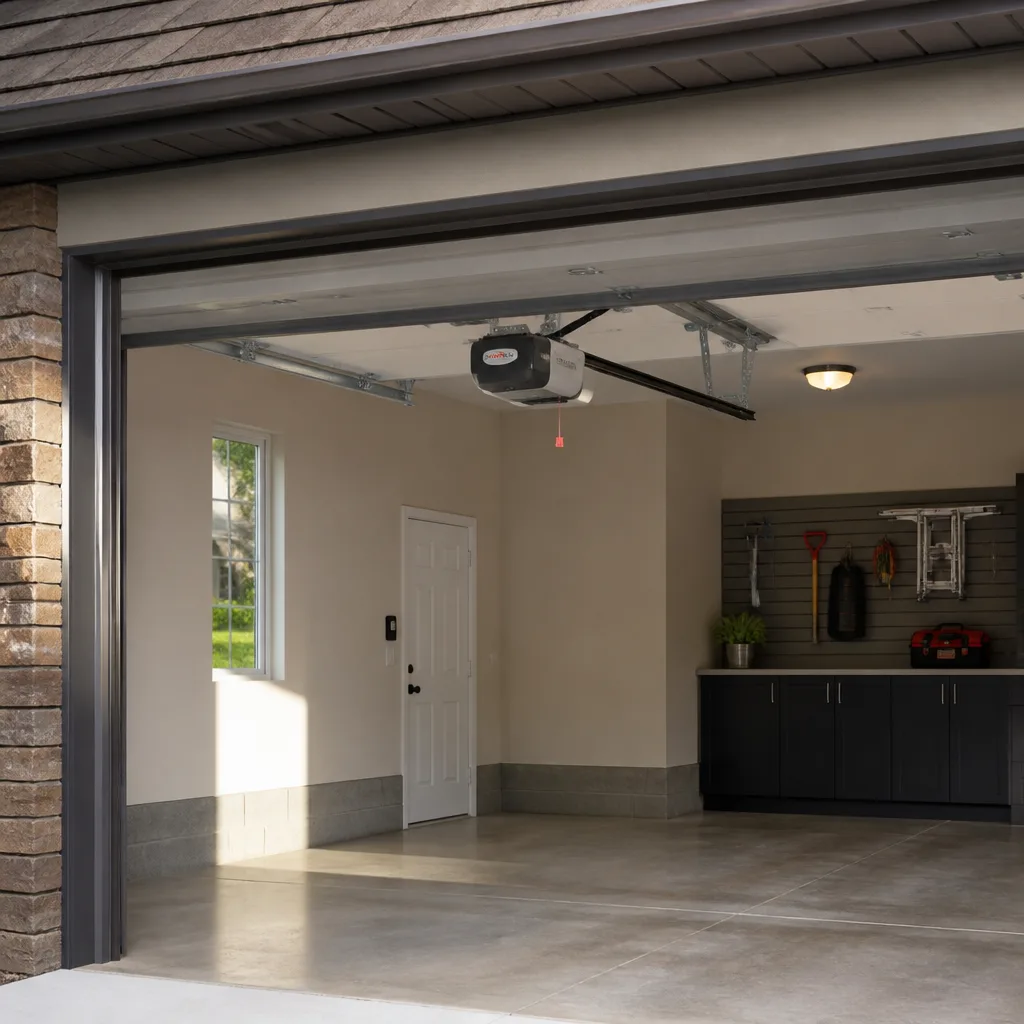
Chamberlain openers
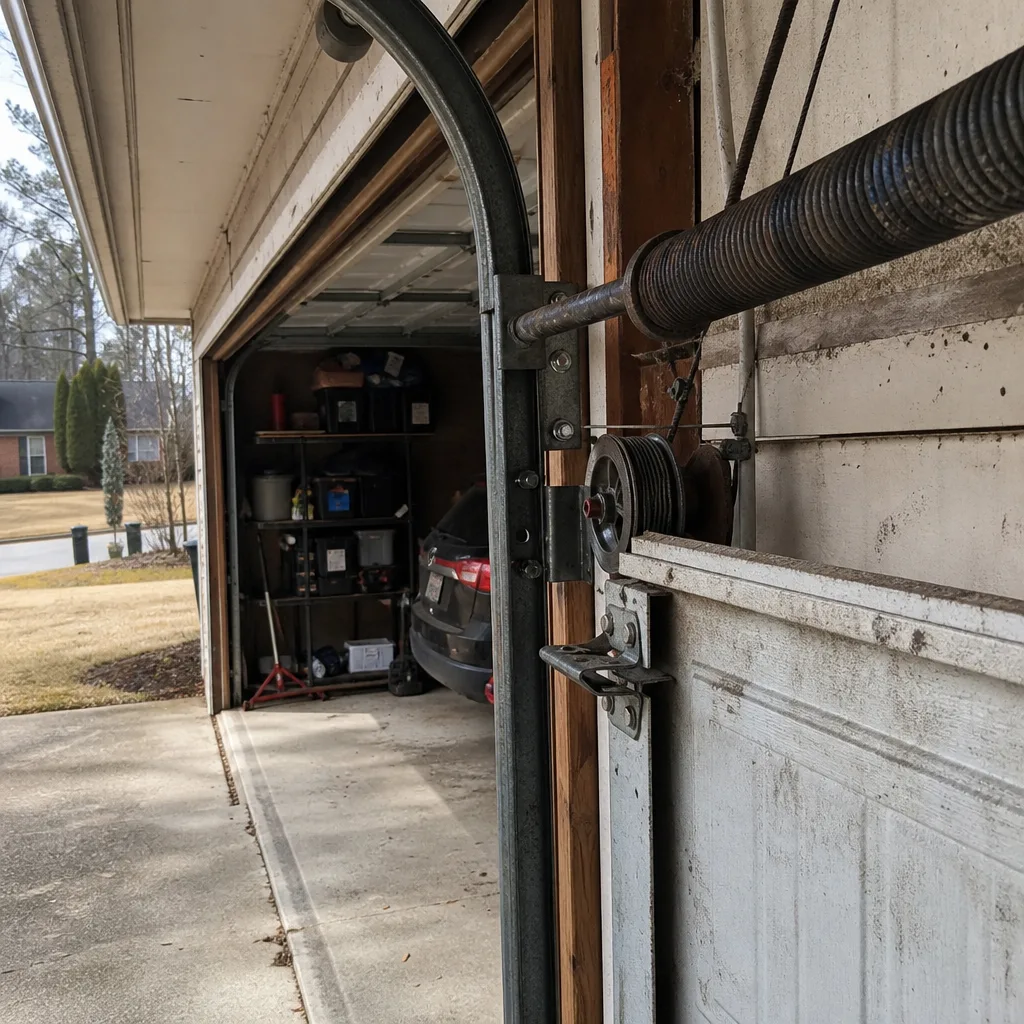 Before
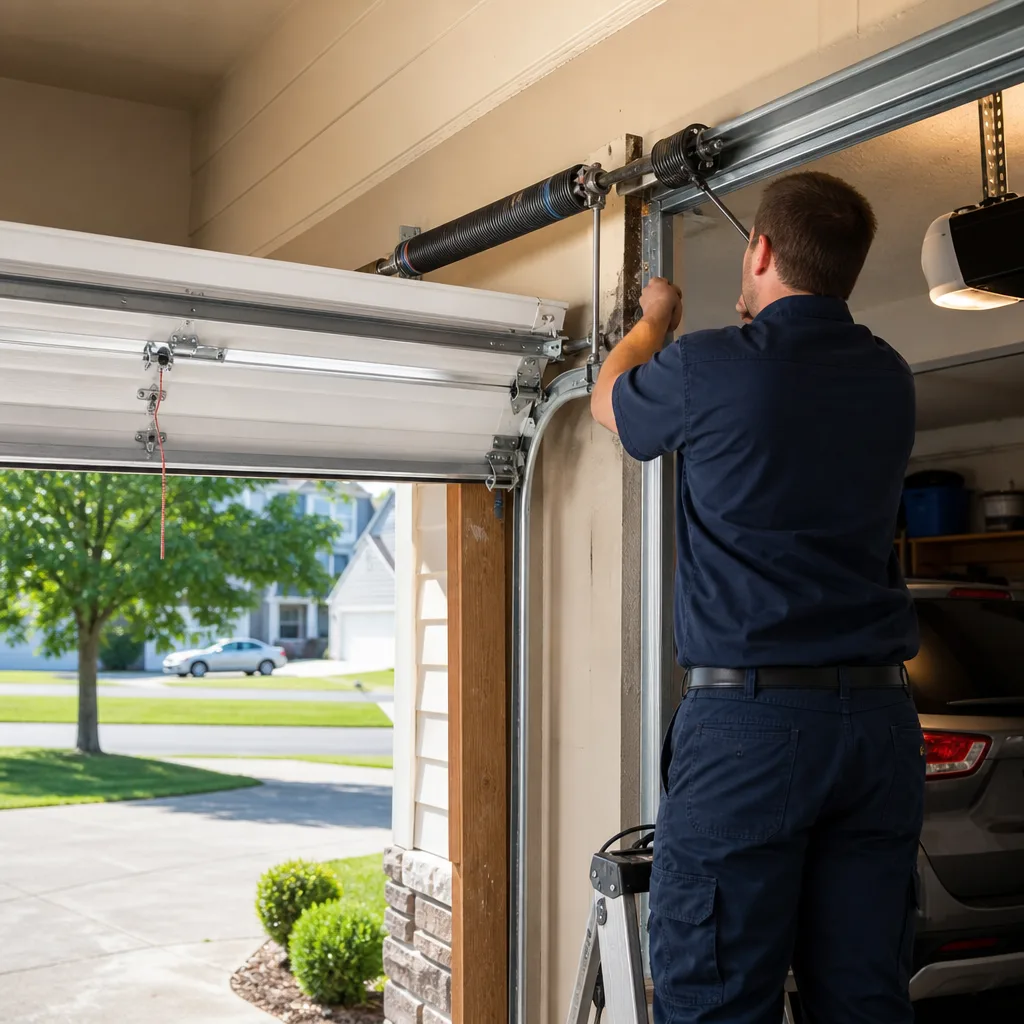 After
After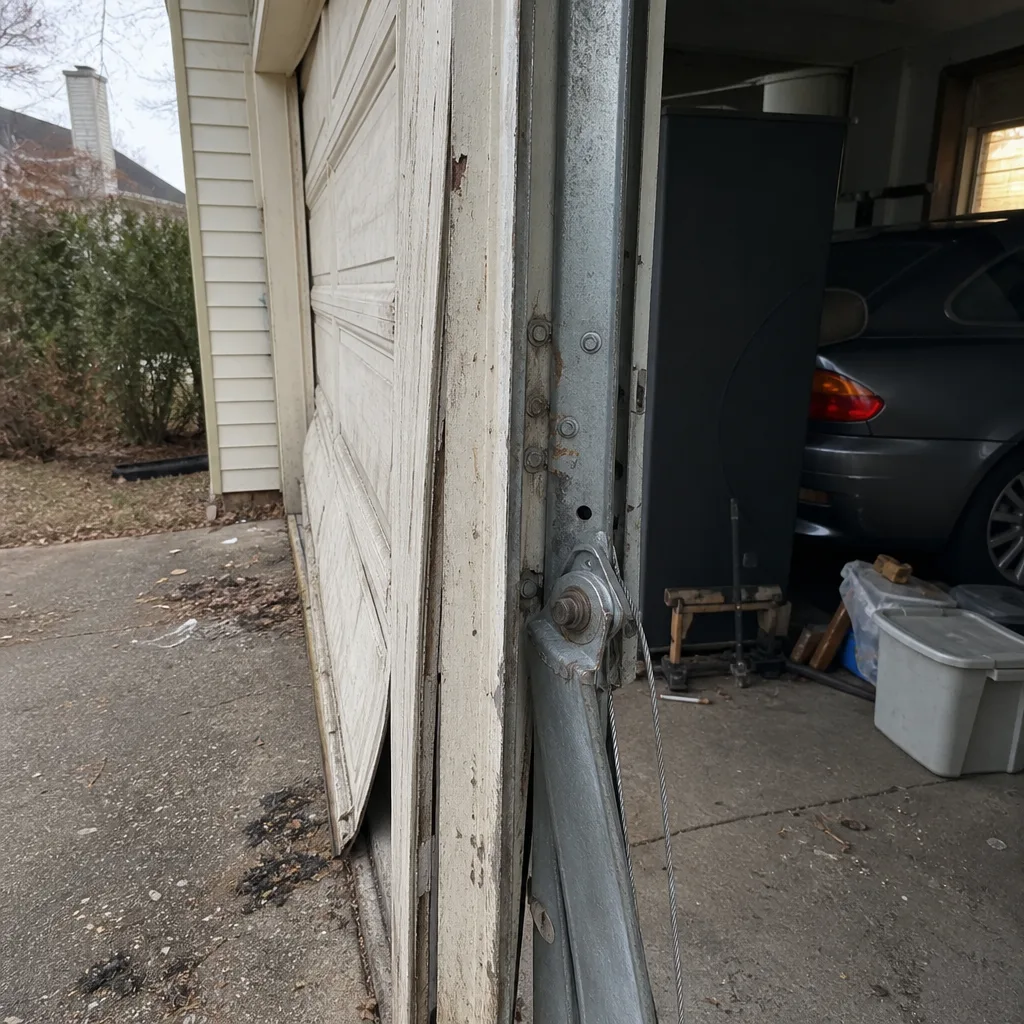 Before
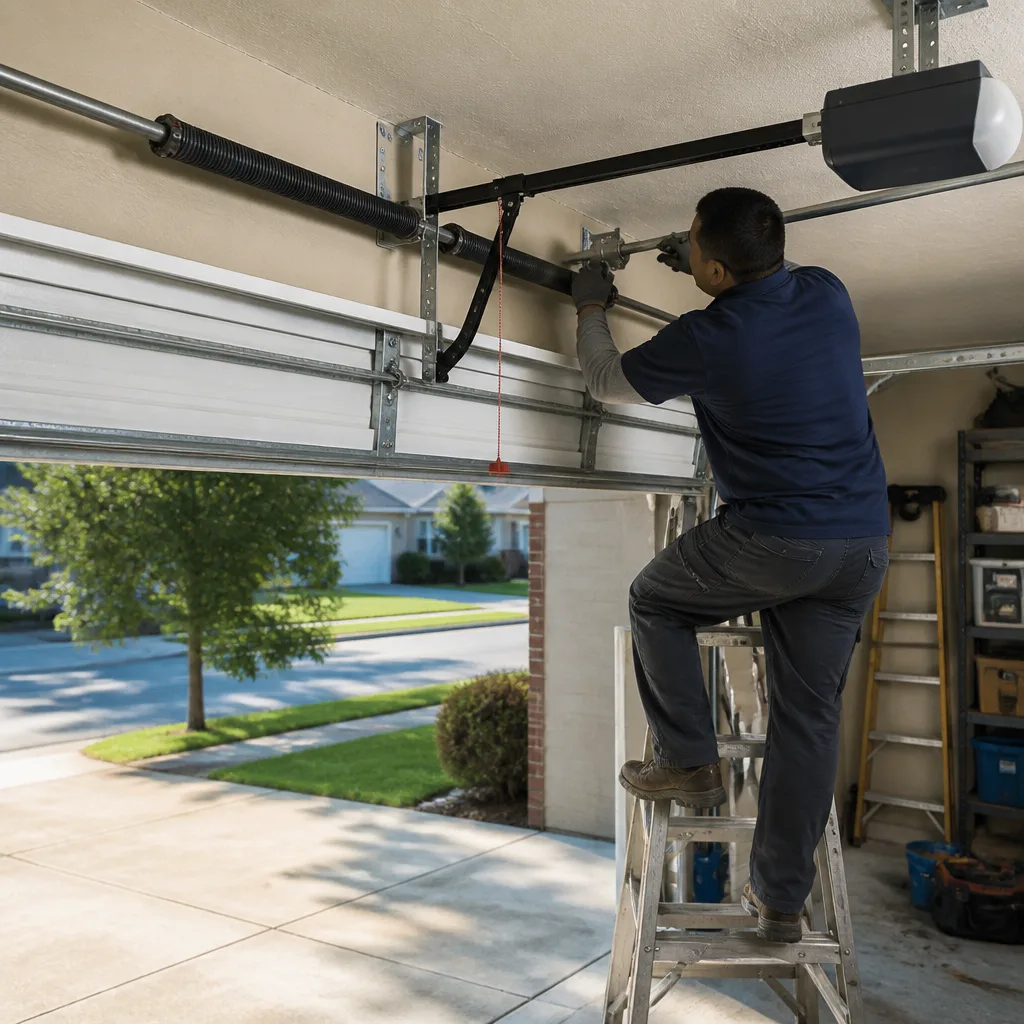 After
After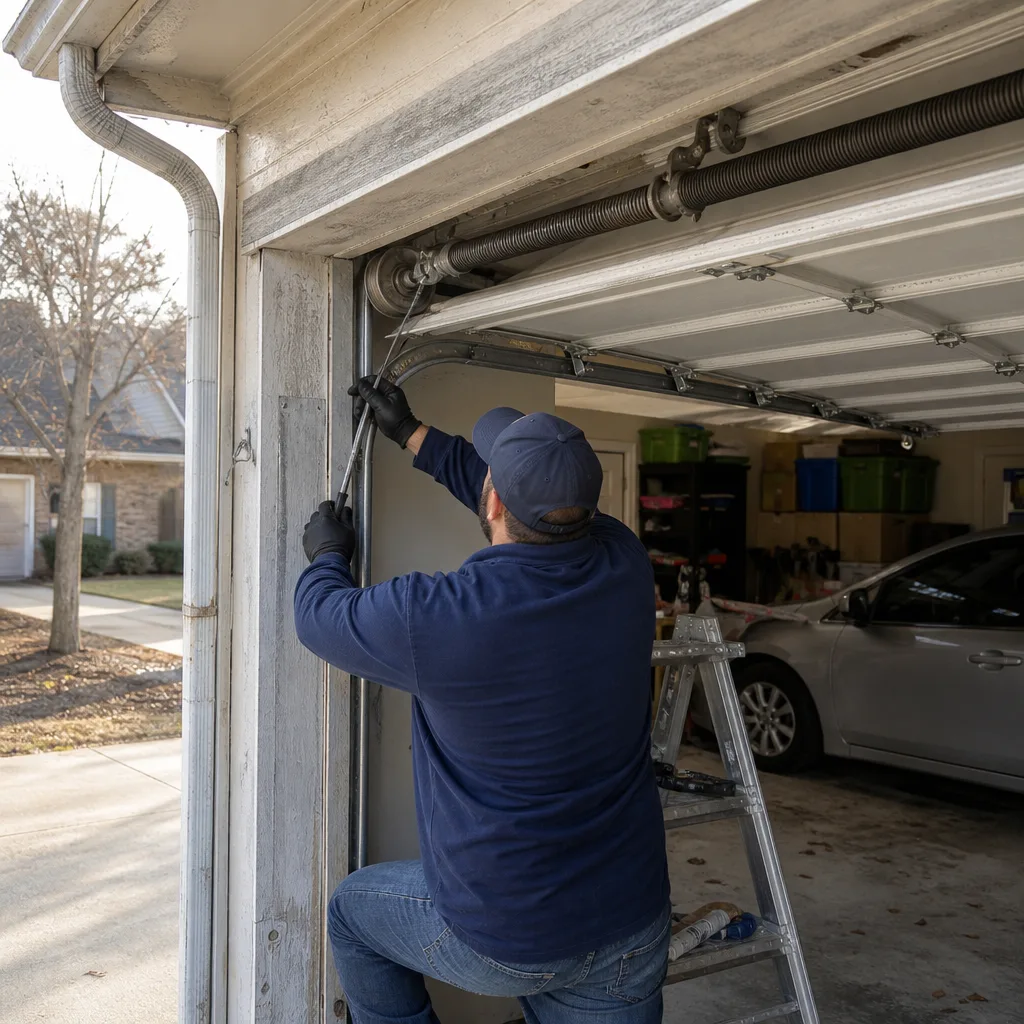 Before
 After
AfterThe Complete Guide to Garage Door in Buford
A garage door has between 22 and 30 moving components depending on the drive type, and most homeowners in Buford can name two of them: the opener and “the spring.” That gap is where bad quotes happen. This guide walks through every major component, what it costs to replace in Gwinnett County, how Buford’s humidity affects different door materials, and the three decision gates you’ll face when something breaks. By the end, you’ll have a framework for every garage door decision, backed by specifics rather than a technician’s opinion.
Quick Answer
A garage door system is a set of interconnected mechanical components, and the most useful thing any Buford homeowner can know is which part failed, what it costs to fix, and whether a repair extends the door’s life or just delays an inevitable replacement. Repair costs in Buford typically run $125 to $400 for most component failures, while full door replacement ranges from $1,100 to $4,200 depending on material and size. The framework below gives you the documentation trail to make that call with evidence, not urgency.
Table of Contents
- The Components: What Each Part Does, What It Costs, and What Failure Looks Like
- How Buford’s Climate Affects Your Garage Door Materials
- The Three Decision Gates: Repair, Bridge, or Replace
- What a Legitimate Written Quote Must Contain
- Gwinnett County Permit Thresholds for Garage Door Work
- A Maintenance Schedule That Actually Works in Buford
- How to Choose a Door Material for a Buford Home
- Opener vs. Door: How to Tell Which One Failed
 Before
 After
AfterThe Components: What Each Part Does, What It Costs, and What Failure Looks Like
Before you can make a decision about a garage door, you need to know what you’re looking at. Here’s the component-by-component breakdown we use when we walk a Buford homeowner through their door. Every part below is one we’ve replaced in homes across Gwinnett County, from Sugar Hill to Buford proper.
Torsion Springs
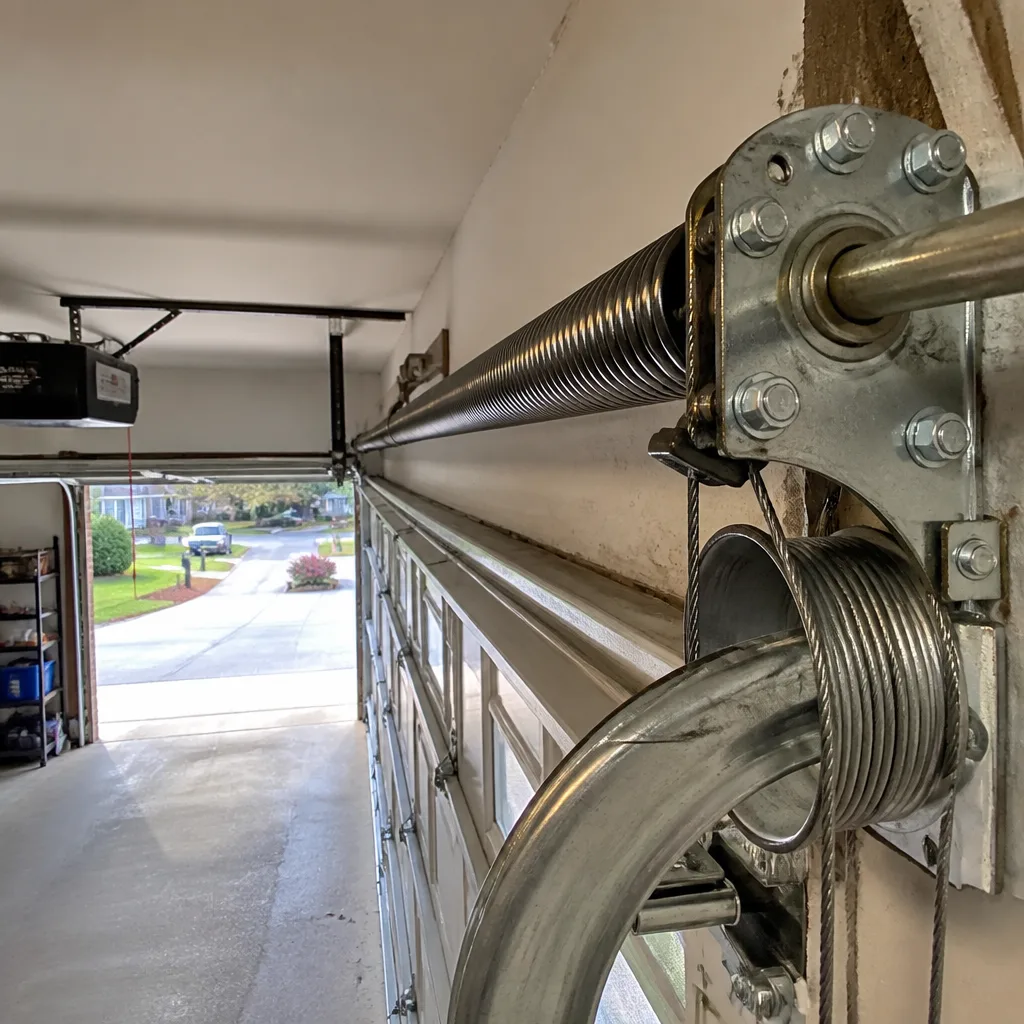
The torsion spring is the counterweight system mounted on a metal shaft above the door opening. It stores mechanical energy when the door closes and releases it when the door opens, which means the door itself only weighs about 10 to 15 pounds in your hand despite weighing 150 to 250 pounds on the scale. A torsion spring has a service life measured in cycles, not years. Most residential springs are rated for 10,000 cycles, which translates to roughly 7 to 10 years of normal use in Buford, but a door that cycles four times daily will burn through that lifespan faster.
What replacement costs in Buford: $180 to $340 for a pair of springs, including labor. We replace springs in pairs because both springs wear at the same rate, and a single new spring paired with a tired old one creates an unbalanced door that strains the opener.
What failure looks like before it fully fails: A visible gap in the coil, often a 1 to 2 inch separation. If you look up at the spring and see a break line or a split in the metal, the spring has already failed and the door is being held by the opener alone. That’s a dangerous condition because the opener’s gear and sprocket are not rated to hold the door’s full weight.
Safety note: torsion springs are under high tension. A spring that lets go during a DIY repair can break bones or worse. This is not a YouTube tutorial situation. A trained technician has the winding bars, the right spring gauge, and the experience to do this without putting anyone in the hospital.
Garage Door Opener
The opener is the motorized unit mounted on the ceiling that pulls or pushes the door along its track. The three drive types are chain drive (loudest, cheapest, most common), belt drive (quieter, slightly more expensive), and screw drive (middle ground, less common in newer Buford homes). The opener itself contains a motor, a logic board, a trolley carriage, and limit switches that tell the motor when to stop.
What replacement costs in Buford: $250 to $600 for the opener unit plus installation, depending on drive type and horsepower. A belt drive with a DC motor runs toward the higher end and is worth it if your garage is attached to a bedroom.
What failure looks like before it fully fails: The door reverses mid-travel for no reason, the opener hums but the door doesn’t move (that’s usually a stripped gear), or the lights on the unit flash error codes. A failing logic board often shows up as intermittent operation: it works fine for a week, then refuses to respond to the remote for an afternoon.
For a detailed breakdown of opener work, see our Garage Door Opener Repair & Installation in Buford page.
Cables
The cables are the steel wires that run along each side of the door and attach the bottom brackets to the spring system. They carry the door’s weight during lifting and lowering. Cables fray before they break, and a frayed cable is a visible warning sign: look for loose strands near the bottom bracket or rusted sections along the cable run.
What replacement costs in Buford: $130 to $200 for a cable pair, including adjustment and rebalancing. Cables should always be replaced in pairs, same logic as springs.
What failure looks like before it fully fails: A frayed cable, a cable that’s jumped off the drum, or a door that hangs unevenly in the opening. If the cable has snapped, the door will not open at all and one side will sit lower than the other.
Rollers, Hinges, and Track
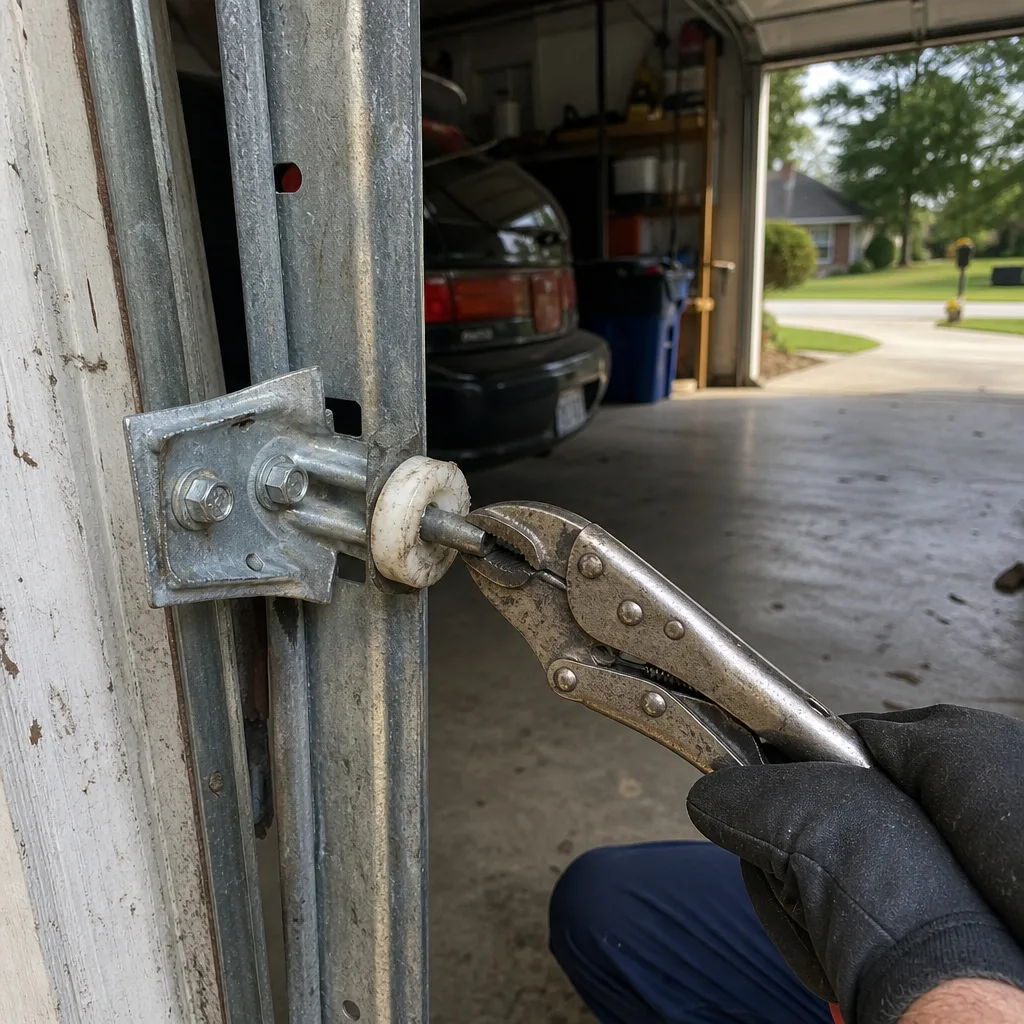
Rollers are the wheels that ride inside the vertical and horizontal track. Hinges connect the door sections and allow the door to bend as it travels. The track is the steel channel that guides everything. Rollers wear out faster in Buford than in drier climates because the humidity accelerates rust on steel rollers and grit accumulation on nylon rollers.
What replacement costs in Buford: Rollers run $80 to $150 for a full set of 10 to 12. Hinges run $15 to $35 each. Track replacement is rare and usually only needed after an impact; a full track replacement runs $200 to $400.
What failure looks like before it fully fails: A grinding noise during operation (roller bearings), visible wobble in a roller wheel, a door that sticks at a specific point in its travel (track bend or misalignment), or a hinge that’s cracked at the pivot point. None of these are emergencies, but all of them get worse and more expensive if ignored.
Weather Seal and Bottom Rubber
The weather seal is the rubber strip along the bottom of the door, and the perimeter weatherstripping runs along the sides and top of the opening. In Buford, these do more than keep out rain. They keep out the humidity that rusts hardware and warps door sections, and they block the insects that thrive in Gwinnett County’s warm season.
What replacement costs in Buford: $50 to $120 for a bottom seal replacement, $80 to $180 for full perimeter weatherstripping.
What failure looks like before it fully fails: Visible cracks in the rubber, daylight showing under the closed door, or water staining on the garage floor after a heavy Buford thunderstorm. A torn seal is easy to ignore but it accelerates every other problem on this list.
How Buford’s Climate Affects Your Garage Door Materials
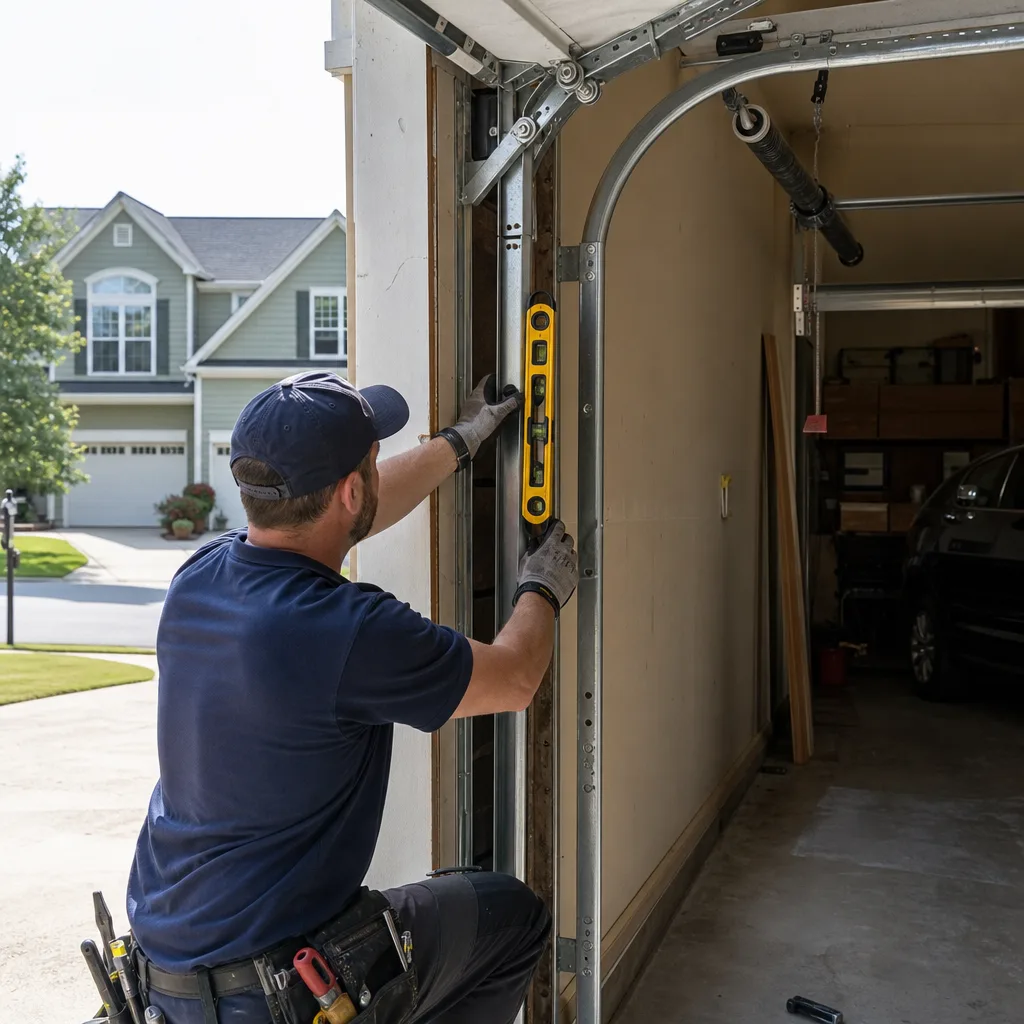
Buford sits in USDA Hardiness Zone 8a, which means hot, humid summers and mild winters with occasional freezes. The humidity is the bigger factor for garage doors. Average summer relative humidity in Gwinnett County runs 75 to 85 percent, and that moisture finds its way into every unsealed surface in your garage.
Steel doors: The most common material in Buford, and for good reason. Steel handles humidity well as long as the paint and primer are intact. The failure point on steel doors in Buford is almost always the bottom section, where water pools and sits against the concrete. A galvanized steel door with a factory-applied finish will last 15 to 20 years in Buford’s climate. A builder-grade door with thin primer will show rust at the bottom edge within 8 to 10 years. When you shop, ask about the gauge of the steel (24-gauge is standard; 26-gauge is thinner and cheaper) and whether the door uses galvanized or galvalume substrate.
Wood doors: Wood is beautiful and a poor choice for Buford’s humidity unless you commit to maintenance. Solid wood doors absorb moisture during the summer and release it during drier winter periods, which causes swelling, cracking, and paint failure. A wood door in Buford needs repainting or resealing every 2 to 3 years, and even then, expect joint separation at the panel seams within a decade. We see wood doors in Buford’s older subdivisions and in some custom homes, but most homeowners who’ve lived with one replace it with a steel or composite door when it’s time.
Fiberglass doors: Fiberglass handles Buford’s humidity better than steel or wood because it doesn’t rust or absorb moisture. The tradeoff is impact resistance: a fiberglass section cracks more easily than steel if it takes a hit from a basketball or a car bumper. Fiberglass is a good choice for Buford if the door faces west or south and takes direct afternoon sun, because the material doesn’t transfer heat the way steel does.
Hardware: The unsung climate story in Buford is hardware. Standard zinc-plated brackets and hinges rust faster here than in drier parts of Georgia. Galvanized or stainless hardware costs more upfront and lasts meaningfully longer. When we replace hardware on a Buford door, we quote galvanized as the default because the standard zinc-plated parts fail in 5 to 7 years in this humidity.
The Three Decision Gates: Repair, Bridge, or Replace
Every garage door decision in Buford comes down to one of three gates. Here’s the framework we use, and it’s the same one we teach homeowners to use on their own.
Gate 1: Repair That Extends Life
You’re at this gate when the door itself is structurally sound and the failure is in a wear component: a spring, a cable, a roller set, a hinge, an opener gear. These parts are designed to be replaced, and replacing them extends the life of the door. Here’s the math: if a spring replacement costs $250 and buys you another 7 years, that’s $35 per year. A new door costs $2,000 and lasts 15 years, which is $133 per year. The repair is the better financial decision as long as the door panels are in good shape.
What “good shape” means: no rust through the panel, no cracks at the section joints, no warping on the bottom section, and a door that’s less than 15 years old. Buford doors that are structurally sound but mechanically tired are perfect candidates for this gate. We’ve extended the life of doors in Buford by a decade with a spring and roller replacement on a Saturday morning.
Gate 2: The Bridge Repair
A bridge repair is a repair that you know is temporary but makes financial sense because you’re not ready to replace the door yet. The most common bridge in Buford: the door is 18 to 22 years old, the panels are showing age but haven’t failed, and a spring or opener dies. You spend $250 on a spring knowing you’ll replace the door in 2 to 3 years. That’s a reasonable decision if the budget isn’t there for a full replacement right now.
The honest framing is that a bridge repair is money spent to buy time. We’ll tell you when you’re in this gate because saying so is part of the job. A door that’s showing rust-through at the bottom corners will need replacement eventually, and spending $400 on a bridge repair now is only smart if you have a specific plan to replace within the window.
Gate 3: Replacement Is the Only Math That Makes Sense
You’re at this gate when the door’s structure has failed or when multiple systems need work simultaneously. The clearest signals: rust through the panel skins, a bottom section that’s rotted or heavily corroded, multiple broken hinges on different panels, or a door that’s sagging because the sections themselves have lost structural integrity. At that point, repairs are cumulative and you’re spending replacement money in increments.
Here’s the math: if you’re facing a spring replacement ($250), a panel replacement ($300 to $500), and an opener replacement ($400) within an 18-month window, you’ve spent $950 to $1,150 on a door that’s still old. A new mid-range steel door installed in Buford runs $1,400 to $2,200. The replacement resets the clock on every component at once. See our Garage Door Installation in Buford page for the full breakdown of what a replacement involves.
What a Legitimate Written Quote Must Contain
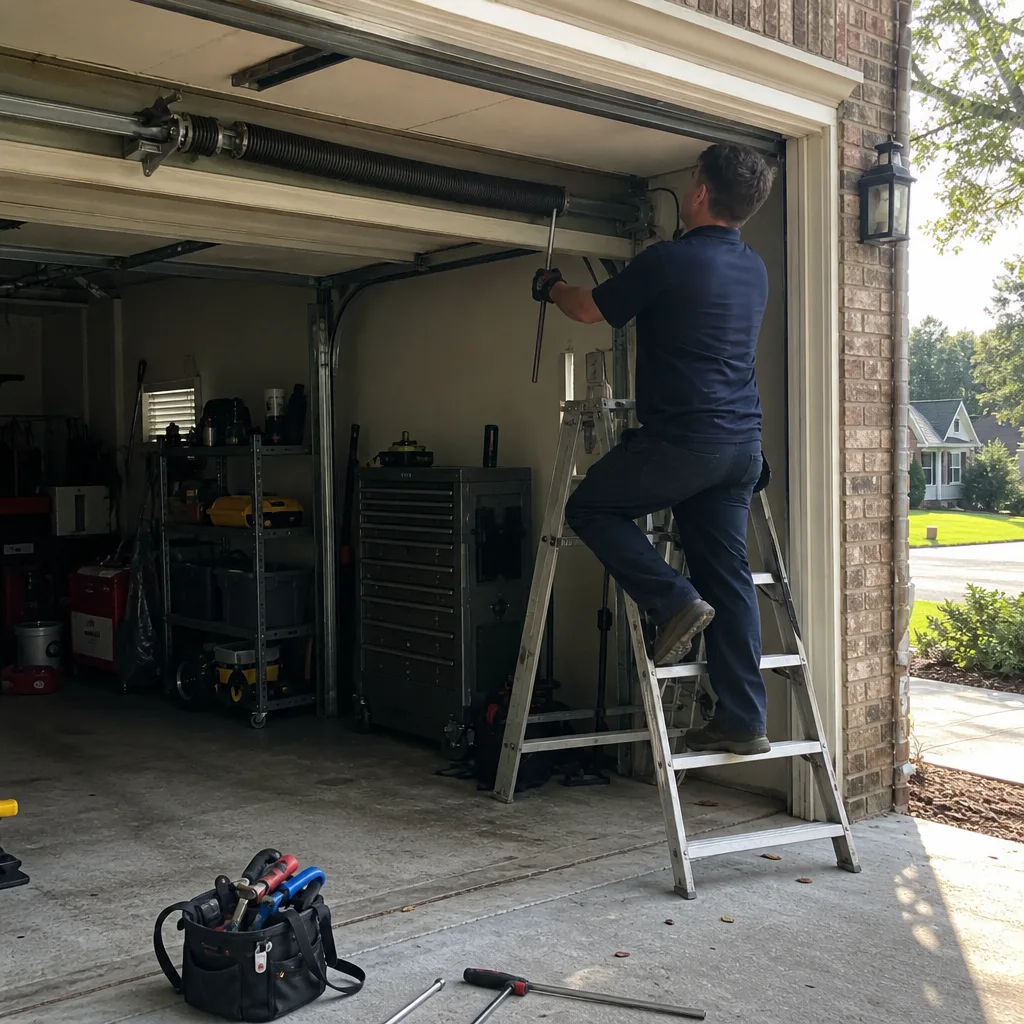
A verbal “ballpark” commits no one to anything. Here’s what a legitimate written quote from any Buford garage door company must contain, and why each element matters. This is the standard we hold ourselves to, written into Clause 1 of The Haven Standard: a flat, written price and written scope delivered before any work starts. For more on navigating the process yourself, see our DIY vs Professional Garage Door: The Buford Homeowner’s Decision Guide.
- The exact scope of work, in writing. “Replace torsion spring pair with 0.225-inch wire diameter springs rated for 10,000 cycles.” Not “fix spring.” If the scope is vague, the invoice will be too.
- A line-item price, not a lump sum. You should see the parts cost and the labor cost separated. This lets you compare quotes apples-to-apples and it also reveals when a company is padding labor to hit a number.
- The brand and model of any part being installed. “New spring” could mean a generic spring from a supply house or an OEM-rated spring from a manufacturer. The quote should name the part.
- The warranty terms, in writing. What’s covered, for how long, and what voids it. A one-year parts warranty is standard in Buford. Anything less is a red flag.
- The technician’s name or a job reference number. Someone has to be accountable for the work. A quote with no name attached has no accountability attached.
- Whether the price is flat or an estimate. An estimate can change. A flat price cannot. “Between $200 and $400 depending on what we find” is an estimate, and you should know that’s what you’re signing up for. We quote flat prices, written down, before we touch a door. If the technician finds something unexpected, the new work gets a new written scope and a new written price before it starts, not a surprise on the final invoice.
If a Buford garage door company won’t put a price in writing before starting work, that’s the end of the conversation. You don’t need a reason beyond that. For a look at how repair pricing breaks down across Buford, see our Garage Door Repair in Buford page.
Gwinnett County Permit Thresholds for Garage Door Work
The line between a permitted job and a non-permitted job in Gwinnett County is not where most homeowners think it is. Here’s the practical breakdown as it applies to garage door work in Buford, and for the full regulatory picture see Garage Door Permits, Codes & Inspections in GA: What You Need to Know.
Repairs and maintenance: no permit required. Replacing a spring, cable, roller, hinge, opener, or weather seal does not require a Gwinnett County permit. These are classified as repairs to existing equipment, and no permit is triggered. This covers the majority of service calls in Buford.
Door replacement on an existing opening: no permit required, in most cases. Swapping a door in the same opening, with no structural changes to the surrounding framing, does not require a permit in Gwinnett County. This is a replacement of equipment, not a modification of the structure. The work should still be done by a licensed contractor, but the county doesn’t need to inspect it.
Structural changes: permit required. If you’re widening the opening, adding a new garage door opening, changing the header, or modifying the load-bearing framing around the door, you need a Gwinnett County building permit. The threshold is whether the structure changes. A wider door means a new header, and a new header means an engineer’s letter and a permit.
What this means in practice: the vast majority of garage door work on existing Buford homes is non-permitted repair and replacement. Where we see confusion is when a homeowner wants to convert a single door to a double door, or add a second garage door. That’s a structural project, and any contractor who says otherwise is wrong. The permit protects you because it brings an inspector’s eyes to the framing, which is the most expensive part of the project to fix if it’s done wrong.
A Maintenance Schedule That Actually Works in Buford
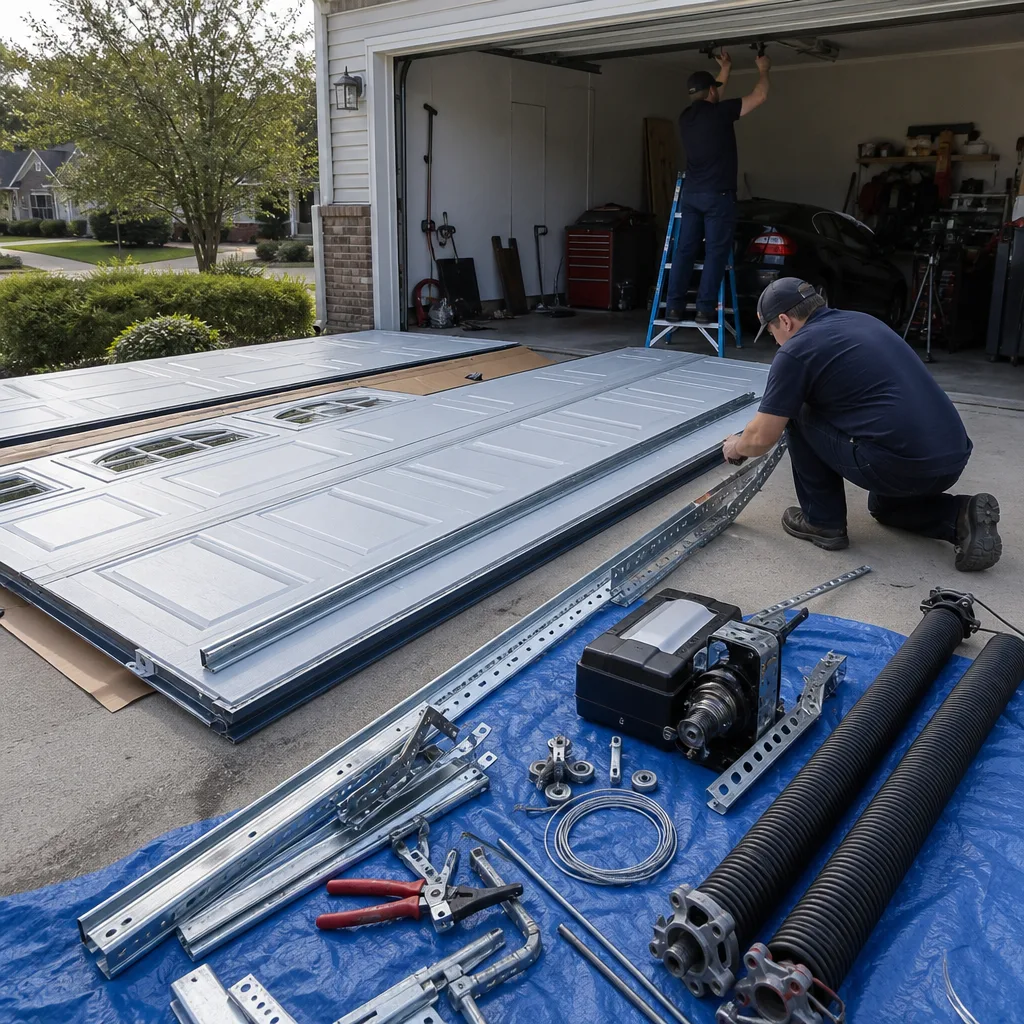
Maintenance on a garage door is not annual in Buford. The humidity and summer heat compress the timeline. Here’s the schedule we recommend, based on what we see across thousands of doors in Gwinnett County.
Every 6 months:
- Inspect the rollers, hinges, and springs visually. Look for rust, fraying, cracking, or loose bolts.
- Test the door balance. Disconnect the opener (pull the red release cord) and lift the door manually. It should move smoothly and stay in place at the halfway point. If it falls, the springs need attention.
- Clean the track with a dry cloth. Do not lubricate the track. Lubricant on the track attracts grit and makes the problem worse.
- Check the weather seal for cracks and daylight.
Every 12 months:
- Lubricate the rollers, hinges, and springs with a silicone-based garage door lubricant. Not WD-40, which is a solvent and will strip the existing lubricant.
- Test the auto-reverse safety feature. Place a 2×4 flat on the ground under the door’s path and close it. The door should reverse within 2 seconds of contact. If it doesn’t, the opener needs adjustment or replacement.
- Check the pressure on the opener’s force settings. A door that’s too forceful is a safety hazard, and a door that’s too weak will reverse for no reason.
- Inspect the opener’s gear and sprocket for wear, especially on chain-drive units.
This schedule takes 20 minutes twice a year and catches most failures before they become breakdowns. The failure we see most often in Buford that could have been prevented: a spring that was giving visible warning (gap in the coil) for weeks before it snapped, and the homeowner didn’t know to look.
How to Choose a Door Material for a Buford Home
If you’re at the replacement gate, the first decision is material. Here’s the Buford-specific guidance, based on what we’ve installed and what we’ve seen fail.
Steel (24-gauge, galvanized): The default choice. Handles Buford’s humidity well when properly primed and painted, affordable, low maintenance, and available in every style. Brands like Clopay and Amarr make steel doors from 24-gauge steel with factory finishes that hold up in Gwinnett County. Expect 15 to 20 years of service with proper care, and expect the bottom section to show age first in this climate. For a complete cost picture, see our Garage Door Cost Breakdown: The Buford Homeowner’s Reference for 2026.
Composite or steel with composite overlay: The upgrade choice. Amarr and Wayne Dalton both make composite doors that give the look of wood without the maintenance. They’re more expensive than steel but they handle Buford’s humidity without the swelling and cracking that real wood suffers. If you want the wood look and don’t want to repaint every two years, this is the play.
Solid wood: The enthusiast choice. Beautiful, heavy, and high-maintenance in Buford’s climate. We install them and we maintain them, but we tell every Buford homeowner the same thing: budget for repainting every 2 to 3 years and expect panel movement. If you’re okay with that, wood is the best-looking door you can buy.
Fiberglass: The niche choice. Good for specific situations: a west-facing door that takes direct afternoon sun, or a homeowner who wants a door that can’t rust. The tradeoff is crack resistance. We recommend fiberglass in Buford primarily for doors that face the brunt of the afternoon heat, where a steel door’s surface temperature gets hot enough to be uncomfortable to touch.
Opener vs. Door: How to Tell Which One Failed
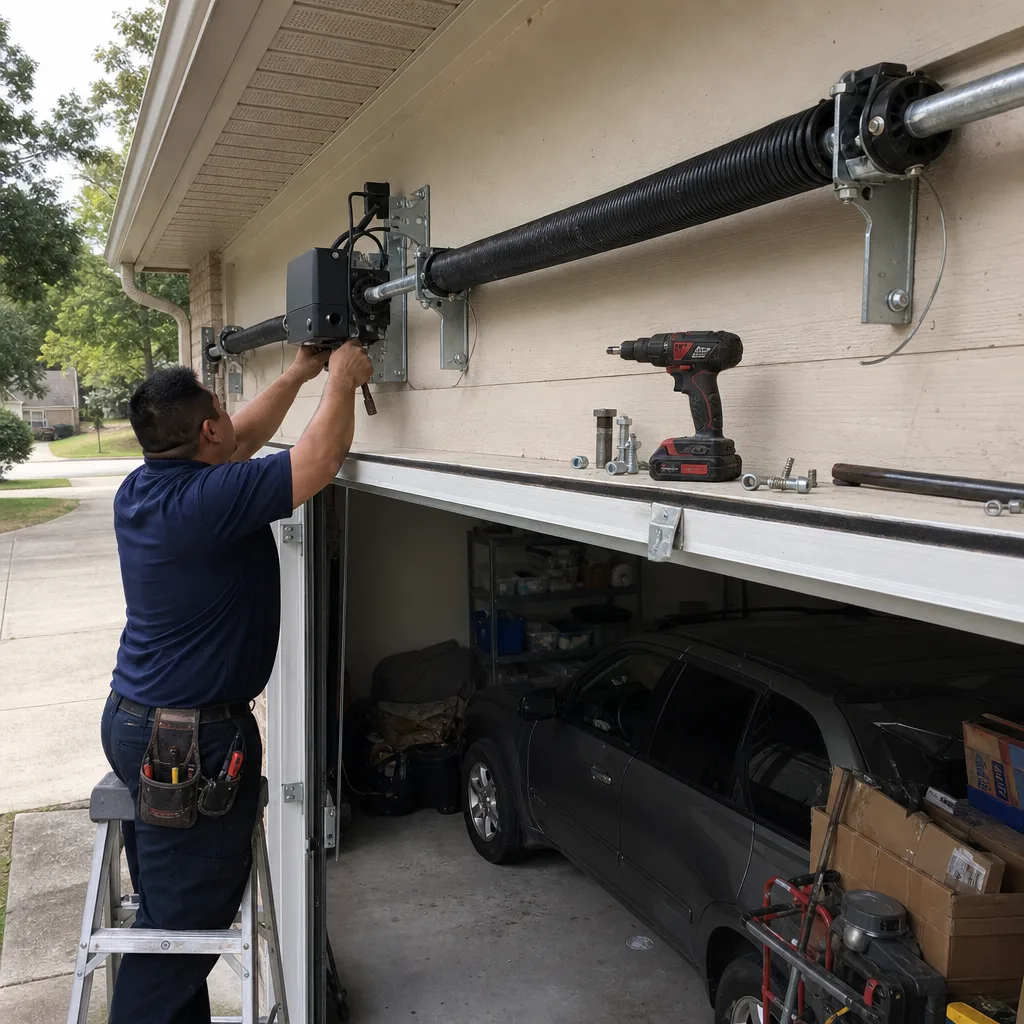
When the door won’t open, the first diagnostic question is whether the problem is the opener or the door itself. Here’s the test sequence, in order.
- Pull the emergency release cord. This disconnects the opener from the door. Now try to lift the door manually.
- If the door lifts smoothly and stays in place at the halfway point: the door and springs are fine, and the problem is the opener. Common culprit: a stripped gear, a failed logic board, or a dead capacitor on the motor. This is an opener repair, typically $125 to $300.
- If the door is heavy, won’t lift, or falls when you let go: the springs have failed and the door is the problem. The opener was probably trying to lift a door that suddenly weighed 200 pounds, which is why it may have also stripped its gear. This is a spring repair, typically $180 to $340.
- If the door lifts but sticks at a certain point: the track, rollers, or hinges are the problem, not the opener. This is a mechanical repair, typically $80 to $200.
- If the door opens fine manually but the opener won’t respond to the remote or wall button: the issue is electrical. Check the breaker, check the safety sensor alignment, then call a technician if the logic board is suspect.
The most common misdiagnosis we see in Buford is a homeowner who replaces the opener when the real problem was a broken spring. The spring failed, the door got heavy, and the opener burned itself out trying to lift it. If the spring is not replaced, the new opener will die the same way within a year.
Common Mistakes to Avoid
- Replacing only one spring. Both springs wear at the same rate. A single new spring creates an unbalanced door that strains the opener and the second spring fails sooner. Always replace in pairs.
- Using WD-40 on the track. WD-40 is a solvent. It strips lubricant and attracts grit on a track surface that should be dry. Use a silicone-based garage door lubricant on rollers and hinges, and keep the track clean and dry.
- Ignoring a fraying cable. A cable that’s visibly fraying will snap, usually when the door is halfway up and under full load. That’s the moment when the door can fall or jam. A $150 cable replacement is cheaper than the damage from a snapped cable.
- Accepting a verbal quote. A verbal “around $300” is not a quote. It’s a conversation. Get the scope and the price in writing before any work starts, and make sure the price is flat, not an estimate that can drift.
- Not checking the balance after a spring replacement. A properly balanced door stays put at the halfway point when disconnected from the opener. If a technician replaces a spring and skips the balance test, the door will wear unevenly and the new spring will fail early.
- Putting off a bottom seal replacement. A torn bottom seal lets Buford’s humidity into the garage every humid day of the year. That moisture accelerates rust on hardware and warping on door panels. It’s a $50 to $120 fix that prevents hundreds in downstream damage.
- Buying an opener based on horsepower alone. A 1/2-horsepower chain-drive opener on a heavy wood door in Buford’s humidity will work hard and die young. Match the opener to the door weight and the drive type to your noise tolerance, not to the biggest number on the box.
When to Call a Professional
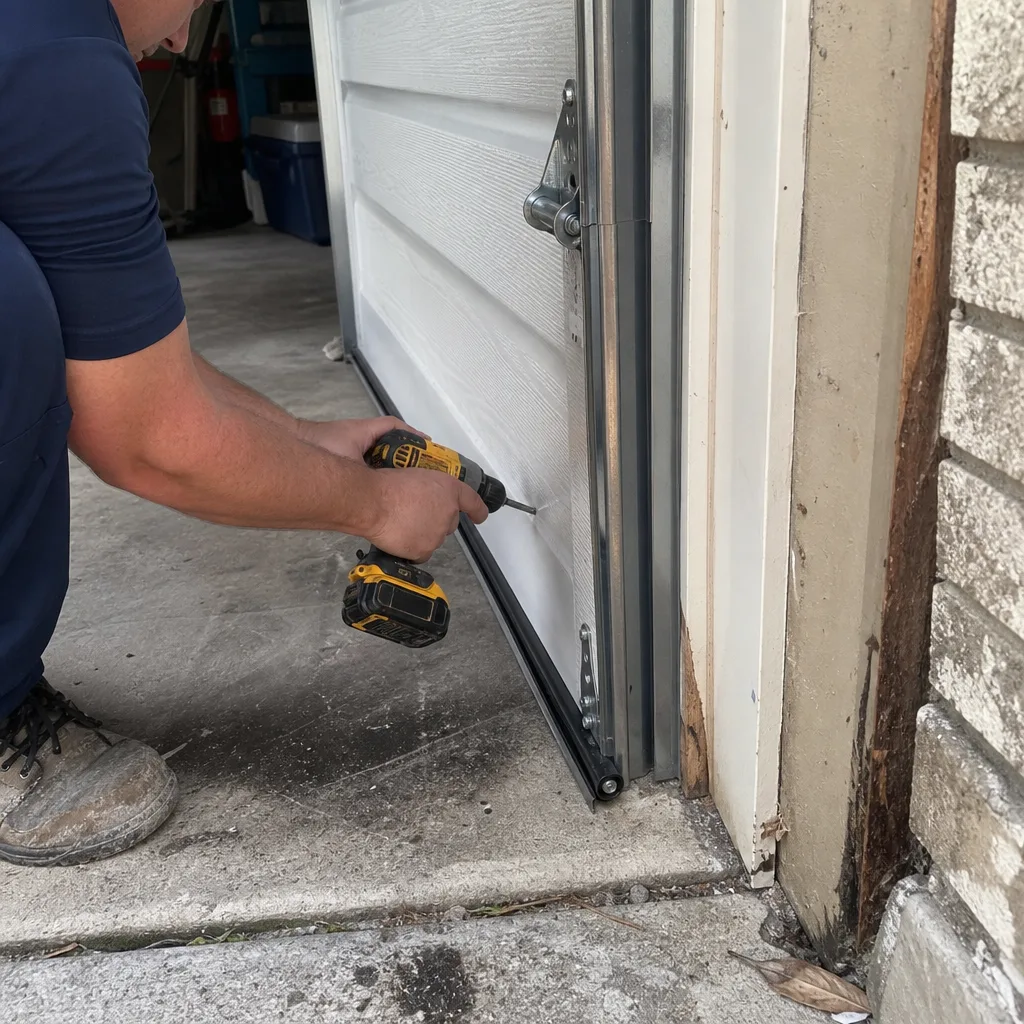
Call a professional when the failure involves torsion springs, cables under tension, or anything that requires the door to be disconnected while under load. Those components store enough energy to cause serious injury if they let go. Call when the problem is electrical rather than mechanical, because a misdiagnosed logic board can become a fire hazard if you wire around the safety features. Call when the door is off its track or hanging unevenly, because operating it in that condition can damage the track, the panels, or the opener. And call when you’ve done the diagnostic test above and the answer is still unclear, because the cost of a professional diagnosis in Buford is less than the cost of replacing the wrong part. Servo Garage Doors Buford offers free estimates in Buford. Call (470) 458-9647 and we’ll send a technician with a written price and a written scope before any work starts.
Frequently Asked Questions
Most garage door repairs in Buford cost between $125 and $400 depending on the component. A roller replacement runs $80 to $150, a cable pair runs $130 to $200, a torsion spring pair runs $180 to $340, and an opener gear replacement runs $125 to $250. The price should be written and flat before work starts, not a range that drifts. Call (470) 458-9647 for a free estimate with a written price before any work begins.
A torsion spring in Buford typically lasts 7 to 10 years under normal use, because springs are rated for about 10,000 cycles and a Buford household cycles the door 3 to 4 times per day. The humidity in Gwinnett County doesn’t directly shorten spring life, but it accelerates corrosion on the spring surface, which can cause premature breakage at the coil. If your door is used more than average, expect the spring to fail earlier.
Most garage door repairs in Buford can be completed same-day when they’re called in during business hours, because the common failure parts are stocked on our trucks. Torsion springs, cables, rollers, hinges, openers, and weather seals are standard inventory. If the failure requires a special-order part, like a custom-sized panel or a specific opener model, the repair takes as long as the part takes to arrive. Call (470) 458-9647 and we’ll tell you whether your job is same-day.
With Servo Garage Doors Buford, the price does not change once we see the door, because the price is written and quoted flat before work starts, per Clause 1 of The Haven Standard. We quote the scope and the price based on what we know from the call, and if the technician finds something additional, that additional work gets a new written scope and a new written price before it begins. No surprises on the invoice, ever.
We service and install all major opener brands in Buford, including Genie, LiftMaster, Chamberlain, and Craftsman, along with door brands like Clopay, Amarr, and Wayne Dalton. The brand matters less than the drive type and the cycle rating, and we’ll tell you what matches your door weight and your noise tolerance rather than pushing a specific brand. Whether it’s a Genie opener or a Clopay door, the same written-price standard applies.
In most cases, replacing a garage door in an existing opening in Buford does not require a Gwinnett County permit. A like-for-like door replacement is classified as equipment replacement, not structural modification. A permit is required if you’re changing the opening size, modifying the header, or adding a new door where one didn’t exist. If your project involves structural changes, get the permit, because it brings an inspector’s eye to the framing.
A new garage door in Buford typically costs between $1,100 and $4,200 installed, depending on material, size, insulation, and style. A basic single steel door runs $1,100 to $1,800. A mid-range insulated steel door in a standard size runs $1,400 to $2,200. A double-wide door or a composite door with a wood look can run $2,500 to $4,200. The price includes the door, the installation, and the written warranty, and we quote it flat before ordering anything.
The Bottom Line
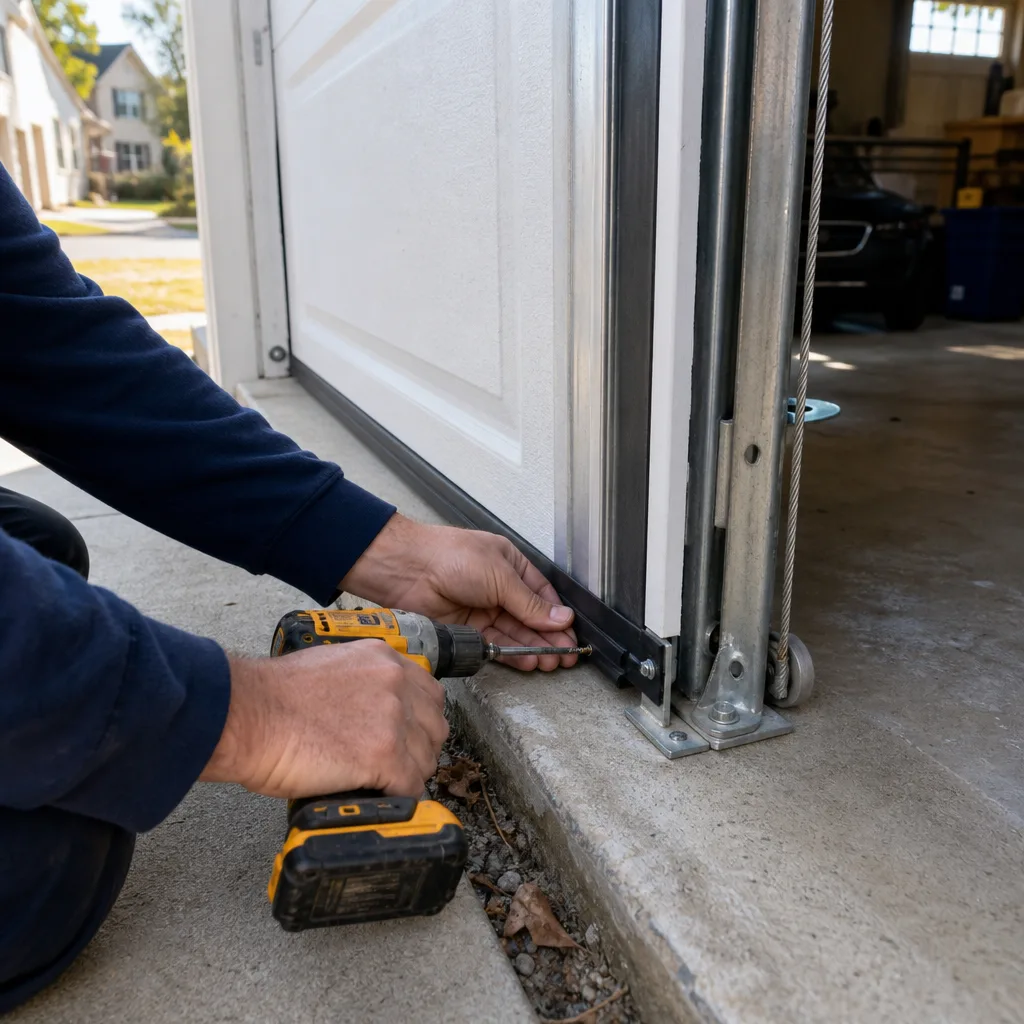
A garage door in Buford is a system of 22 to 30 components working together, and every failure has a specific part, a specific price, and a specific fix. The framework matters because it turns a stressful breakdown into a documented decision. Know the component that failed, know what a legitimate written quote must contain, know whether you’re in a repair, bridge, or replace situation, and know what Gwinnett County requires. Write the price down before the work starts. Take the photo record when the technician leaves. Ask for the warranty on paper. That’s the whole system, and it’s how we’ve done every job in Buford since 2015. For the full picture on repairs, see Garage Door Repair in Buford, or start at the Servo Garage Doors Buford home page for an overview of everything we cover.
Written by Marcus Deller, Owner at Servo Garage Doors Buford, serving Buford since 2015.