
Last updated September 20, 2026
Full 25-point door and opener safety check with every visit - springs, cables, rollers, tracks, and your LiftMaster or Chamberlain opener included
You get a price before we start. It does not change when the truck arrives.
Full-view glass
Chamberlain openers
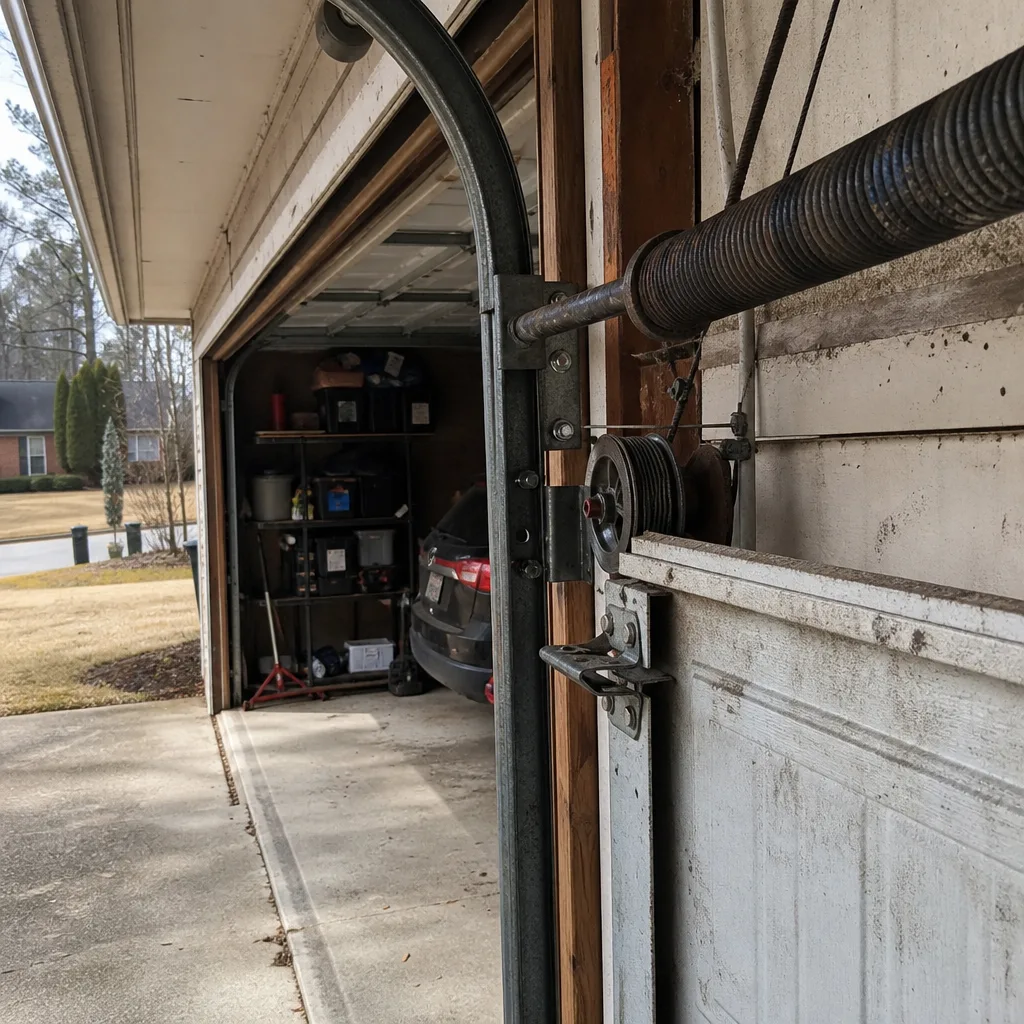 Before
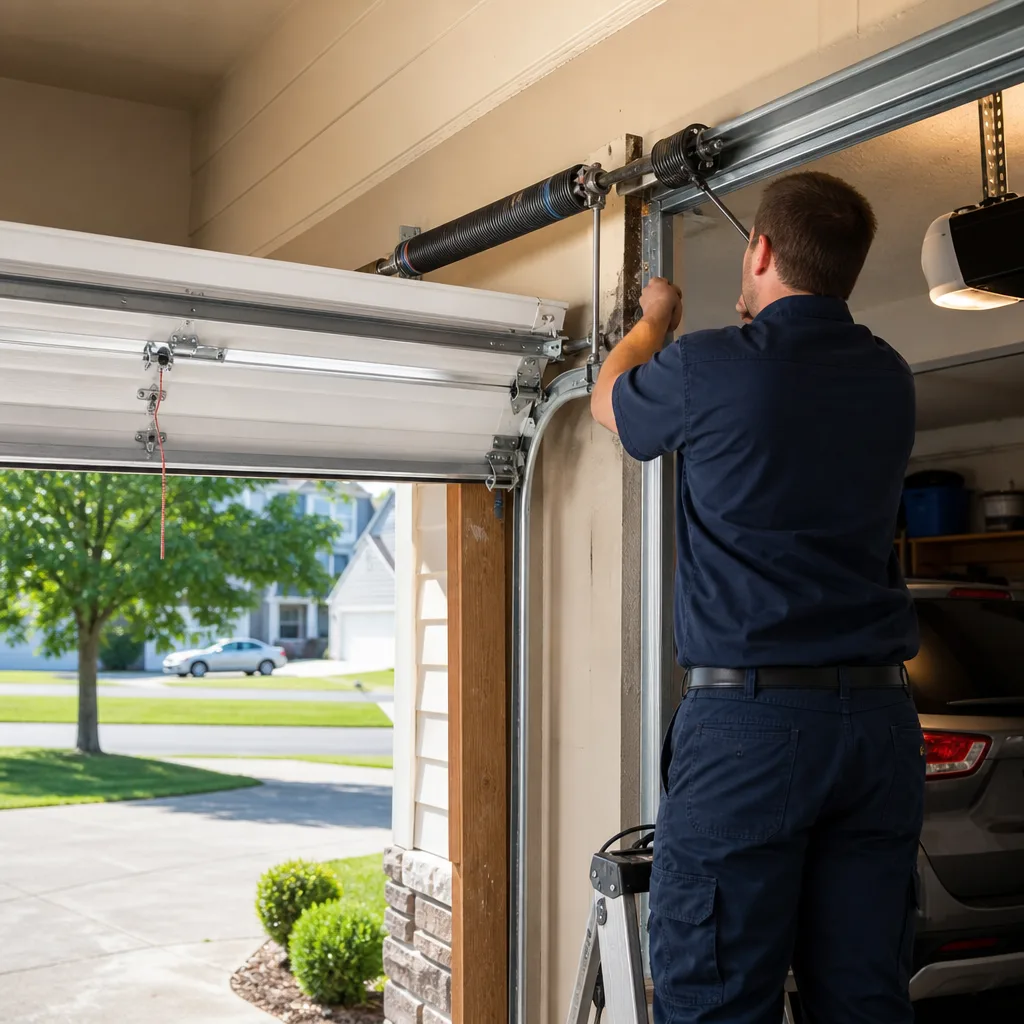 After
After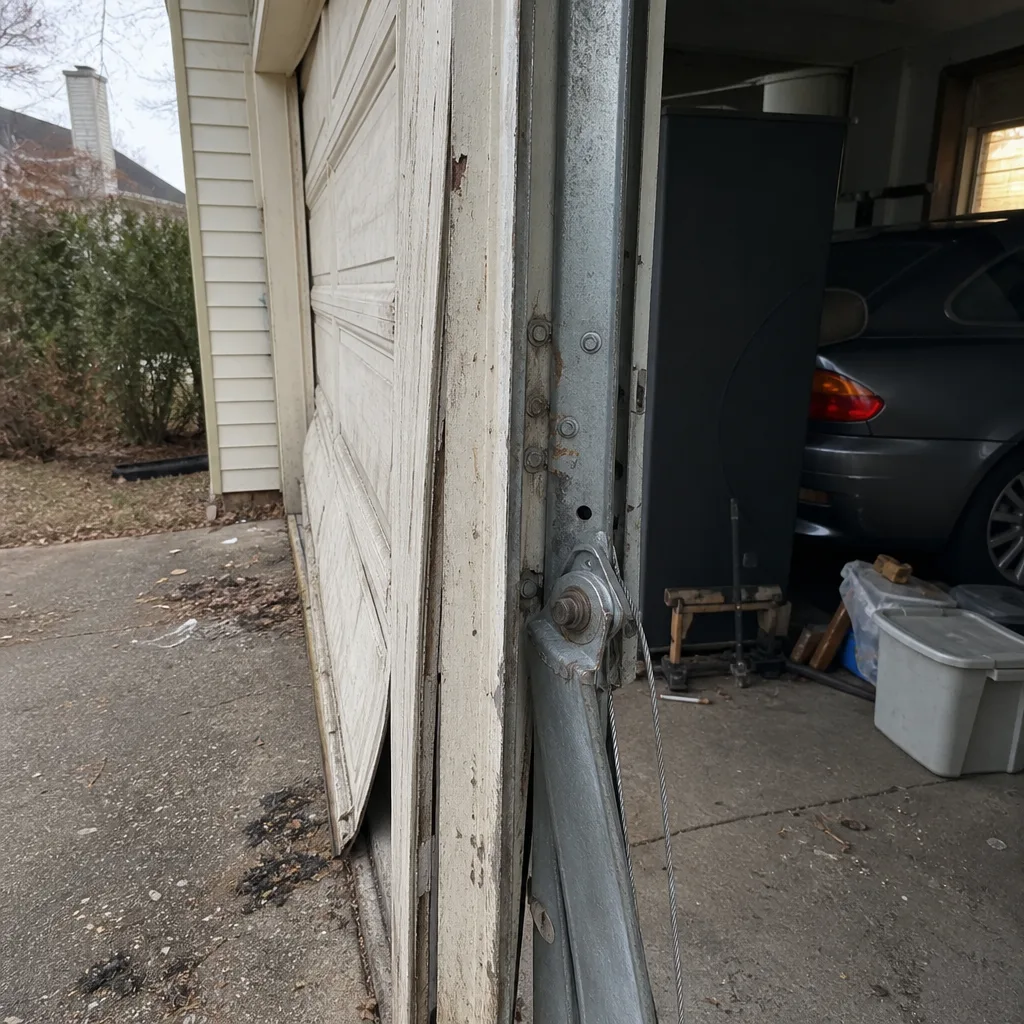 Before
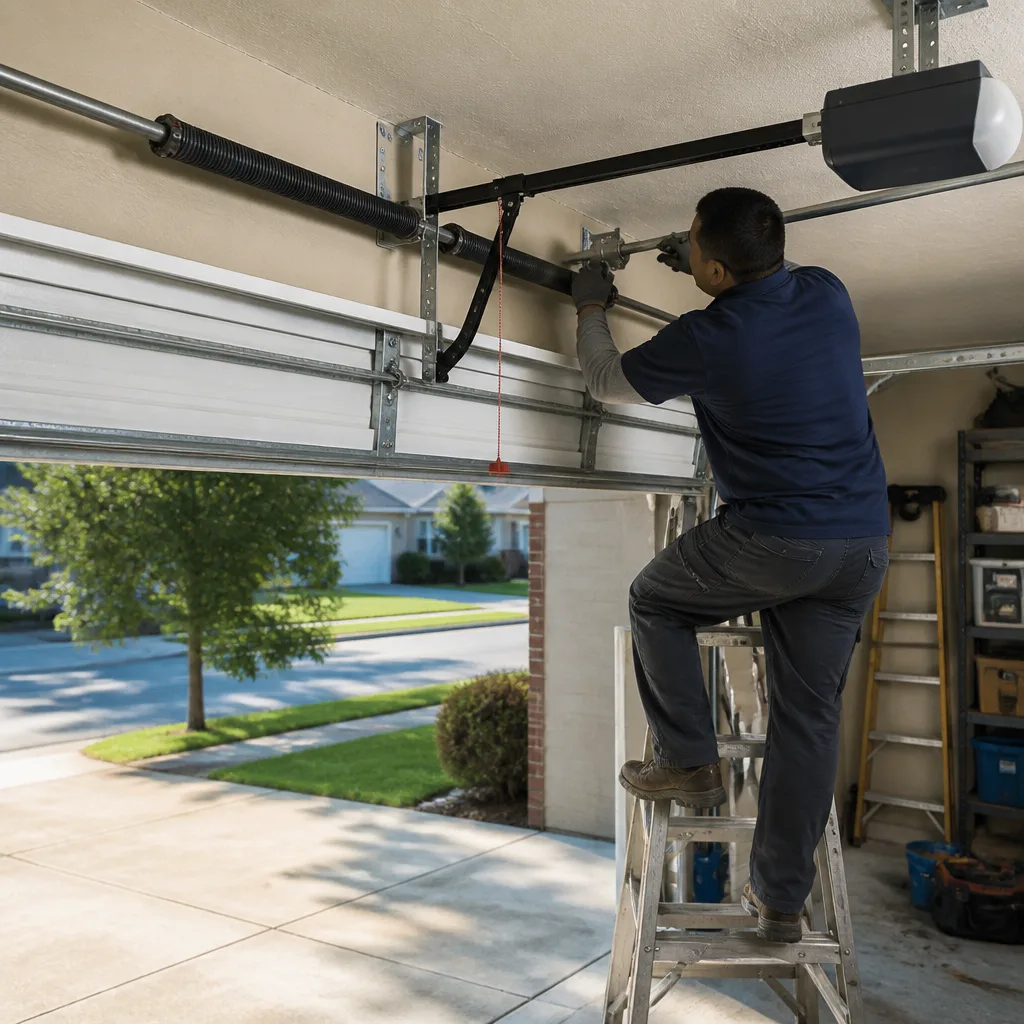 After
After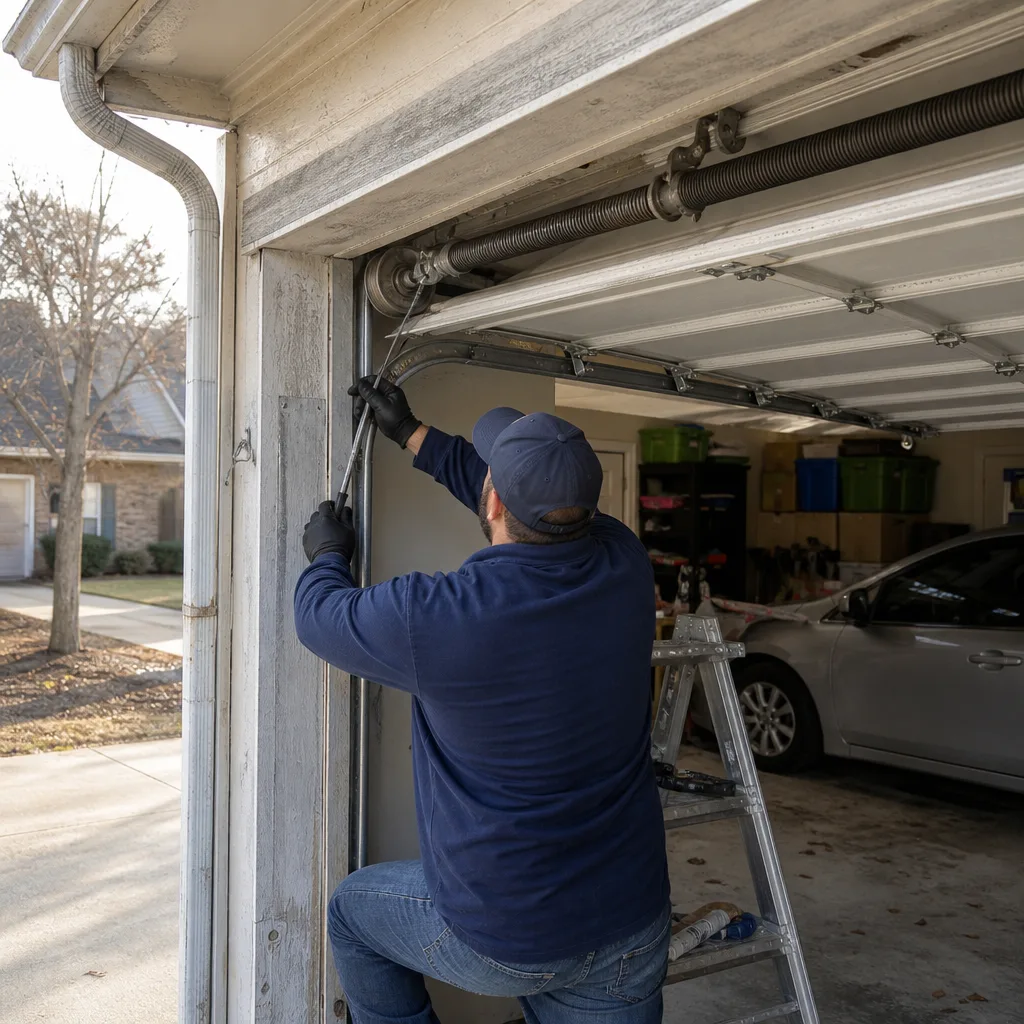 Before
 After
AfterGarage Door Warning Signs: A Buford Homeowner’s Reference Guide
A torsion spring doesn’t break without warning. It leaves a visible gap in the coil winding, an audible change in pitch during operation, and a measurable imbalance in the door’s manual lift, usually four to eight weeks before it snaps. Most homeowners in Buford miss all three. This guide is different from the generic listicles you’ll find elsewhere. It describes the quieter, earlier signals that appear six to twelve weeks before a component fails, back when a repair still costs less than a replacement. If you own a garage door in Buford, GA, and you want to catch problems before they catch you, this is the reference you keep.
Quick Answer
The earliest garage door warning signs in Buford homes are a visible gap in the torsion spring’s coil winding, a change in the door’s operating pitch or rhythm, a door that feels heavier during a manual lift, and roller or cable wear that shows as fraying, rust staining, or uneven movement. Any one of these means a component is in its failure window, typically 6 to 12 weeks out. Catching them now means a $180 to $340 repair instead of a $900 to $1,400 replacement.
Table of Contents
- Torsion Spring Warning Signs: The Coil Gap and What It Means
- Cable Warning Signs: Fraying, Slack, and Popping Sounds
- Roller Warning Signs: The Sound of a Bearing That’s Already Dying
- Track Warning Signs: When the Rail Itself Starts Working Against You
- Bottom Seal Warning Signs: The Cheap Part That Prevents Expensive Damage
- Opener Logic Board Warning Signs: The Component No One Checks Until It’s Dead
- The Manual Lift Test: A Diagnostic You Can Do in 60 Seconds
- Safety Risk vs. Future Expense: Which Signs Require Shutting the Door Down Today
- How to Photograph a Warning Sign Before You Call
- Common Mistakes to Avoid
- When to Call a Professional
- Frequently Asked Questions
 Before
 After
AfterTorsion Spring Warning Signs: The Coil Gap and What It Means
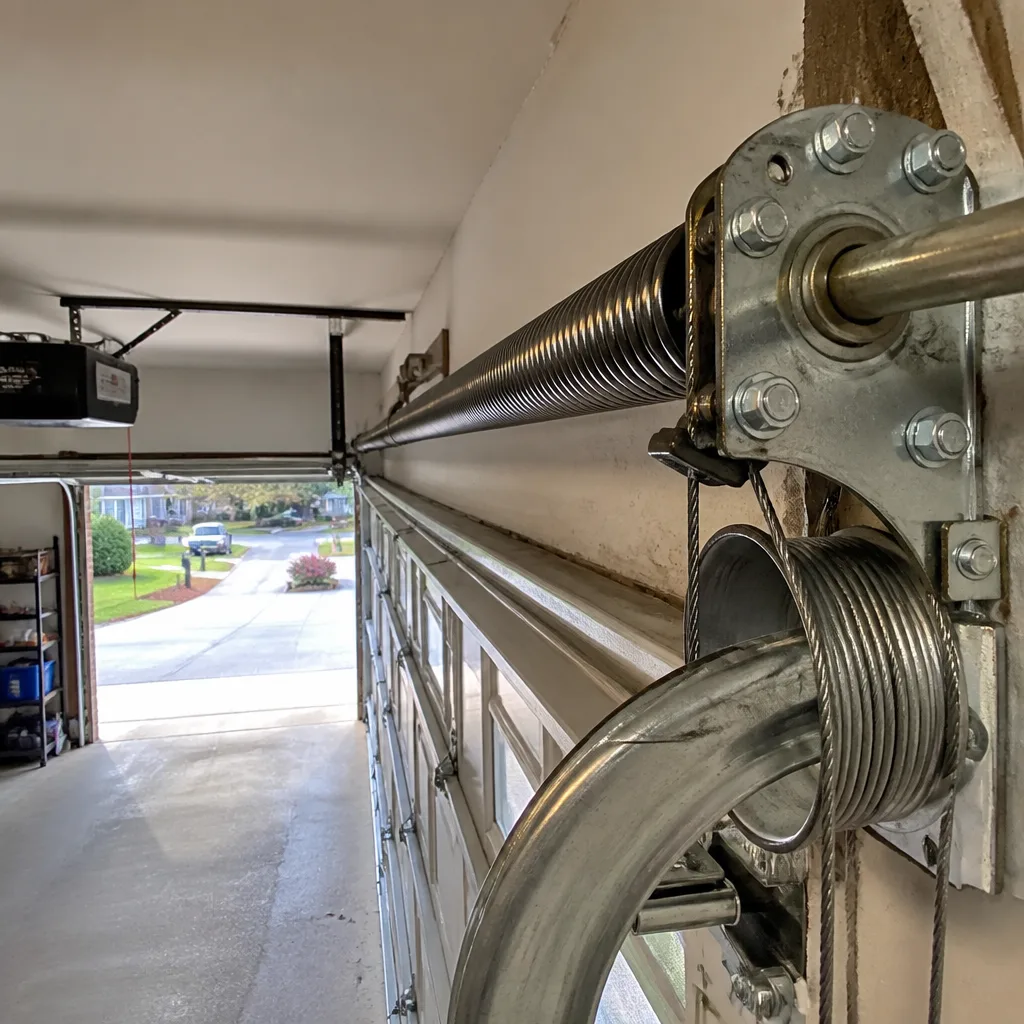
A torsion spring on a Buford garage door typically lasts 10,000 to 15,000 cycles. That’s roughly 8 to 12 years for a household that opens the door three to four times a day. But the spring doesn’t fail all at once. It announces itself weeks in advance. The clearest early signal is a visible gap in the coil winding. When a torsion spring begins to fatigue, the coils separate slightly, usually near the center bearing or at the spring cone. You’ll see a space between two coils that wasn’t there before, often 1/16 to 1/8 inch wide. That gap is the metal telling you it’s about to let go.
Here’s what else to look for in the 6-to-12-week window before failure:
- Pitch change during operation: The spring doesn’t sound the same when the door runs. It’ll have a lower, duller tone or a subtle vibration that wasn’t there before. Our technicians in Buford hear this complaint often: “It just sounds different.” Trust that instinct.
- Rust staining on the spring itself: Rust doesn’t cause spring failure directly, but it’s a reliable indicator of age and exposure. In Buford’s humid summers, garage springs rust faster than homeowners expect. A spring with visible rust staining is usually past its useful life, even if it hasn’t cracked yet.
- Door imbalance on manual operation: Pull the release handle and lift the door halfway. A healthy, balanced door stays put. A door that sinks slowly, drops quickly, or becomes hard to hold is telling you the spring has lost tension. That loss of tension is the precursor to a full break.
- One side of the door rising faster than the other: When a dual-spring system has one spring weakening faster than the other, the door will lift unevenly. You’ll see it, and you’ll hear it in the uneven rhythm of the opener.
In our experience, a torsion spring that shows a coil gap is usually 4 to 8 weeks from snapping. Once it snaps, the door becomes dead weight, often trapping the car inside, which is exactly the moment most people discover how heavy a garage door really is. We’ve had Buford homeowners tell us they couldn’t believe the sound when it finally went. The spring under tension releases with a crack like a gunshot, and the door doesn’t open again until it’s fixed. Catching the coil gap early means a straightforward spring replacement, not an emergency call on a Saturday morning.
If you want to understand more about how springs factor into broader repairs, see our guide on garage door repair in Buford.
Cable Warning Signs: Fraying, Slack, and Popping Sounds
Cables are the component that scares us, because when a cable fails, the door can come down hard. A garage door cable is under constant tension, wound around a drum at each end of the torsion bar. When a cable frays, you’ll see individual wire strands poking out from the main bundle, usually near the bottom bracket or where the cable wraps onto the drum. That fraying is the earliest visible warning. It happens gradually, a strand or two at a time, until the remaining strands can’t hold the load. In Buford, we see cable wear accelerate in garages that aren’t climate controlled, because humidity and temperature swings cause the steel to expand, contract, and fatigue faster than in conditioned spaces. For tips on protecting your system year-round, see our Seasonal Garage Door Care for Buford: Year-Round Homeowner’s Guide.
The visual signs are there if you look:
- Frayed strands: Look at the cable where it attaches to the bottom bracket at the base of the door. If you see loose wires sticking out, the cable is in its failure window. This is a 2-to-6-week countdown.
- Slack in the cable: A healthy cable is taut. If you see a visible sag or a gap between the cable and the drum, the spring or the cable has already lost tension. A slack cable can jump the drum, which is the failure that drops the door.
- Kinks or flat spots: A cable that’s been stressed will show small bends, kinks, or flattened sections. These are stress points where the steel is already compromised.
- Popping or clicking during movement: When a cable is starting to bind or slip on the drum, it makes a popping sound as the door moves. Homeowners sometimes describe it as a “snap” or “click” that repeats with each door cycle. This is different from a single loud crack, which is a spring breaking. A repeated pop is the cable warning you.
One thing we tell every homeowner: do not try to release tension on a cable yourself. The tension on a garage door cable can be over 150 pounds per strand. When a cable lets go while someone is near it, the whipping steel can cause serious injury. If you see fraying, slack, or hear repeated popping, leave the door where it is and call a trained technician. This is one of those times where the diag counts, and the diag is: cable failure is imminent.
Roller Warning Signs: The Sound of a Bearing That’s Already Dying
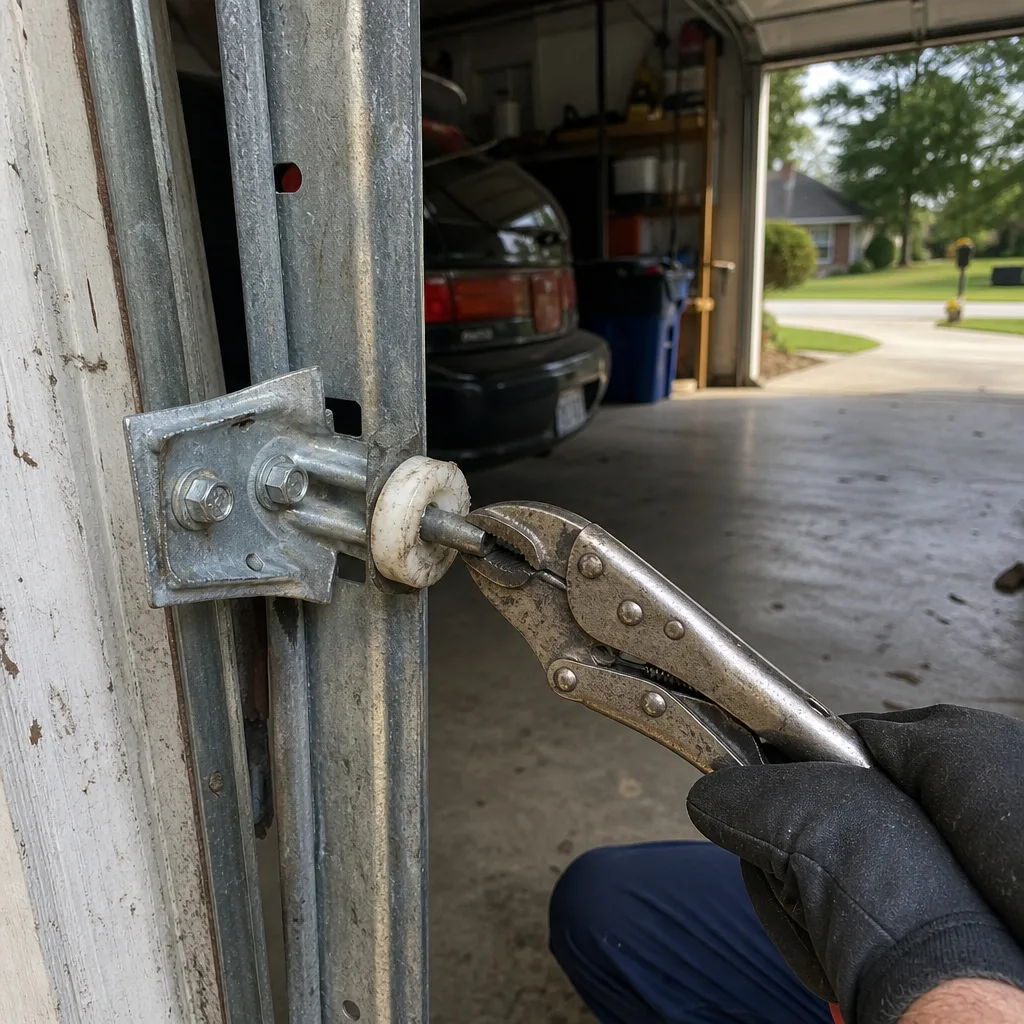
Rollers are the component that wears most predictably. A garage door roller is a small wheel with a ball-bearing center that rides inside the track. Most Buford homes have steel rollers with unsealed bearings, and unsealed bearings lose their grease over time, then fail. The earliest warning sign is sound: a scraping or rasping noise as the door moves. That sound is the metal axle grinding against the ball bearings after the lubrication has broken down. It’s not a squeak, which is a hinge issue, and it’s not a grind, which usually points to the opener. It’s a dry-metal scrape, consistent in pitch, coming from one or more rollers as the door travels.
Here’s how to tell if your rollers are in the failure window:
- Listen for the scrape: Run the door and stand in the middle of the garage. A failing roller makes a dry, scratchy sound that moves with the door. A healthy door is nearly silent, with only the opener motor audible.
- Look at the roller while it’s in the track: With the door down, inspect the rollers you can see from inside the garage. A failing steel roller will show visible play, you can wiggle it slightly in the track, and the wheel may have flat spots or a dull, worn surface.
- Check for nylon wear: Some Buford homes have nylon rollers with sealed bearings. These are quieter than steel and don’t fail as loudly. When a nylon roller starts to go, you’ll see the nylon wheel itself beginning to flatten or crack, usually on the edge.
- Watch the door’s movement: A failing roller causes the door to wobble or shimmy slightly as it travels, particularly in the curved section of the track. You may see the door jump sideways a half-inch as it rounds the curve.
Roller replacement is one of the most affordable repairs on a garage door system, typically $15 to $35 per roller including labor in the Buford market, which is why early detection matters. Let a bad roller keep running and it will damage the track, which is a much bigger bill. Once a roller seizes completely, it can jump the track, and a door off its track is a door that won’t close and shouldn’t be forced.
Track Warning Signs: When the Rail Itself Starts Working Against You
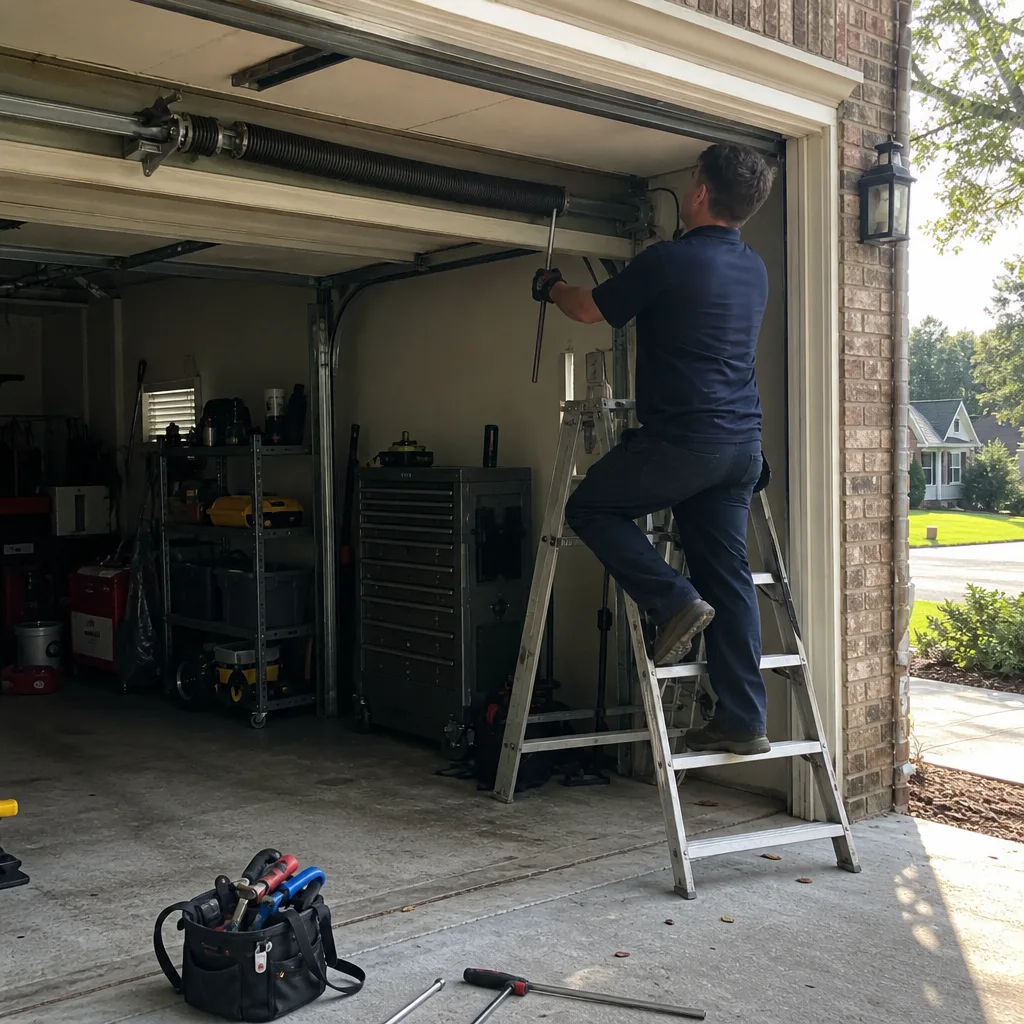
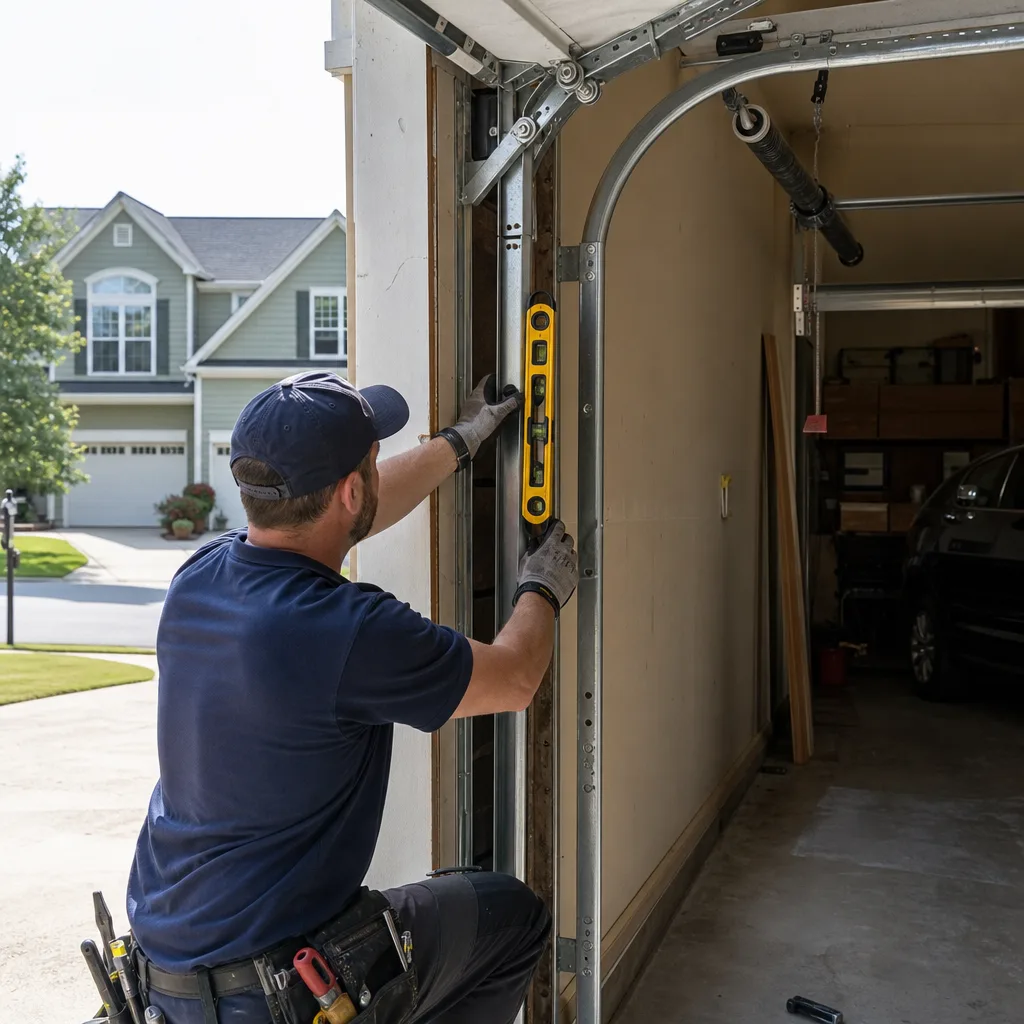
The track is the rail system that guides the door from horizontal to vertical and back. When the track is healthy, the door moves smoothly and the rollers make consistent contact. When the track starts to fail, the door tells you in a dozen small ways. The earliest track warning sign in Buford garages is a subtle bend or bow in the vertical section, usually caused by impact or by years of misaligned roller pressure. In Georgia’s clay soil, garage slabs settle over time, and that settlement transfers to the track brackets, causing misalignment that shows up as a door that’s tight against one side of the track and loose on the other.
The key track warning signs, in order of severity:
- Visible gap between roller and track: The rollers should sit fully inside the track channel. If you can see daylight between the roller and the track wall, the track is out of alignment or the roller is worn past its diameter.
- Scrape marks on the inside of the track: Metal-on-metal contact leaves evidence. Look at the inside face of the track. If you see shiny wear lines, the rollers are scraping because the track is pinching or the door is pulling to one side.
- Door binding at a specific point in travel: Does the door slow, stutter, or grind at the same point every cycle? That’s a track issue, usually a bent section or a bracket that’s loose. The door telegraphs its binding point with remarkable consistency.
- Loose mounting brackets: Grab a track bracket and try to wiggle it. It shouldn’t move. A loose bracket allows the track to flex during operation, which accelerates wear on everything else.
- Gap between track sections at the curve: The sections of track join at the curve. If that joint has separated or is misaligned, the rollers hit a seam every cycle, 365 days a year, until something gives.
Track problems in Buford are often misdiagnosed by homeowners as “the door is getting old.” The door isn’t getting old. The track is out of alignment, and it’s been pulling the whole system sideways for months. We routinely find doors where the lower track brackets have pulled out of the wall far enough that the door is hanging on by two of four bolts. That’s the failure you don’t want to find when the door falls.
Bottom Seal Warning Signs: The Cheap Part That Prevents Expensive Damage
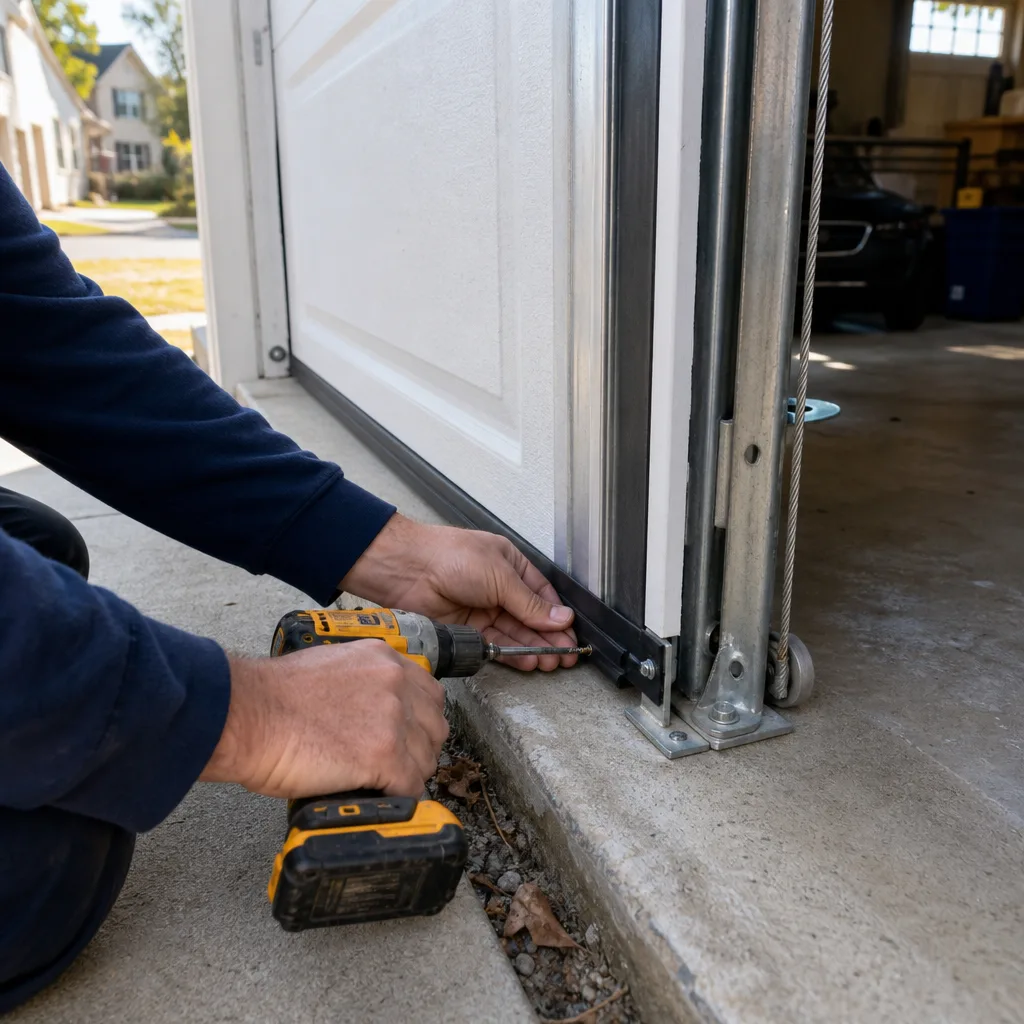
The bottom seal is the vinyl or rubber strip that runs along the bottom edge of the door. It’s the least expensive component on the entire system, typically $60 to $90 to replace, and it does the most to protect the rest of the garage. The warning signs here aren’t about structural failure; they’re about moisture, pests, and energy loss, the things that quietly damage everything else in the room. In Buford, where summer humidity runs high and heavy rain is a regular afternoon event, a failed bottom seal means water pooling under the door, insects and small rodents gaining entry, and conditioned air leaking out, which matters in a garage that’s been converted to a workshop, gym, or storage space.
Here’s what a failing bottom seal looks like:
- Visible cracks or splits in the rubber: Inspect the seal on a dry day with the door closed. Cracks, splits, or sections missing entirely are the obvious signs. The rubber degrades over time, especially in garages that get direct afternoon sun.
- Daylight under the door: This is the easiest test. Close the door and look at the floor from inside the garage. If you can see daylight under any part of the door, the seal has failed at that point. That gap is where water, bugs, and warm air get in.
- Water stains on the garage floor near the door: After a heavy rain, check the floor inside the door. Water staining or actual standing water means the seal isn’t doing its job. Even a 1/4-inch gap lets water in during a Buford downpour.
- The seal has become brittle or hard: Rubber that has lost its flexibility won’t compress to fill the gap. Press on the seal with your thumb. A healthy seal flexes. A dead one resists and shows stress marks.
- Drafts or temperature differences: If your garage feels noticeably colder or hotter than it used to, a degraded bottom seal is often part of the cause. It’s also the piece that lets pine straw and leaves blow in under the door, which is a year-round annoyance in Buford neighborhoods with mature trees.
Bottom seal replacement is a quick job. It’s also one of the best values on the entire garage door system, because a working seal prevents the moisture damage that kills stored belongings and the pest pressure that makes a garage unpleasant. And when you’re ready to think about a full garage door installation in Buford, the seal quality is one of the details we check at the measure.
Opener Logic Board Warning Signs: The Component No One Checks Until It’s Dead
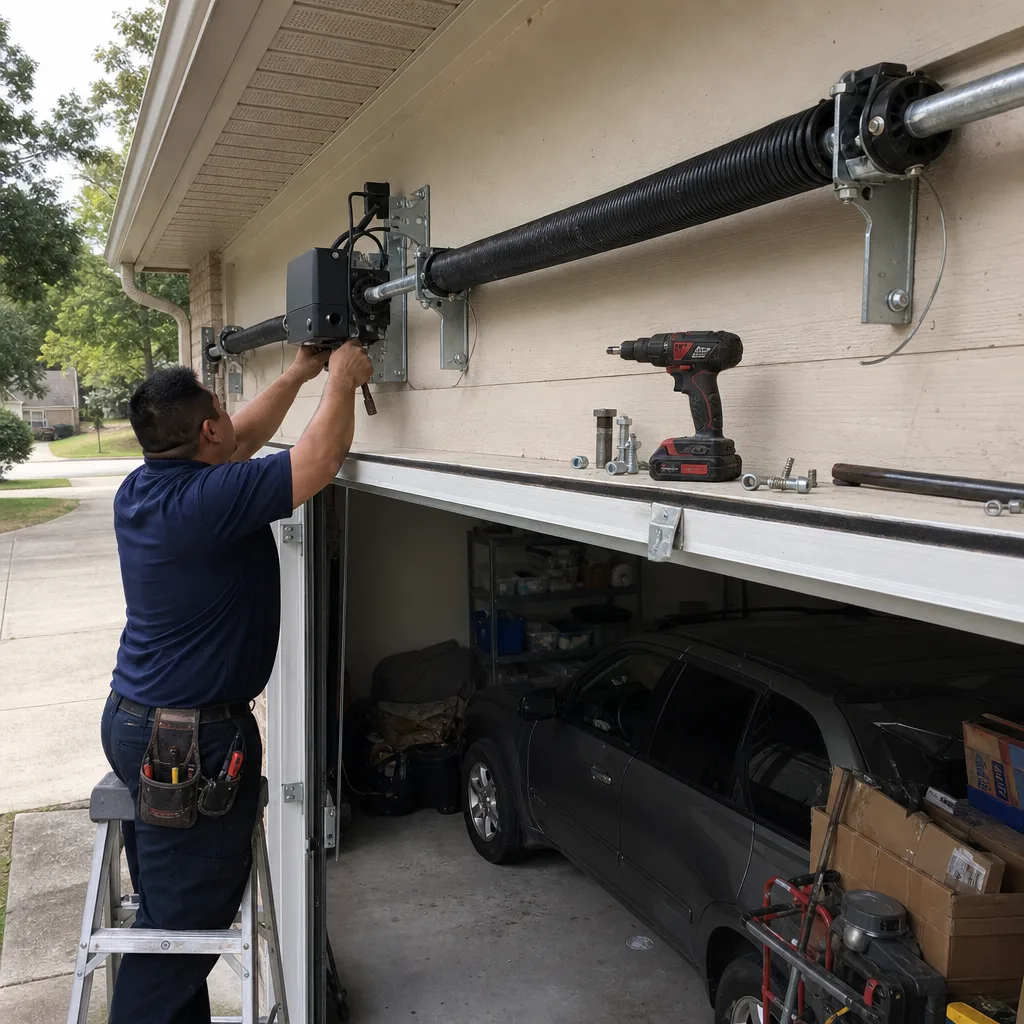
The logic board is the circuit board inside the opener that processes signals from the remotes, keypads, and safety sensors. It’s the part that fails without a physical warning, but not without an electrical one. The earliest logic board warning sign is intermittent behavior: the opener works, then doesn’t, then works again. A logic board on its way out will produce symptoms that look like bad remotes, dead keypads, or faulty sensors, because those components all route through the board. We get calls from Buford homeowners who have already replaced their remote batteries and re-paired everything, and the opener still misbehaves. That usually points to the board.
Specific logic board warning signs include:
- Random opening or closing without anyone pressing a button: This is the most alarming symptom. A logic board with failing capacitors can send ghost signals that activate the opener. If your door opens on its own, treat it as a safety issue and disconnect the opener until it’s diagnosed.
- Safety sensors that intermittently reverse the door or refuse to close it: A failing board can’t consistently read the sensor signal, so the door reverses mid-cycle or the opener light blinks a fault code that isn’t actually the problem.
- Range problems that don’t improve with new batteries or new remotes: If the remote only works from 10 feet away, and you’ve replaced the battery, the board’s receiver circuit may be degrading. This is especially common on older LiftMaster and Chamberlain units in homes built before 2015.
- Capacitor bulge or burn marks: With the opener unplugged, remove the cover and look at the board. A bulging capacitor, which looks like a small metal cylinder with a domed top, is a clear warning sign. So are dark scorch marks near any component. Both mean the board is failing and should be replaced before it takes the transformer with it.
- Opener hums but doesn’t move: Sometimes this is a capacitor failure on the board itself, not the motor. A humming opener that won’t run can be a $40 capacitor replacement rather than a full opener replacement, if it’s caught early.
In our experience, logic boards on Raynor and Chamberlain openers in the Buford market tend to last 7 to 10 years, and they usually fail slowly, with weeks of intermittent symptoms before the opener goes dark entirely. For more on when a board replacement beats a new opener, see our page on garage door opener repair and installation in Buford.
The Manual Lift Test: A Diagnostic You Can Do in 60 Seconds
The manual lift test is the most useful diagnostic a homeowner can perform, and it doesn’t require opening anything. Pull the red release handle to disconnect the opener from the door, then lift the door by hand. A properly balanced garage door will lift smoothly to the halfway point and stay there. It shouldn’t feel heavy, it shouldn’t drop, and it shouldn’t shoot upward on its own. The manual lift test tells you whether the springs still have the correct tension, and it’s the test that catches early spring fatigue better than any visual inspection.
Here’s the protocol, step by step:
- Close the door fully. With the door in the down position, pull the red release handle. This disconnects the trolley carriage from the opener’s chain or belt.
- Lift the door to waist height. Use both hands, and lift slowly. Pay attention to how much effort it takes. A door with healthy springs should feel like lifting a medium suitcase, roughly 10 to 15 pounds of resistance for a standard 16×7 foot door.
- Stop at the halfway point and let go. Do not take your hands away from the door, just relax your grip. A balanced door will stay put. If the door sinks, the springs are weak. If it rises, the springs are over-tensioned. Either condition is a warning sign.
- Lift the door fully and hold it briefly. The door should stay up without significant effort. If you’re holding more than 20 to 30 pounds of weight overhead, the springs are losing tension and need service.
- Lower the door slowly and reconnect the opener. Pull the release handle until the carriage clicks back into place, then test the opener with a full cycle.
One note on safety: when you release the door at the halfway point, keep your hands within a few inches of the door. The goal is to observe what it does, not to test whether it will slam. On a heavy wood door, even a few inches of uncontrolled drop can generate enough force to hurt. The manual lift test is safe when done deliberately and slowly, and it gives you hard data to describe over the phone, which helps us diagnose before we arrive.
Safety Risk vs. Future Expense: Which Signs Require Shutting the Door Down Today
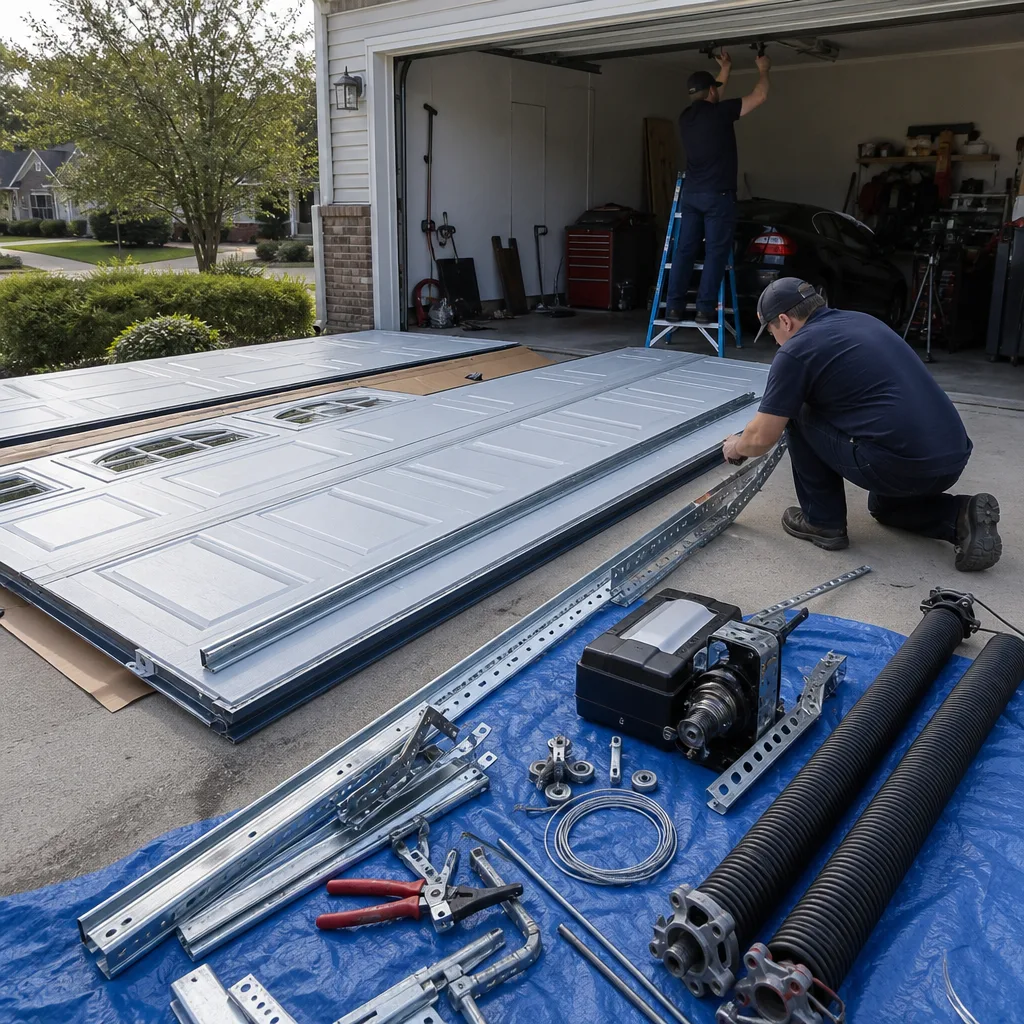
Not all warning signs are equal. Some indicate future cost: you’ll need to spend money in the next few months, but the door is safe to operate. Others indicate present danger: the door could fail catastrophically, and that failure could hurt someone. The distinction matters, because it tells you whether to schedule a repair or stop using the door immediately.
Safety-risk signs, stop using the door and call us at (470) 458-9647:
- Frayed or slack cables: A cable failure is the safety incident we most want to prevent. A door that drops because a cable let go can crush whatever is under it, including a person. If you see fraying or slack, the door is unsafe to operate.
- A broken spring: Once a spring has snapped, the door is dead weight. Do not attempt to lift it by hand, and do not run the opener against the broken spring. The opener will strain, the cables may jump, and the door can slam.
- A door that opens on its own: Ghost openings indicate a failing logic board and a door that’s operating without your command. Disconnect the opener and treat it as an electrical safety issue.
- A door that’s off its track: Once the door leaves the track, it’s not seatable without special tools and tensioning knowledge. Continuing to run the opener will bend panels and may drop the door.
Future-expense signs, schedule a repair this month but don’t panic:
- A coil gap in the torsion spring: You’re 4 to 8 weeks from a snap. That’s time to schedule, but the door is still operating on a functional spring.
- Scraping rollers or a grinding opener gear: These are wear indicators. The door will continue to work, but the damage accumulates, and the repair cost rises the longer you wait.
- A degraded bottom seal: This is purely future-expense territory. Water damage, pest entry, and energy loss are real costs, but a failed seal doesn’t endanger anyone.
- Track scrape marks or loose brackets: The door is still functioning, but the rail is wearing and the whole system is under abnormal stress. Fix it before it becomes a safety issue.
This is the distinction we wish every Buford homeowner knew before they called us. The safety-risk signs require immediate action, ideally today. The future-expense signs give you a window, and using that window is what separates a $180 roller replacement from a $1,400 track and panel repair.
How to Photograph a Warning Sign Before You Call
Servo Garage Doors has a founding rule: the customer sees the failed part before anyone quotes a replacement. That’s Clause 4 of The Haven Standard, and it’s why our technicians photograph every finding on every visit. But the photographic record can start with you, before you call. A clear photo of a warning sign means the diagnostic conversation starts with evidence, not guesses. It also means we can often tell you over the phone whether you need a same-day visit or can schedule a few days out.
Here’s how to photograph each type of warning sign so the detail is actually visible:
- Torsion spring coil gap: Open the garage door fully so the spring is unloaded and the coils are visible. Stand on a step stool and shoot the spring from the side, not head-on. Use your phone’s zoom rather than getting too close. The goal is to capture the gap between coils in relation to the coils around it. Hold the camera steady and let it focus before you press.
- Frayed cable: Shoot the cable from the bottom, where it attaches to the bracket. Get close enough that the individual strands are visible. A side angle with a light source behind you works best, since backlight washes out the detail.
- Roller wear: With the door down, photograph the roller from the inside of the garage, getting the camera lens within 6 inches of the roller face. If the roller has visible flat spots, those are the detail that matters.
- Track scrape marks: Use the phone’s flash or a work light aimed down the inside of the track. Shoot along the track’s length, not straight at it. The flash will catch the shiny wear lines and make them visible in the photo.
- Bottom seal cracks: Close the door and get down to floor level. Shoot the seal from the inside, looking outward, with daylight behind it. The gaps will show as bright spots only if the photograph captures the light coming through.
- Opener logic board signs: Unplug the opener, remove the cover, and photograph the board from directly above, using your phone’s flash. A bulging capacitor or scorch mark is what you’re trying to capture.
Three things to remember: clean your phone’s lens first, which is the source of half the blurry photos we get from Buford homeowners. Use your phone’s zoom rather than changing your physical position if that position is on a step stool. And send the photos in the original size, not compressed through a chat app, so we can zoom in on our end. Clause 4 works best when the evidence is sharp.
Common Mistakes to Avoid
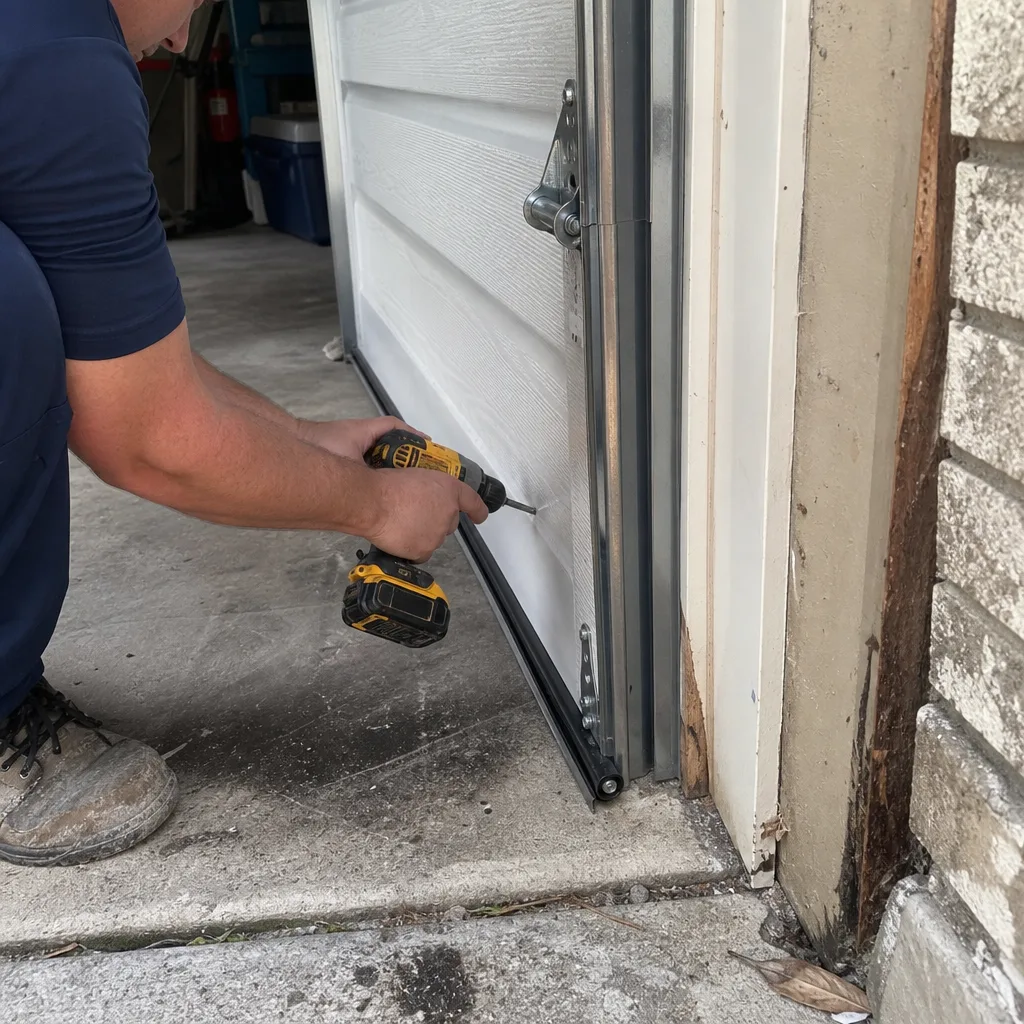
- Waiting until you can hear the problem over the TV. By the time a garage door failure is loud enough to notice from inside the house, you’re usually hours or days from a break, not weeks. The early warning signs are quiet, which is why this guide exists.
- Lubricating over a failing component. Spraying lubricant on a scraping roller or a groaning spring masks the sound for a few days without fixing the underlying wear. It’s the equivalent of painting over rust. The component is still failing, you’ve just made it quieter while it does.
- Replacing the remote batteries before checking the logic board. This is the most common diagnostic dead-end we see from Buford homeowners. New batteries, re-pairing, still intermittent, then they call us and we find a failing board. Check the board before you spend money on remotes.
- Forcing a door that’s binding. When a garage door is stuck at a point in its travel, the opener will try to muscle through it. That muscle, applied against a track issue, bends panels, shears bolts, and destroys rollers. If the door binds, stop the cycle and investigate. Forcing it turns a $40 repair into a $400 one.
- Ignoring water on the garage floor because “it’s always done that.” Water under the door means the bottom seal has failed, and in Buford’s rain, that water is getting under stored boxes, into drywall, and into the base of the door itself. The seal is a $60 to $90 fix. The water damage is not.
- Doing the manual lift test with the door half open and letting go completely. The manual lift test is a controlled observation, not a drop test. Keep your hands near the door. A full release on a heavy wood door can cause a slamming event that injures a hand or foot.
- Believing a garage door is a “no maintenance” system. The average garage door cycles over 4,000 times per year in Buford, opening and closing through heat, humidity, rain, and the occasional Georgia ice storm. No mechanical system does that without maintenance. The warning signs in this guide are your maintenance schedule, you just have to look for them.
When to Call a Professional
Call a professional when the warning sign involves anything that carries tension, weight, or electricity. That covers torsion springs, cables, tracks that are structurally misaligned, openers with electrical faults, and any door that’s come off its track. These are not repair projects for a weekend afternoon. They require training, specialty tools, and in the case of springs and cables, enough force to cause serious injury when released incorrectly. Call a professional when the manual lift test shows the door dropping or rising on its own. Call when you hear a repeated popping during operation. And call when a door opens or closes without anyone pressing a button.
For everything in this guide, the diagnostic question is: which component is failing, and how much time do I have? That’s a question we answer with a documented photo record, not a verbal guess. Servo Garage Doors Buford home has served the city since 2015, and we offer free estimates to Buford homeowners, call (470) 458-9647. If you have a written estimate from another company, bring it to us. We’ll give you a free second opinion, no coupon required.
Frequently Asked Questions
Garage door spring repair in Buford typically costs $180 to $340 when you catch the spring in its failure window, before it snaps. Once the spring has broken, the repair is the same job but may include an emergency service fee if it’s outside normal hours. At Servo Garage Doors Buford, the price is flat and written before any work starts, per Clause 1 of The Haven Standard, and you’ll see the failed spring in photographs before we quote the replacement. Call (470) 458-9647 for an exact quote on your door, estimates are free.
Yes, a garage door can fall if a torsion spring breaks, and that is exactly why spring maintenance matters. The spring under tension is what counterbalances the weight of the door, which is typically 130 to 170 pounds on a standard 16×7 steel door. When the spring snaps, that counterbalance is gone in an instant. The door becomes dead weight, and if the cables are also compromised, the door can come down hard. This is the scenario the early warning signs exist to prevent. If you see a coil gap or hear a pitch change, call us before it becomes a drop.
Yes, Servo Garage Doors Buford answers calls 24/7, including weekends and holidays, with a live person, not a recording. Emergency calls get a named technician and an on-the-way text, not a callback window. For non-emergency warning signs, we can usually schedule within 24 to 48 hours, which is still inside the repair window for most components. Call (470) 458-9647 and describe what you’re seeing, and we’ll tell you whether it’s a today problem or a this-week problem.
No. The price is flat and written before any work starts, and the written scope specifies what that price covers. That’s Clause 1 of The Haven Standard, and it’s been the rule at Servo Garage Doors Buford since 2015, not a policy we adopted recently. The written price you receive is the price you pay. If the technician finds something additional during the job, that’s quoted as a separate written line item before any additional work happens. You’ll never receive an invoice for more than the number you agreed to, and you’ll have the photo record showing what was found and what was done.
Yes, our Buford technicians carry springs, cables, rollers, bottom seals, and common gear-and-sprocket assemblies for LiftMaster, Chamberlain, Genie, and Craftsman openers on the truck. Logic boards and specialty parts for Raynor and some custom doors may need to be ordered, and we’ll tell you that before you schedule, not after we arrive. The truck inventory exists to make the repair happen in one visit, which is how we keep a broken door from sitting open overnight. Call (470) 458-9647 with your door’s brand and the warning sign you’re seeing, and we can tell you over the phone whether the part is on the shelf.
A steel garage door in Buford should last 20 to 30 years with regular maintenance, but the springs, rollers, cables, and bottom seal will not last that long. Springs last 8 to 12 years on average, rollers 7 to 10 years, cables 8 to 12 years, and bottom seals 3 to 5 years, because Buford’s summer humidity and winter temperature swings accelerate rubber degradation and metal fatigue. The door itself may outlast two full sets of springs. That’s the normal pattern, and it’s why the warning signs in this guide are worth checking every spring and fall.
The Bottom Line
The garage door in a Buford home is a mechanical system, and mechanical systems fail on schedules. The springs give you 8 to 12 years. The rollers give you 7 to 10. The cables give you roughly the same. The bottom seal gives you 3 to 5. Before any of these components fails, it gives you a warning: a coil gap, a scrape, a pop, a sag, a crack in the daylight under the door. Most homeowners miss those warnings because nobody told them what to look for. Now you know. Walk out to the garage, run the manual lift test, look for the coil gap, listen to the door run. If you find something, call (470) 458-9647 and describe it. We’ll help you figure out which window you’re in.
Written by Marcus Deller, Owner at Servo Garage Doors Buford, serving Buford since 2015.